Wingspan compared with a person with arms outstretched.
Length
40–44 cm
Wingspan
77–85 cm
Weight
465 g
Social life
Elusive and nocturnal; both sexes build the nest, incubate and care for the chicks
Lifespan
Record of 22 years and 3 months in the wild (a bird ringed in the United Kingdom)
Conservation status
LC
NT
VU
EN
CR
EW
EX
Global (IUCN)
Least Concern
Spain
Near Threatened (NT) in the Red Book of the Birds of Spain; included in the List of Wild Species under Special Protection (the two Canary subspecies, as Vulnerable, in the Spanish Catalogue of Threatened Species)
When to see it
Resident
Months of the year when it is present
J
F
M
A
M
J
J
A
S
O
N
D
In Iberia
yes
yes
yes
yes
yes
yes
yes
yes
yes
yes
yes
yes
Breeding season
no
no
no
yes
yes
yes
yes
no
no
no
no
no
Song or voice of the Eurasian Stone-curlew
During spring and summer it makes itself very noticeable by its characteristic call, an unmistakable «cur-li-liii» heard at twilight and at night. In courtship it gives a plaintive song, with a trilling note followed by clear ones: «clii-urr-lii».
CallEurasian Stone-curlew
0:00 / 0:26
10 kHz5
The sonogram draws the sound: time runs from left to right, and the higher a trace sits, the higher the note.Recording by AviCanto, Wikimedia Commons (Vídeo de YouTube, con atribución).
Flight of the Eurasian Stone-curlew
In flight, the underside of the wings is very pale, while the upper side shows two whitish wing bars edged with black, with the tips and rear of the wings blackish and some white spots.
Flight typeLow, with the white and black bars on the wings
Elusive and nocturnal in habits, it spends the day motionless, earthy brown, on open ground with little vegetation; if it feels watched, it walks away.
It flies low, with the wings pale underneath and, above, two whitish wing bands edged with black, with blackish tips and trailing edge.
It lands and freezes on the bare ground of the wasteland, where it blends into the terrain. At dusk it makes itself heard: «cur-li-liii».
Photo gallery of the Eurasian Stone-curlew
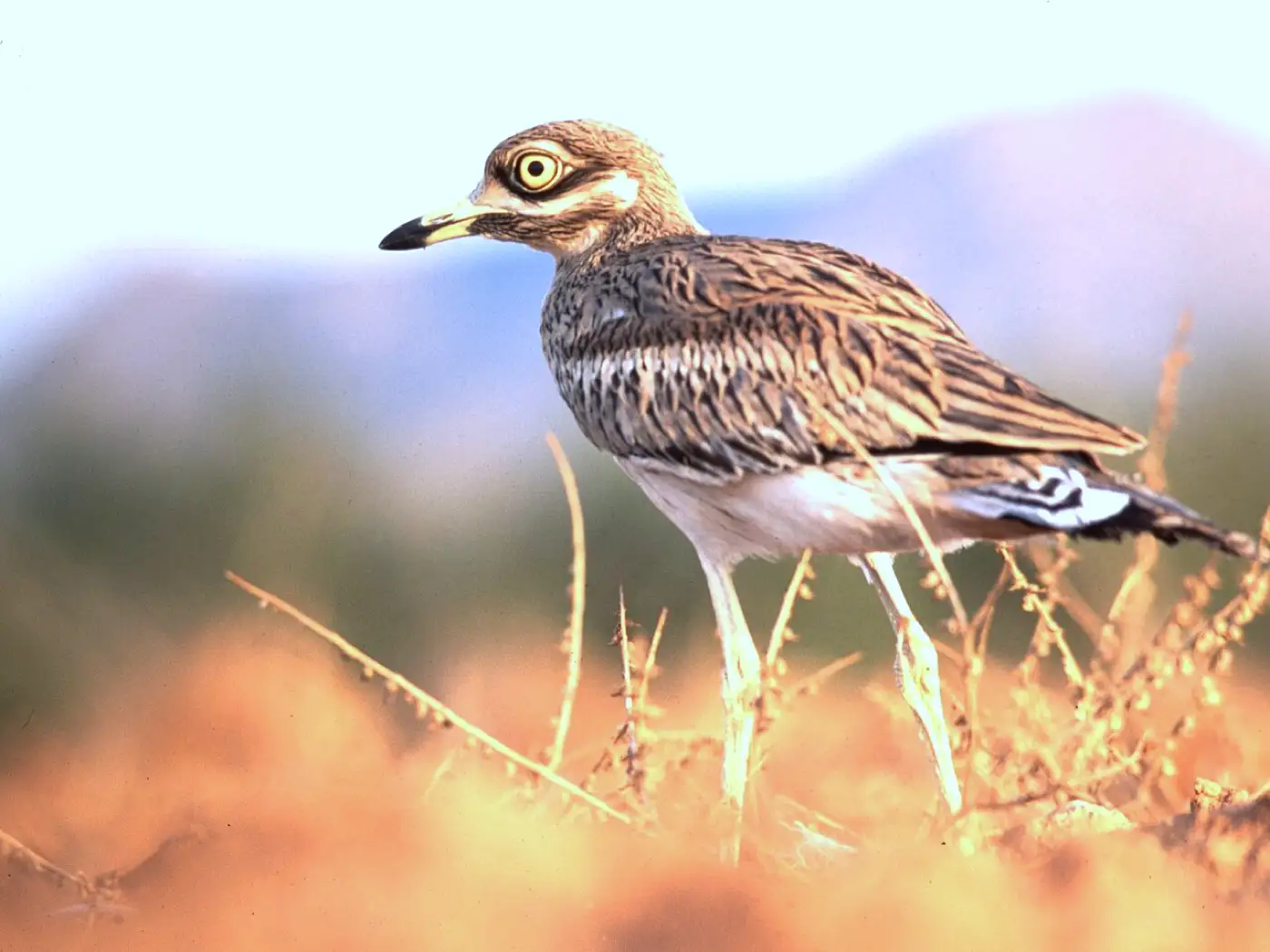
Eurasian Stone-curlew in profile against a scrub background, with the big yellow eye, yellow bill with black tip and streaked plumagePhoto: trebol-a, CC BY-SA 2.5Photo 1 of 4
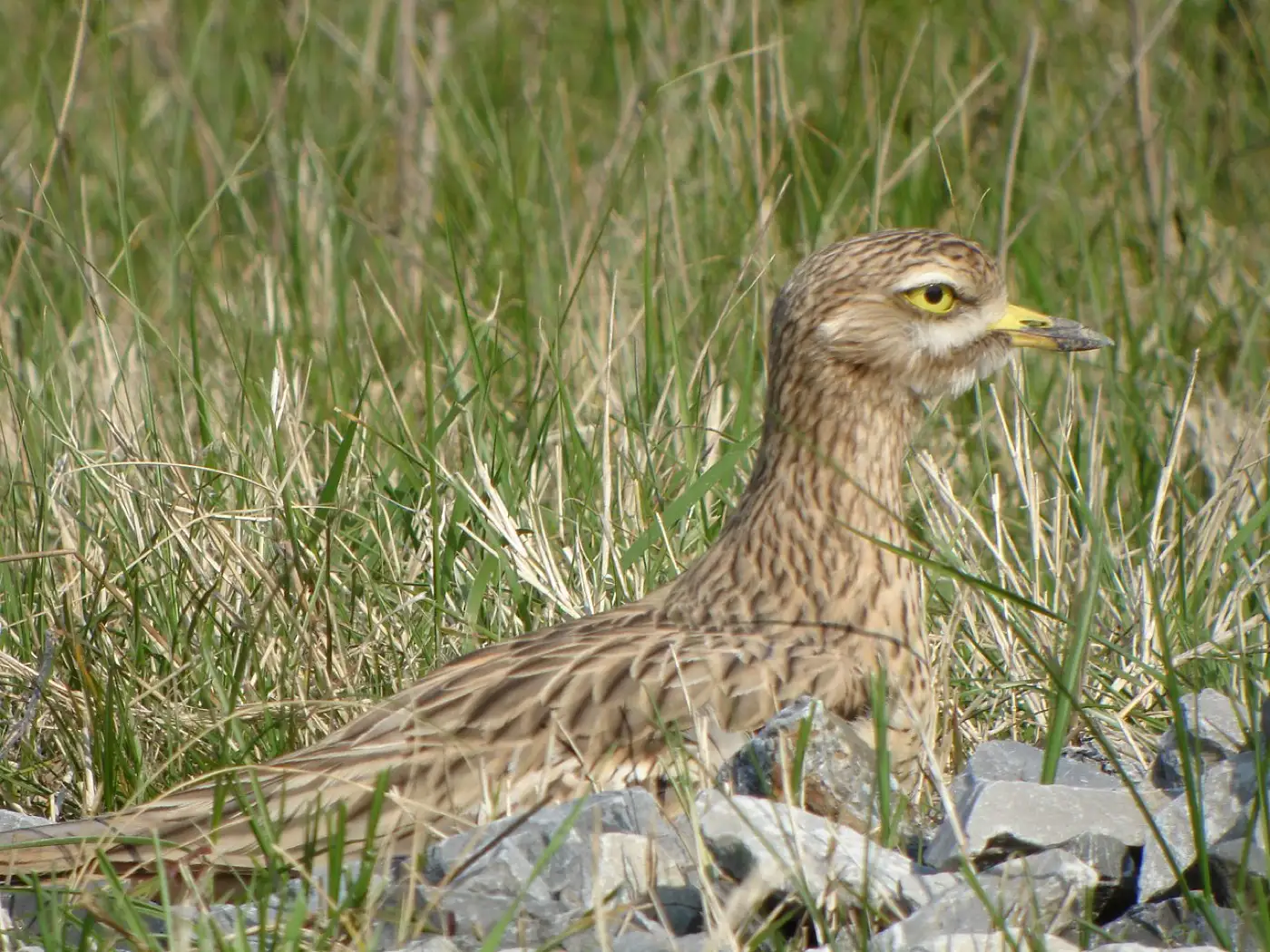
Eurasian Stone-curlew crouched in the grass on a bed of stones, camouflaged, with its yellow eyePhoto: Pascal Aleixandre, CC BY-SA 3.0Photo 2 of 4
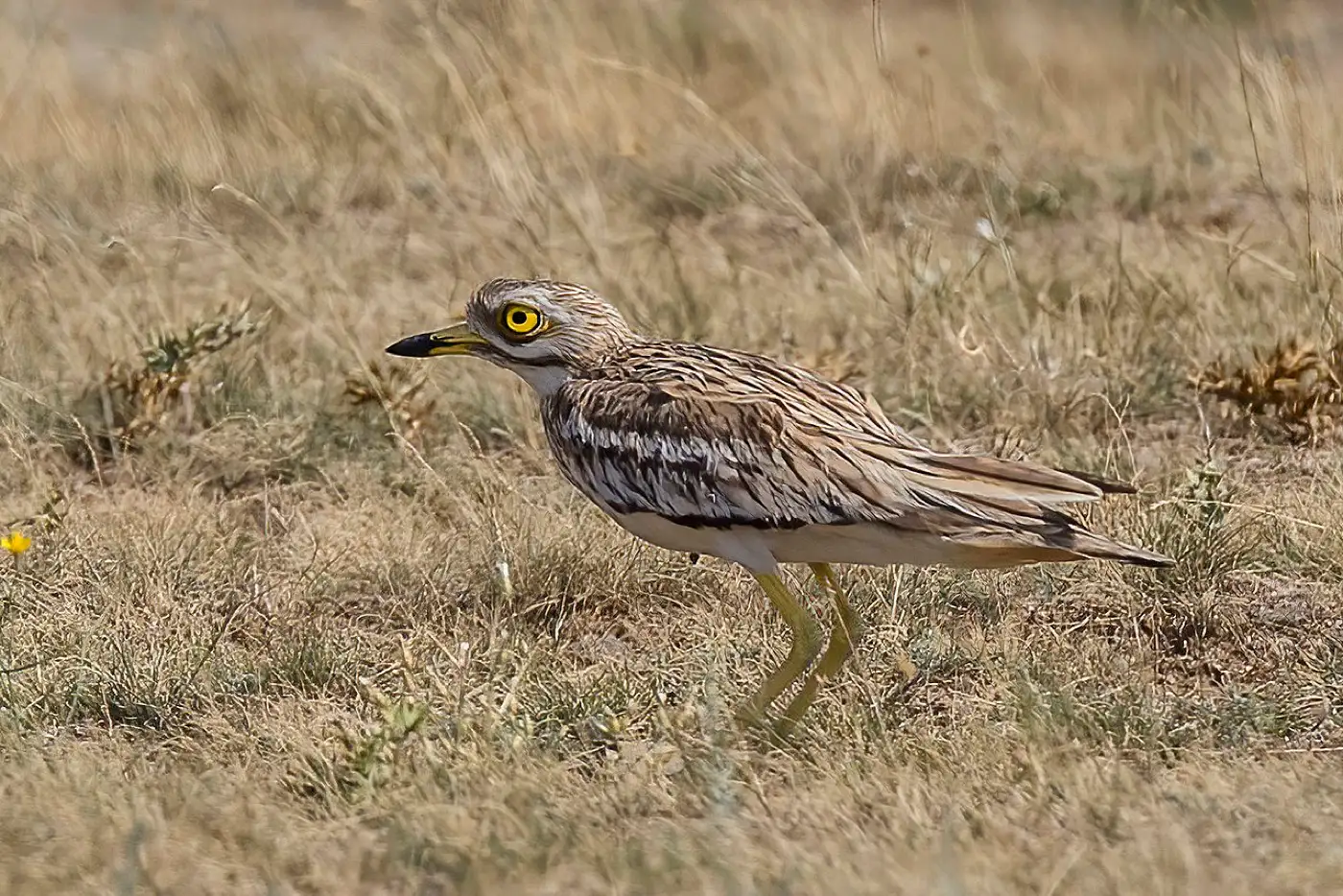
Eurasian Stone-curlew walking across dry pasture, with long yellow legs and the white wing barPhoto: Charles J. Sharp, CC BY-SA 4.0Photo 3 of 4
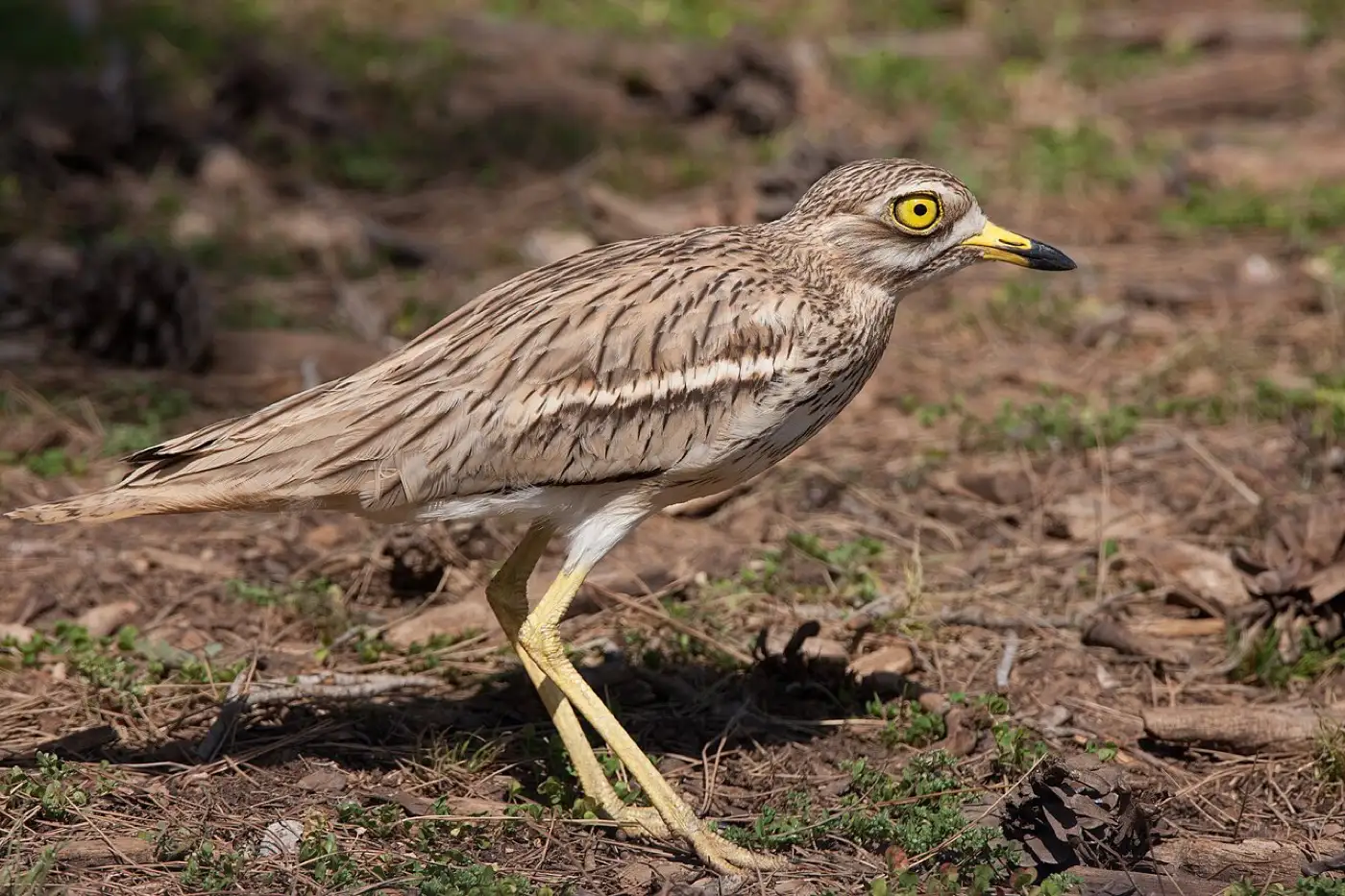
Eurasian Stone-curlew walking on bare earth, with yellow bill and earthy brown streaked plumagePhoto: Artemy Voikhansky, CC BY-SA 4.0Photo 4 of 4
1 / 4
Identification of the Eurasian Stone-curlew
The Eurasian Stone-curlew is a small wader with big yellow eyes and generally earthy brown colouring. The adult shows a white bar edged with black on the wing and two white stripes above and below the eye. It has a yellow bill, with a black tip. The young bird is more discreet, with the wing bar and the white stripes on the head fainter and less marked.
Adult
Earthy brown, with big yellow eyes and two white stripes above and below the eye.
Yellow bill with black tip and a white bar edged with black on the wing.
Young bird
More discreet, with the wing bar and the head stripes fainter.
Habitat and distribution of the Eurasian Stone-curlew
It is distributed across a broad strip of the southern Palaearctic, from Great Britain and Mauritania in the west to central and eastern Asia (India and Indochina) in the east.
On the Peninsula it widely occupies the areas of Mediterranean influence, avoiding mountain and forest regions, and is absent from the damp northern strip and much of Catalonia and the Valencian Community. In the Balearics it is on Mallorca, Menorca, Cabrera, Ibiza and Formentera, and it is also in the Canaries. On the Peninsula the subspecies «oedicnemus» occurs; in the Balearics, «saharae»; and in the Canaries there are two subspecies of their own: «insularum» (Fuerteventura, Lanzarote and the islets of La Graciosa and Alegranza) and «distinctus» (the rest of the archipelago).
It occupies flat or gently rolling land, with little or no tree cover and low vegetation, often arid or semi-arid. It can appear in dry grassland, wasteland, steppes and semi-deserts, or in dryland and even irrigated farming environments. In farming areas it prefers areas of natural vegetation to cultivated ones, and surfaces of bare soil and sparse plant cover that allow greater visibility, with more organic matter.
Island populations are strictly resident; those of the Peninsula are basically resident in the southern half and summer visitors in the northern part of the Meseta and in Aragón. On the Peninsula, birds from other continental regions also winter.
Areas where it is regularly recorded since 2010Squares of about 25 km where it is recorded regularly (occasional passage records are left out). Data from GBIF.org (25,071 records, retrieved October 2026); outline from Natural Earth.
Etymology of the Eurasian Stone-curlew
«Burhinus» combines the Greek «boûs», «ox», and «rhís», «nose». «Oedicnemus» combines the Greek «oideîn», «to swell», and «knḗmē», «leg» or «shin»: from the prominent joints of its legs, which also give it its English name, «thick-knee», «thick knee».
Population of the Eurasian Stone-curlew
In the 2021 European Red List of Birds the European breeding population is estimated at between 123,000 and 193,000 mature individuals, with an increasing trend. The population of peninsular Spain and the Balearics was estimated at about 134,000 individuals in the 2014–2018 censuses, and its trend is summed up as a moderate decline. The most important threat is the reduction and homogenisation of breeding habitat through urbanisation and farming changes (conversion to irrigation, reduced grazing, reforestation), although, being versatile in its choice of habitat, it is less vulnerable to landscape change than other steppe birds. Insecticides and farming operations themselves are also risk factors.
Nest of the Eurasian Stone-curlew
The nest, which both sexes build, is about 16–22 centimetres across and 5–7 deep. It is set on the ground, and surrounded with small stones, shells, rabbit droppings and other materials.
Courtship and breeding of the Eurasian Stone-curlew
On the Peninsula, the breeding period runs from April to early July, although in the Canaries it can start as early as late February. The clutch consists of one to three eggs, usually two, beige or pale grey, slightly glossy and with variable violet-grey speckling. Incubation, done by both male and female, lasts 24–26 days. Replacement clutches have been recorded after losing the first. The young are nidifugous and leave the nest soon after hatching; both parents look after them and they develop in about 36–42 days.
Diet of the Eurasian Stone-curlew
It is based mainly on insects, such as orthopterans, beetles or ants.
Curious facts about the Eurasian Stone-curlew
Although related to the waders, it is a steppe bird quite widespread in Spain, but not easy to see because of its discreet colours and its elusive, nocturnal habits. In the breeding season it is detected more easily by its call, given at dusk.
The Eurasian Stone-curlew in Cabañeros
This website’s page on grasslands lists it, under the name «alcavarán», among the steppe species of the grasslands of Cabañeros, together with the Little Bustard and the only stable population of Great Bustard in the Montes de Toledo.
Where to see the Eurasian Stone-curlew in Cabañeros
In the grasslands and the raña of Cabañeros, alongside other steppe birds.
When
All year; it is heard more in spring and summer.
What time
At dusk and at night; by day it stays still and camouflaged.
Where
In flat, open terrain with little vegetation, wasteland, steppes and dryland crops.
What to look for
An earthy brown bird with enormous yellow eyes, which freezes on the ground.
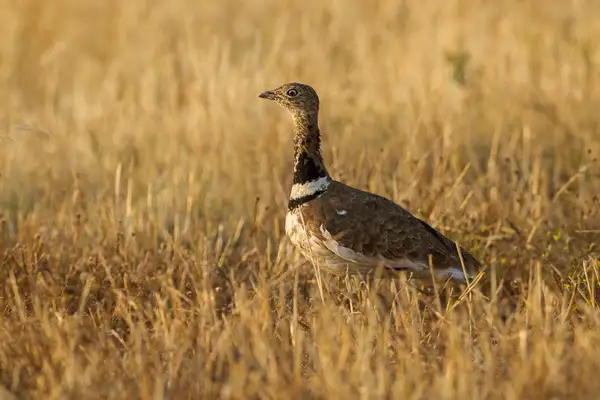
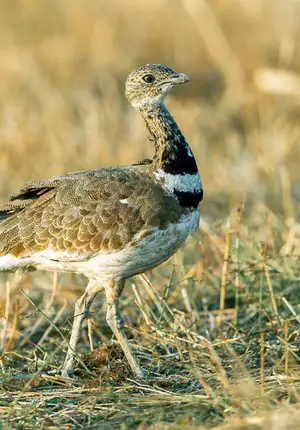
It does not look like it by sight: it is a steppe bird of the same open fields, with cryptic brown plumage and ground-dwelling habits, but with a dark neck with a white collar in the breeding male and without the big yellow eyes of the Stone-curlew.
Photo: Francesco Veronesi from Italy, CC BY-SA 2.0
Other birds
Birds related to the Eurasian Stone-curlew or sharing its habitats in Cabañeros.



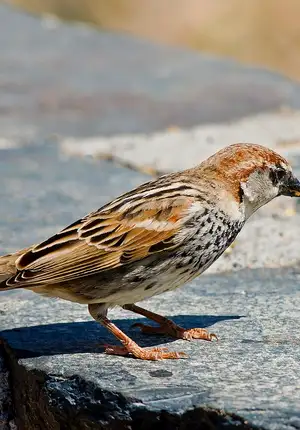 Also in grasslands and rañas
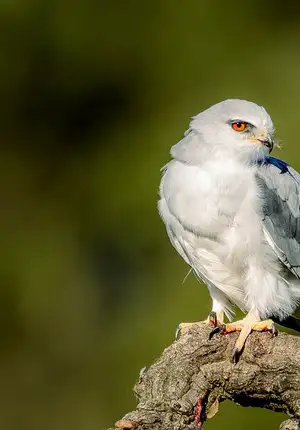 Also in grasslands and rañas
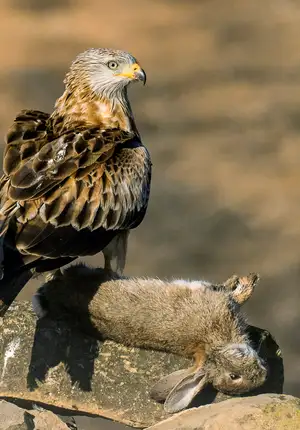 Also in grasslands and rañas
 Also in grasslands and rañas
 Also in grasslands and rañas
 Also in grasslands and rañas
 Also in grasslands and rañas
 Also in grasslands and rañas





