Wingspan compared with a person with arms outstretched.
Length
50–60 cm
Wingspan
81–95 cm
Weight
1–1.5 kg
Social life
Gregarious; pairs up in the breeding season
Lifespan
Record of 26 years and 9 months in the wild (a bird ringed in Germany)
Conservation status
LC
NT
VU
EN
CR
EW
EX
Global (IUCN)
Least Concern
Spain
Not on the List of Wild Species under Special Protection or in the Spanish Catalogue of Threatened Species; included in the Red List of Birds of Spain as Least Concern
When to see it
Resident
Months of the year when it is present
J
F
M
A
M
J
J
A
S
O
N
D
In Iberia
yes
yes
yes
yes
yes
yes
yes
yes
yes
yes
yes
yes
Song or voice of the Mallard
The male gives a dull, nasal «wruab», like a frog’s croak, which he repeats two or three times. The commonest sound of the female is the one we all know from ducks, a rapid quack, «cuac cuac cuac cuac», whose intensity gradually fades. The recording we hear is of a female.
CallMallard
0:00 / 0:03
10 kHz5
The sonogram draws the sound: time runs from left to right, and the higher a trace sits, the higher the note.Recording by Jonathon Jongsma, Wikimedia Commons (CC BY-SA 3.0).
Flight of the Mallard
It takes off from the water vertically and flies fast and direct, with constant wingbeats and the neck stretched out, in small flocks. In flight the violet-blue speculum of the wings, which gives the species its Spanish name, can be seen very well.
Flight typeFast and direct, with the neck stretched out
It leaves the water vertically, with a strong beating of wings and a croak.
Quick, steady wingbeats, with the neck stretched out, in a straight line and at good height. On the wings you can see the violet-blue speculum, which gives the bird its name.
It glides with wings open and feet forward, and brakes on the water, raising a wake.
Photo gallery of the Mallard
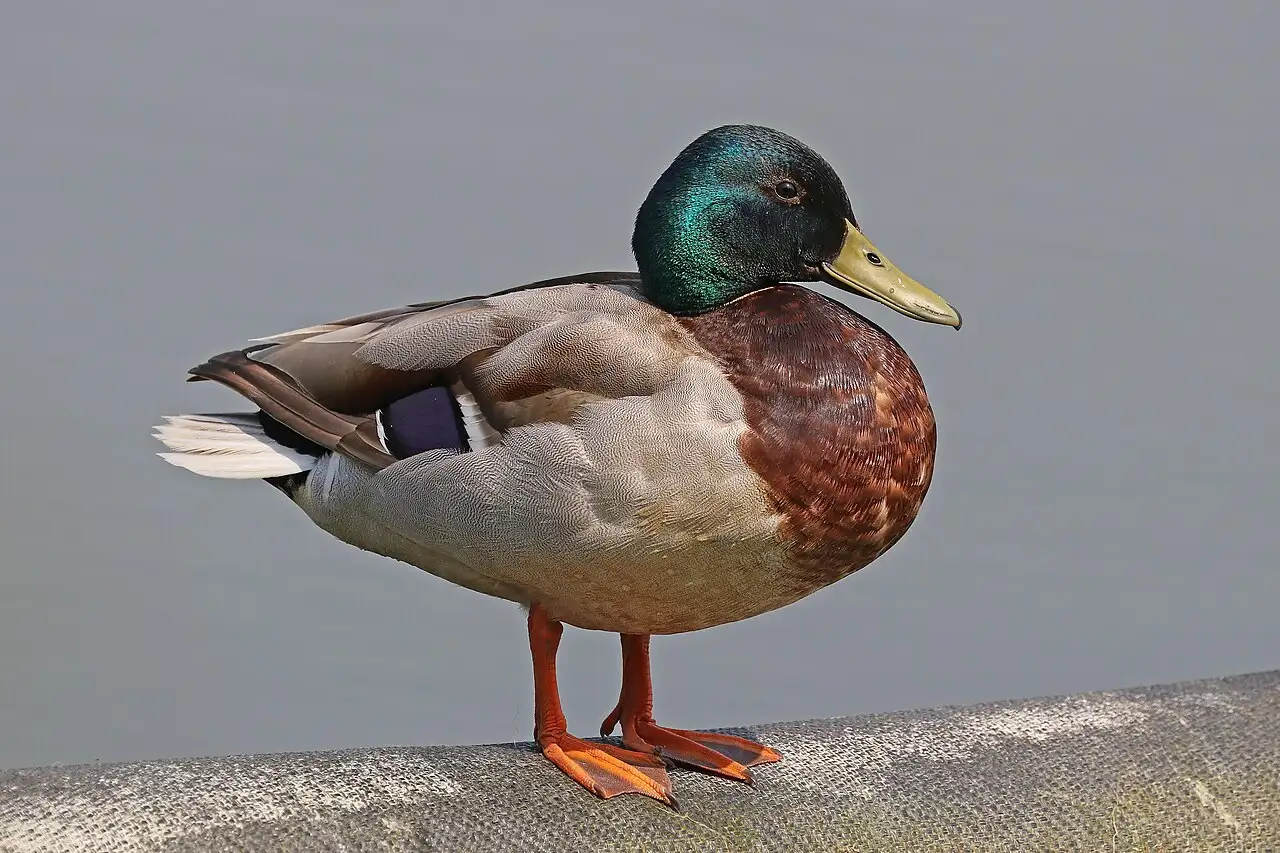
Male Mallard perched on a wall, in profile, with green head, white collar, chestnut breast and orange legsPhoto: Charles J. Sharp, CC BY-SA 4.0Photo 1 of 4
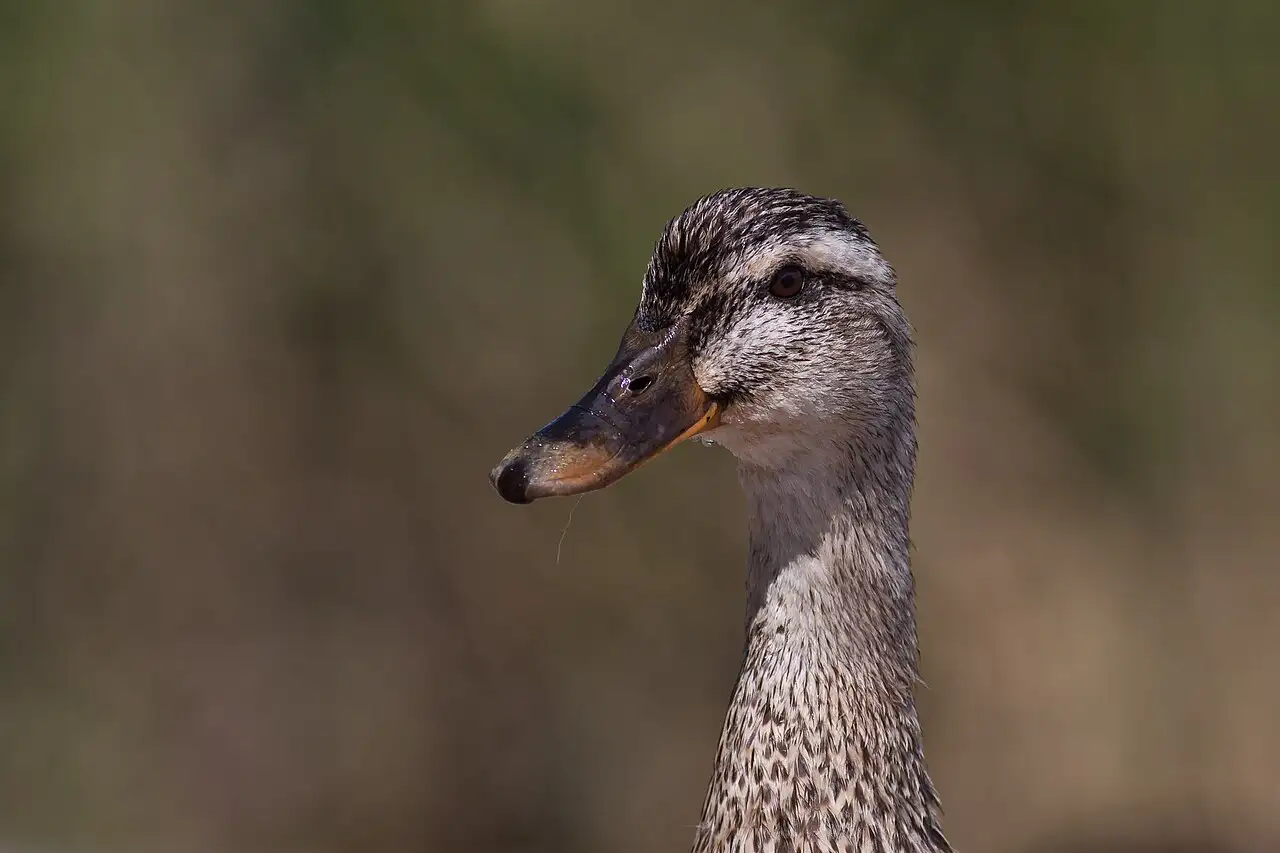
Portrait of a female Mallard, with mottled brown plumage and an orange bill with dark spotsPhoto: Thermos, CC BY-SA 3.0Photo 2 of 4
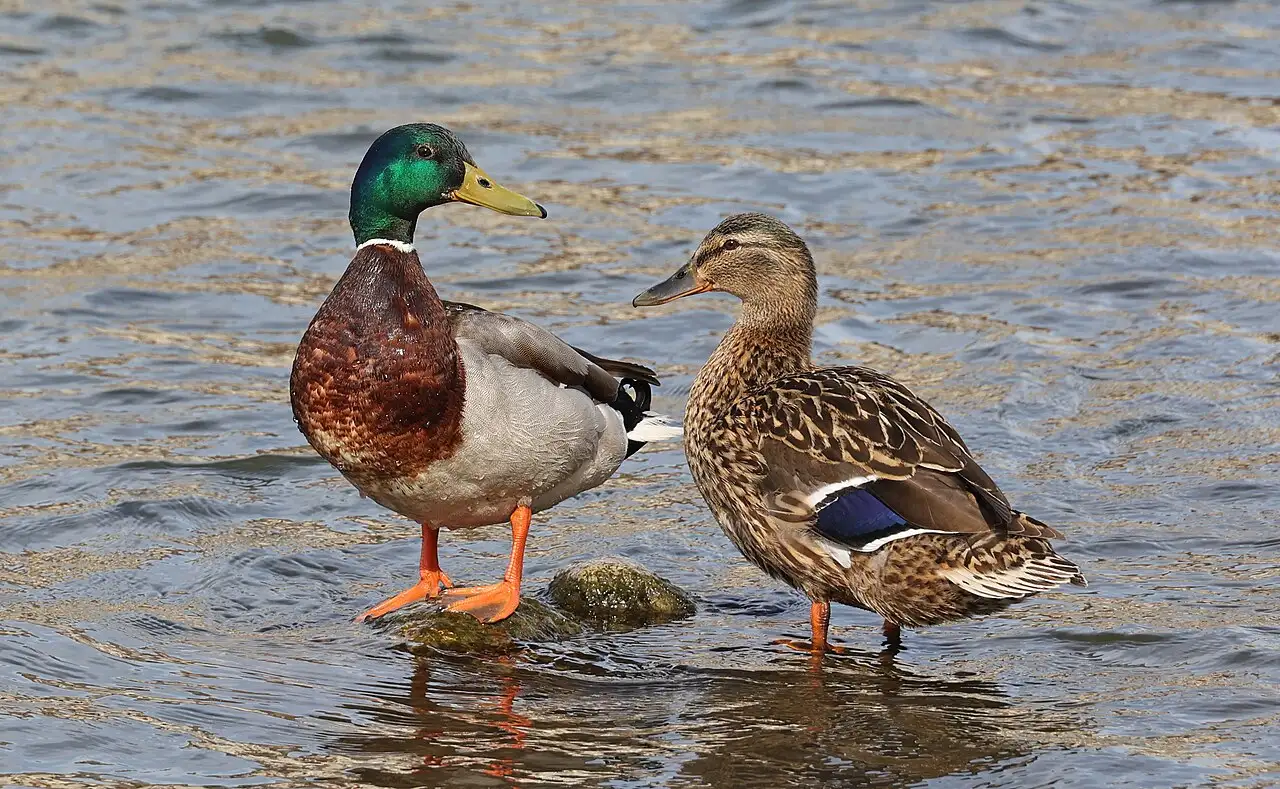
Pair of Mallards on a shallow shore: the green-headed male and the brown female, with the blue speculum visiblePhoto: Clément Bardot, CC BY-SA 4.0Photo 3 of 4
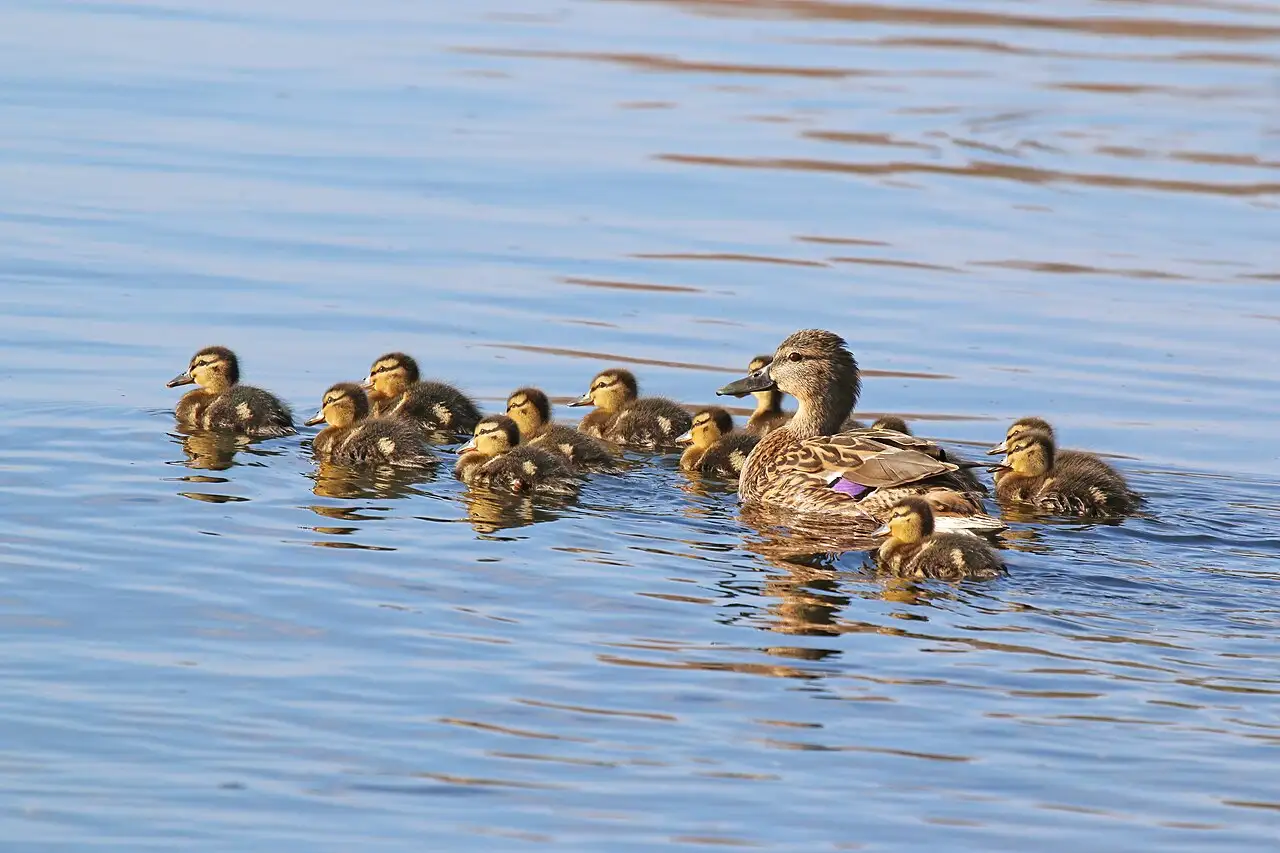
Female Mallard swimming with a dozen ducklings covered in dark down with yellowish patchesPhoto: Charles J. Sharp, CC BY-SA 3.0Photo 4 of 4
1 / 4
Identification of the Mallard
It is a large duck with marked sexual dimorphism. In the male the bright iridescent green of the head and neck stands out, separated from the chestnut breast by a narrow white collar. The back is brownish and the underparts grey. The rump is black and stands out against the white tips of the tail feathers. The bill is yellow with a black nail and the legs are orange. Two black, curled feathers above the tail and the violet-blue speculum, very evident in flight, complete the pattern.
Male
Head and neck green with iridescence, and white collar.
Chestnut breast, brownish back and grey underparts.
Female and young bird
The female, a little smaller than the male, is very cryptic, with mottled brownish plumage; only the speculum stands out.
Young birds look very like the females, with a somewhat reddish general tone.
Habitat and distribution of the Mallard
Its range extends across almost the whole Holarctic, in a broad strip that takes in Europe, much of Asia and North America, with some pockets in North Africa. There are introduced populations in south-eastern Australia and New Zealand, and several subspecies are recognised.
In Spain an important population of the subspecies «platyrhynchos» breeds, spread across much of the Peninsula and the Balearics, although it is scarce in the arid south-east and in some interior spots; it is absent from the Canaries, Ceuta and Melilla. It is an extraordinarily generalist bird, which frequents wetlands of all kinds: slow watercourses, marshes, lagoons, reservoirs and even seasonal ponds or ornamental ponds in parks and gardens, with a preference for shallow water, where it gathers in groups of variable size. Resident birds are joined in winter by many migrants, mainly from central Europe, the British Isles and Scandinavia: winter visitors arrive in September, peak between December and January and return to the breeding areas around April. The Ebro delta, the aiguamolls de l’Empordà and the Vegas Altas del Guadiana are its main wintering areas.
Areas where it is regularly recorded since 2010Squares of about 25 km where it is recorded regularly (occasional passage records are left out). Data from GBIF.org (748,507 records, retrieved October 2026); outline from Natural Earth.
Etymology of the Mallard
«Anas» is the Latin name for the duck, and «platyrhynchos» comes from the Greek «platýs», «broad», and «rhýnchos», «bill»: «the broad-billed one». The Spanish name, azulón, alludes to the violet-blue speculum of the wings.
Population of the Mallard
In Spain there are no conclusive data on the number of birds, although the 2009 census estimated a minimum of 170,000 birds, and populations fluctuate with wetland water levels; the trend seems slightly positive in recent years. In Europe, the 2021 European Red List of Birds estimates between 2.83 and 3.77 million mature breeding individuals, with a decreasing trend. It is classed as Least Concern. The main threat is intense hunting pressure, on top of the progressive alteration of the wetlands where it lives.
Nest of the Mallard
The female prepares a shallow structure of twigs, lined with grass, leaves and plenty of down. It is usually in a hollow hidden among marsh vegetation or sheltered by scrub, although sometimes it is far from water, in rock crevices, tree hollows or cereal fields.
Courtship and breeding of the Mallard
A showy courtship normally takes place in February, with a complex display of postures, wing flapping, turns and head-shakes, tail stretching and bill-tapping on the water, accompanied by whistles and quacks. Females lay their eggs in early spring. The clutch is 7 to 13 eggs, greenish, beige or bluish, at a rate of one a day; the female does not start incubating until the clutch is complete, for 27 or 28 days, so hatching is simultaneous. The chicks hatch covered in soft dark down with yellowish patches, swim and dive within a few hours of life and follow their mother in search of food. At 50 or 60 days they can already fly.
Diet of the Mallard
Although its main food is aquatic plants, it does not hesitate to eat insects, worms, molluscs or small fish. It also frequents meadows, cereal fields and holm oak dehesas, where it eats grass, sown shoots and acorns.
Curious facts about the Mallard
It is the commonest duck in Spain, and every winter many birds arrive from Europe to join the population that breeds here. Ducklings swim and dive within a few hours of hatching, which explains why we see the mother with the whole brood behind her.
The Mallard in Cabañeros
The habitat pages of this website list it as a breeder on the River Bullaque, together with the Black Stork, the Common Kingfisher and the Common Moorhen. On the lagoons it appears only occasionally, and usually breeds in rainy years.
Where to see the Mallard in Cabañeros
On the River Bullaque and the lagoons of Cabañeros, especially in rainy years.
When
All year; in winter, with the northern migrants, there are more. Winter visitors arrive in September and peak between December and January.
What time
Early morning and late afternoon, when it moves most.
Where
On the calm, shallow water of the Bullaque and the lagoons, and on nearby meadows and dehesas.
What to look for
The male with the green head and white collar, and the brown female, with the blue speculum as she takes off.
Somewhat smaller and slender, with dull, uniform plumage, with vermiculated greys and a black rump. Its distinctive feature is the white speculum, very visible in flight, against the Mallard’s violet-blue; the brownish female has a quack similar to the female Mallard’s.
Photo: Charles J. Sharp, CC BY-SA 4.0
Other birds
Birds related to the Mallard or sharing its habitats in Cabañeros.



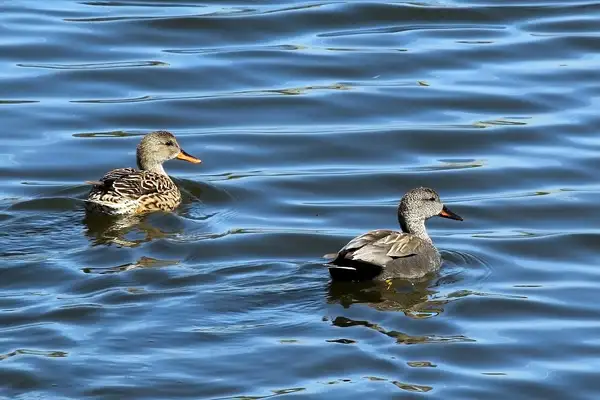
 Same family
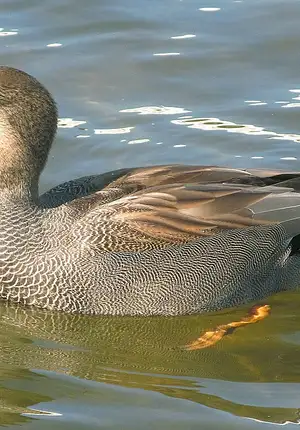 Same family
 Same family
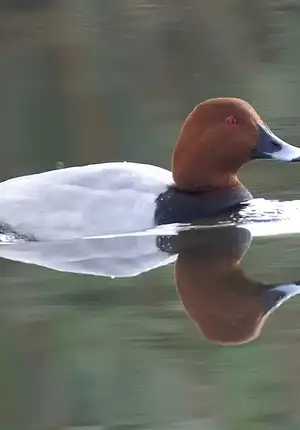 Same family
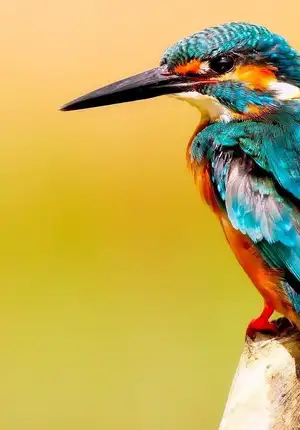 Also in rivers and riverbanks
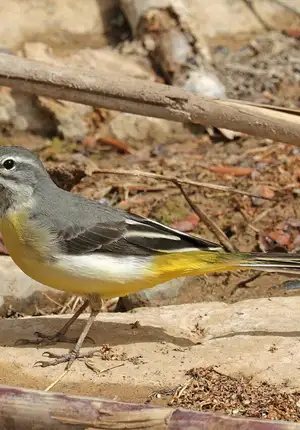 Also in rivers and riverbanks
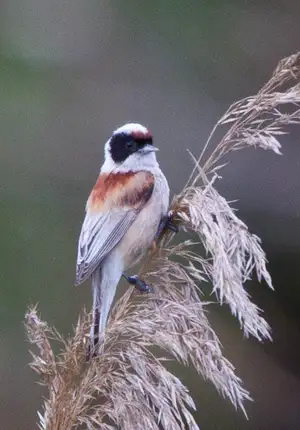 Also in rivers and riverbanks
 Also in rivers and riverbanks






