Both members of the pair build the nest and both parents feed the chicks
Lifespan
Record of 10 years and 8 months in the wild (a bird ringed in Finland)
Conservation status
LC
NT
VU
EN
CR
EW
EX
Global (IUCN)
Least Concern
Spain
Least Concern (LC) in the Red Book of the Birds of Spain; included in the List of Wild Species under Special Protection and not in the Spanish Catalogue of Threatened Species
When to see it
Resident
Months of the year when it is present
J
F
M
A
M
J
J
A
S
O
N
D
In Iberia
yes
yes
yes
yes
yes
yes
yes
yes
yes
yes
yes
yes
Song or voice of the White-throated Dipper
It gives frequent «chuik», short and ringing, as it flies or moves about. The song is more elaborate in spring, since it consists of several quick, continuous notes, like a warble.
SongWhite-throated Dipper
0:00 / 0:24
10 kHz5
The sonogram draws the sound: time runs from left to right, and the higher a trace sits, the higher the note.Recording by AviCanto, Wikimedia Commons (Vídeo de YouTube, con atribución).
Flight of the White-throated Dipper
Nervous by nature, it flies fast over the water surface and moves with ease among the stones of the river before launching itself into a dive.
Flight typeFast and low, over the water surface
Nervous by nature, it moves with ease among the stones of the river before launching itself into the water; perched, it raises its tail and flexes its legs non-stop.
It flies fast over the water surface, and gives short, ringing «chuik» as it flies or moves about.
It looks for its food very actively, diving or half-submerged under the pebbles, with between 5 and 10 dives of a few seconds per minute.
Photo gallery of the White-throated Dipper
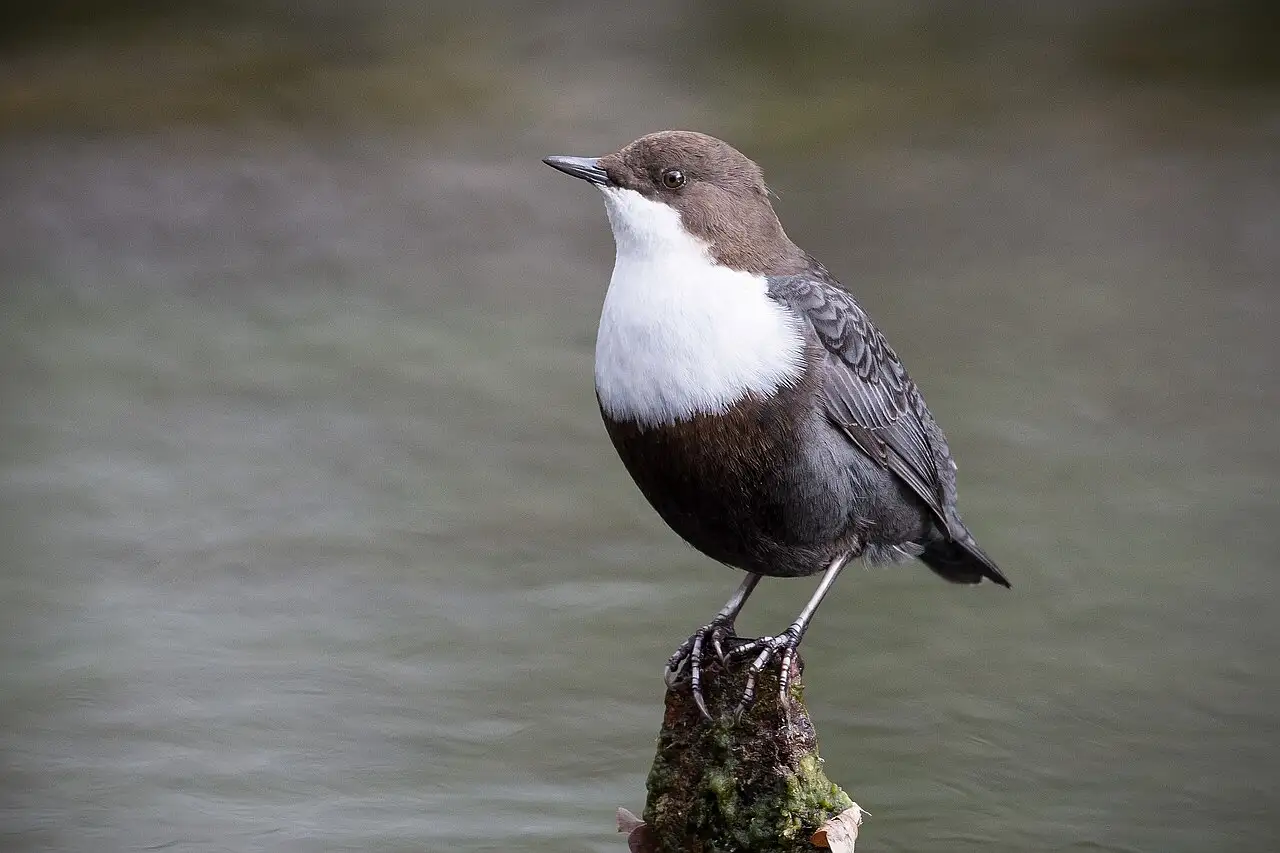
White-throated Dipper perched from the front on a stump beside the water, with white bib, brown head and dark backPhoto: Dirk-Jan van Roest, CC BY 2.0Photo 1 of 4
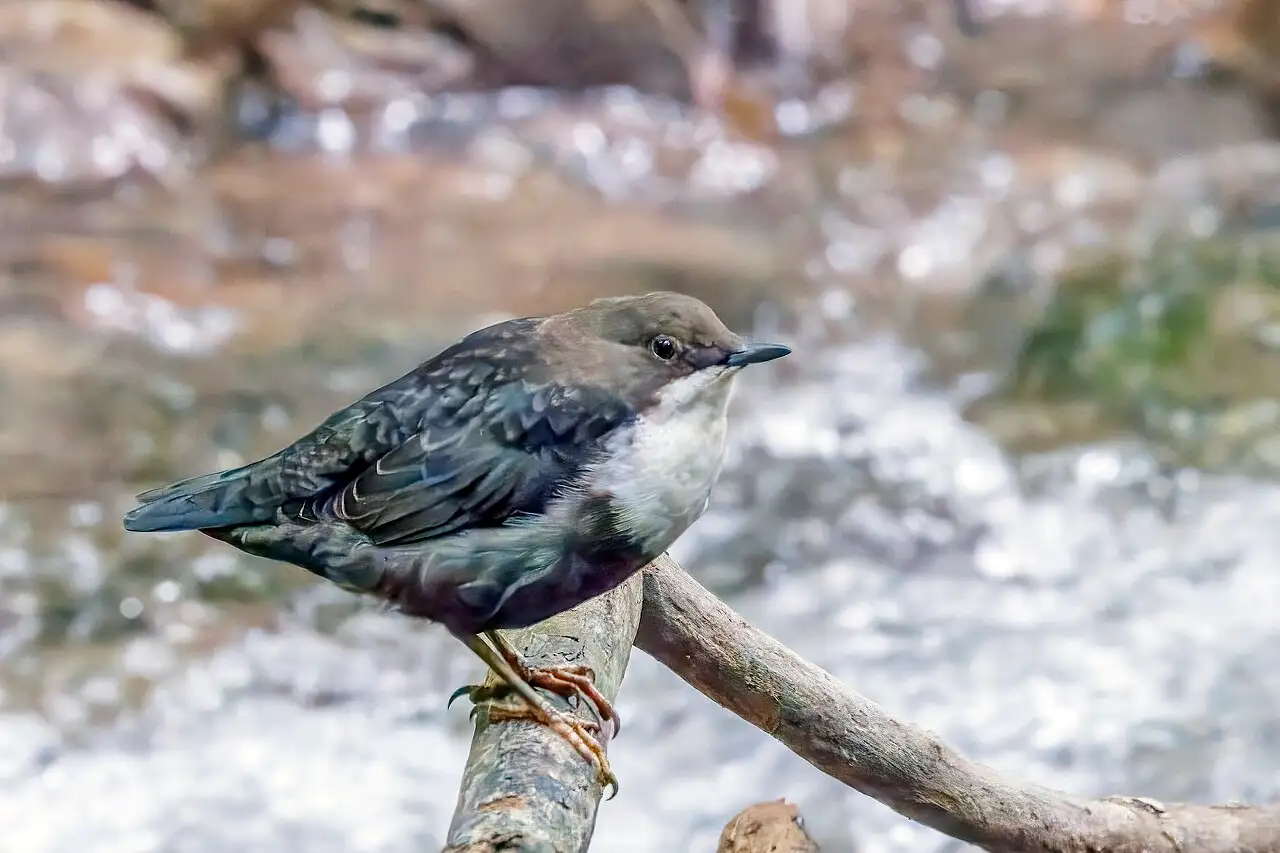
Young White-throated Dipper perched on a branch above the water, with scaly-looking plumage and poorly defined bibPhoto: Charles J. Sharp, CC BY-SA 4.0Photo 2 of 4
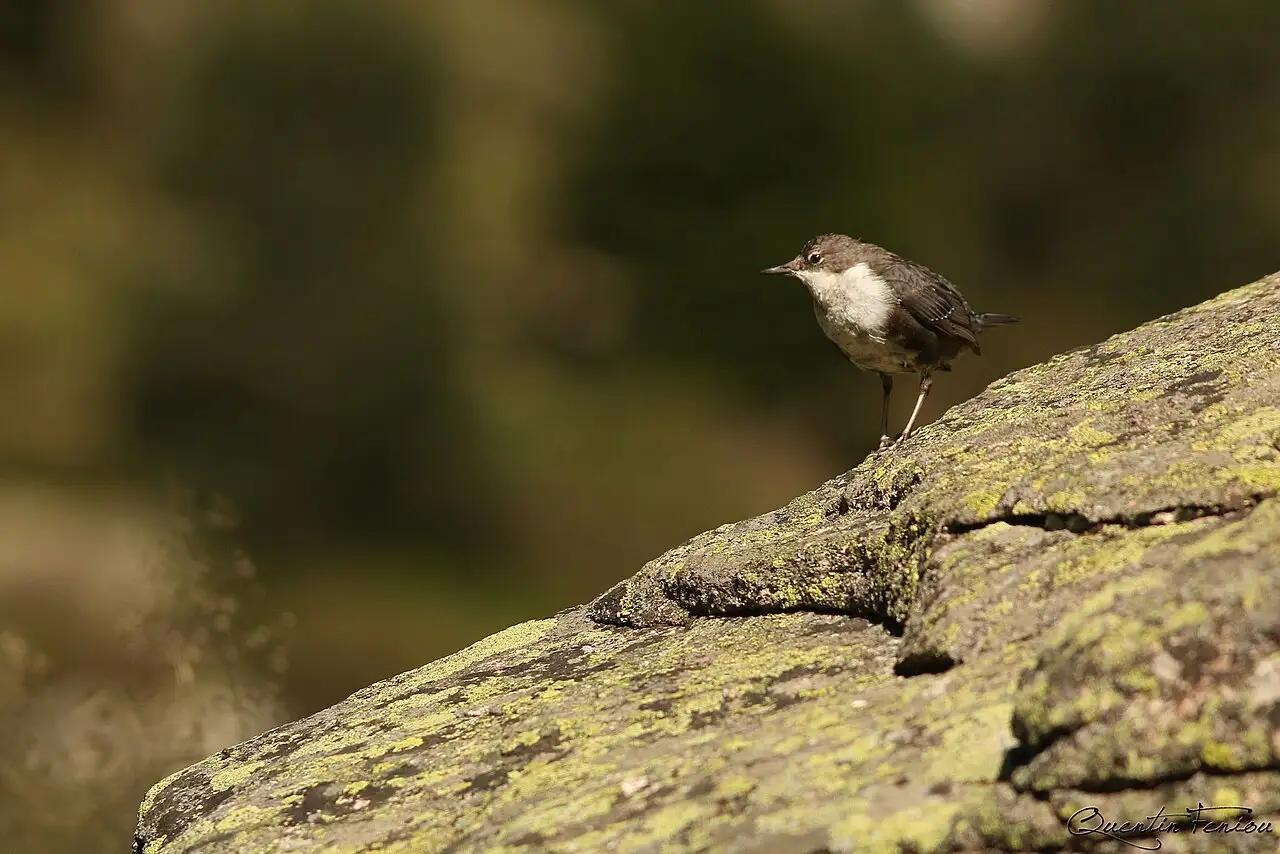
White-throated Dipper in profile on a lichen-covered rock, in the PyreneesPhoto: Frizz64600, CC BY-SA 4.0Photo 3 of 4
White-throated Dipper perched on a fallen branch beside a stream of waterPhoto: Ivan Medenica, CC BY-SA 4.0Photo 4 of 4
1 / 4
Identification of the White-throated Dipper
It is a medium-sized passerine, with a short tail and rather small wings, and a stocky, compact body that gives it a characteristic look. Very dark brown tones, almost black, dominate its plumage on the back, giving way to chocolate tones on the head, neck and belly. It wears a striking white bib that extends to the breast. The legs are short and robust and the bill is thin, dagger-shaped.
The young bird has greyish colours in the plumage, with a scaly look. Unlike adults, it has a white eye-ring, and its bib, much less defined and extensive, is a dirty cream colour.
Nervous by nature, it flies fast over the water surface and moves with ease among the stones of the river before launching itself into a dive. When perched it usually seems restless, with a constant movement in which it raises its tail and makes continual flexions of its legs.
Adult
Back very dark brown, almost black.
Head, neck and belly chocolate-coloured, with a white bib reaching the breast.
Young bird
Greyish plumage, scaly-looking, with a white eye-ring.
Bib less defined, dirty cream.
Habitat and distribution of the White-throated Dipper
It is distributed across much of the Palearctic, where 14 subspecies are recorded. It is present in the British Isles, Scandinavia and areas of the Caucasus and the Urals. In central and southern Europe, as well as North Africa, it is relegated to mountain areas. In Asia it is detected from the Himalayas to eastern China.
In Spain two subspecies have been described: «cinclus», in the north-west and north of the Peninsula, and «aquaticus», in the east and south. It appears across the whole Cantabrian region, the Pyrenees and Galicia, as well as the Central System and the Iberian System, where its distribution is more fragmentary. In the south of the Peninsula it becomes even rarer, with isolated populations in the Montes de Toledo, Las Villuercas, Sierra Morena, Sierra Nevada, Cazorla and the ranges of Málaga and Cádiz. It is absent from the Canaries, the Balearics and Melilla, and may have become extinct in Ceuta.
It is restricted to good-quality and, in general, little-altered watercourses. The potential habitat in our country is made up of mid- or high-mountain rivers, with average slopes of between 2 % and 15 % and shallow depth, allowing stones to emerge in the channel, and good water quality so that there are rich populations of aquatic invertebrates. It seems to prefer rivers in limestone areas. The channel should be as natural as possible, although it tolerates moderate pressure from passers-by and human activities.
It is a resident species throughout its range, and restricts its movements to altitudinal movements within the basin of the rivers where it lives, more marked in northern Europe. The dispersive movements of young birds are somewhat wider, although little information is available.
Areas where it is regularly recorded since 2010Squares of about 25 km where it is recorded regularly (occasional passage records are left out). Data from GBIF.org (28,433 records, retrieved October 2026); outline from Natural Earth.
Etymology of the White-throated Dipper
In other languages it is called «merla d’aigua» in Catalan, «merlo rieiro europeo» in Galician, «ur-zozoa» in Basque and «white-throated dipper» in English1. Two subspecies have been described on the Peninsula, «cinclus» and «aquaticus».
Population of the White-throated Dipper
In the 2021 European Red List of Birds, the European breeding population is estimated at between 222,000 and 547,000 mature individuals, with a decreasing trend. Estimates for the whole Spanish population are some 6,200–8,000 pairs, although they are not recent. In past decades, the number of Iberian birds seemed to have fallen generally because of the physical deterioration of many rivers and their waters, but exact trends cannot be established for lack of data.
It is a bird very sensitive to habitat alteration: the growing deterioration of rivers and streams is directly related to its lower presence or abundance. The degradation of basins, pollution and the acidification of waters are responsible for the disappearance of the invertebrates that serve it as food, while the regulation of rivers with dams, canals and water intakes reduces its optimal habitat. In addition, the continual presence of walkers, anglers or hikers on the banks where it breeds can cause the loss of clutches.
Nest of the White-throated Dipper
Both members of the pair build a well-finished spherical nest, based on moss and grass, which they hide in hollows and other crevices among rocks, under trunks or in bridges, banks and cascades on the river margins. They also accept nest boxes readily.
Courtship and breeding of the White-throated Dipper
The breeding period begins in mid-March or April. To court the female, the male performs a graceful little dance, spreading his wings away from his body in front of her and shaking them nervously. The clutch consists of between four and six white, unspotted eggs, which take an average of 16 days to hatch. Incubation falls to the female, although brief relief shifts by the male have been detected when his mate is away. The chicks are fed by both parents for a period of 18 to 22 days, after which they leave the nest. There is usually a second clutch.
Diet of the White-throated Dipper
It is a specialist in eating aquatic invertebrates, in particular mayfly larvae, stoneflies, dragonflies, water beetles and caddisflies, although it also eats other insects, molluscs and small crustaceans. To catch them it searches very actively, either diving or half-submerged, under pebbles and among the algal mat. It makes frequent dives of a few seconds, between 5 and 10 per minute, and rarely more than 11.
Curious facts about the White-throated Dipper
It is a bird tied as few are to the good environmental state of its surroundings: it depends absolutely on well-preserved watercourses and, because of that, its numbers are falling alarmingly across almost all of its range. The longest-lived ringed bird, checked in Finland, reached 10 years and 8 months.
The White-throated Dipper in Cabañeros
This website’s page on the rivers of Cabañeros cites it among the «usual prowlers» of the stones sticking out of the water, together with the Grey Wagtail. In the south of the Peninsula its populations are isolated and occur in the Montes de Toledo1.
Where to see the White-throated Dipper in Cabañeros
On the rivers of Cabañeros, on the stones that stick out of the water.
When
All year: it is resident.
What time
In good light, going along the channel with binoculars.
Where
On rivers and streams of clean, little-altered water, with stones emerging from the current.
What to look for
Look for a dark bird with a white bib, which raises its tail and flexes its legs on a stone; if there are walkers, it is best to watch it from a distance, so as not to harm its breeding.
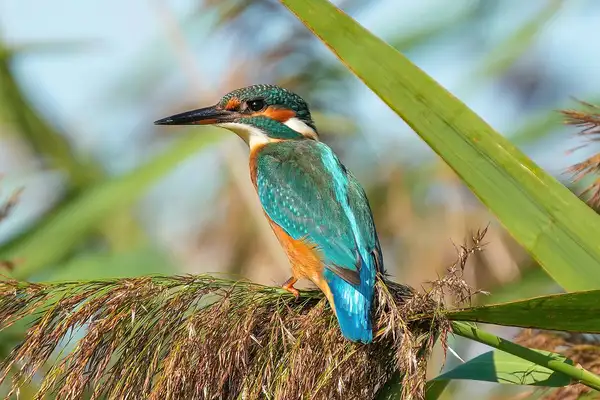
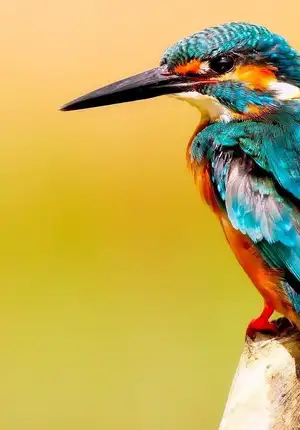
It is not clearly similar1. It does not look like the dipper, but shares the rivers of Cabañeros with it: the park’s rivers page cites the Common Kingfisher in autumn and winter.
Photo: Giles Laurent, CC BY-SA 4.0
Other birds
Birds related to the White-throated Dipper or sharing its habitats in Cabañeros.




 Also in rivers and riverbanks
 Also in rivers and riverbanks
 Also in rivers and riverbanks
 Also in rivers and riverbanks
 Also in rivers and riverbanks
 Same order
 Same order
 Same order






