It can make two clutches a year and, occasionally, three; both parents take part in the nest and in rearing
Lifespan
Record of 13 years in the wild (a bird ringed in Spain)
Conservation status
LC
NT
VU
EN
CR
EW
EX
Global (IUCN)
Least Concern
Spain
Least Concern (LC) in the Red Book of the Birds of Spain; included in the List of Wild Species under Special Protection and not in the Spanish Catalogue of Threatened Species
When to see it
Resident
Months of the year when it is present
J
F
M
A
M
J
J
A
S
O
N
D
In Iberia
yes
yes
yes
yes
yes
yes
yes
yes
yes
yes
yes
yes
Breeding season
no
no
yes
yes
yes
yes
yes
no
no
no
no
no
Song or voice of the Sardinian Warbler
Very loud, the song is made up of a succession of short, rattling, fast phrases, with harsh, strident notes. The call, a repetitive «tre-tre-tre, tra-tra-tra», is very characteristic. The recording is from the countryside of Jaén.
SongSardinian Warbler
0:00 / 0:28
10 kHz5
The sonogram draws the sound: time runs from left to right, and the higher a trace sits, the higher the note.Recording by Tanguy Loïs, Wikimedia Commons (CC BY-SA 4.0).
Flight of the Sardinian Warbler
It moves among the shrubs of the Mediterranean scrub in short flights. Both sexes have white outer tail feathers.
Flight typeShort flights between shrubs, with the long tail
It leaves the rockrose or mastic with a repetitive «tre-tre-tre», «tra-tra-tra», very characteristic.
Short flight among the shrubs, with the long, dark tail showing the white outer feathers.
It lands on top of a shrub and sings short, quick, rattling phrases, with harsh, strident notes.
Photo gallery of the Sardinian Warbler
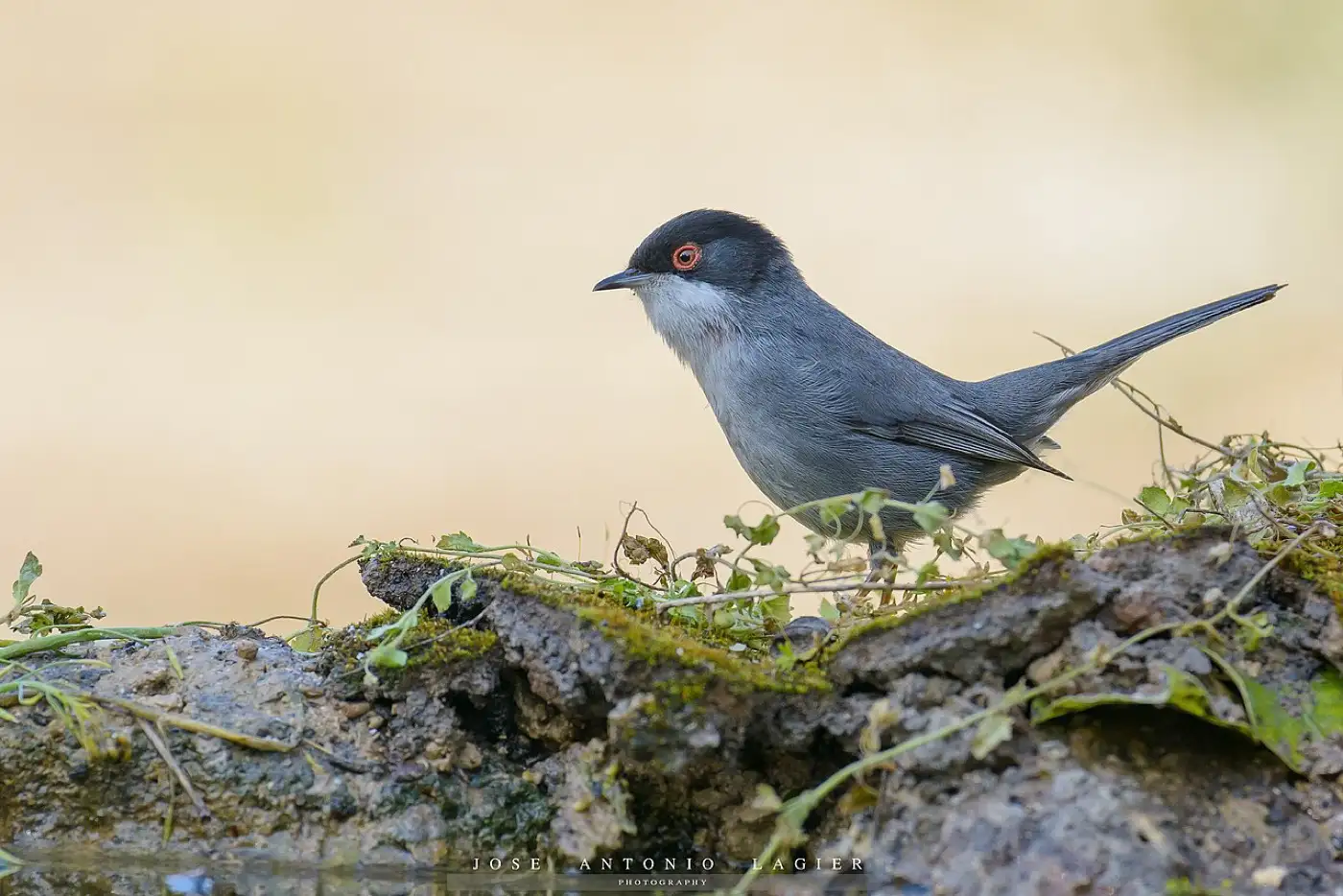
Male Sardinian Warbler in profile on moss, with black cap, red eye-ring and long tail raisedPhoto: José Antonio Lagier Martin, CC BY 3.0Photo 1 of 4
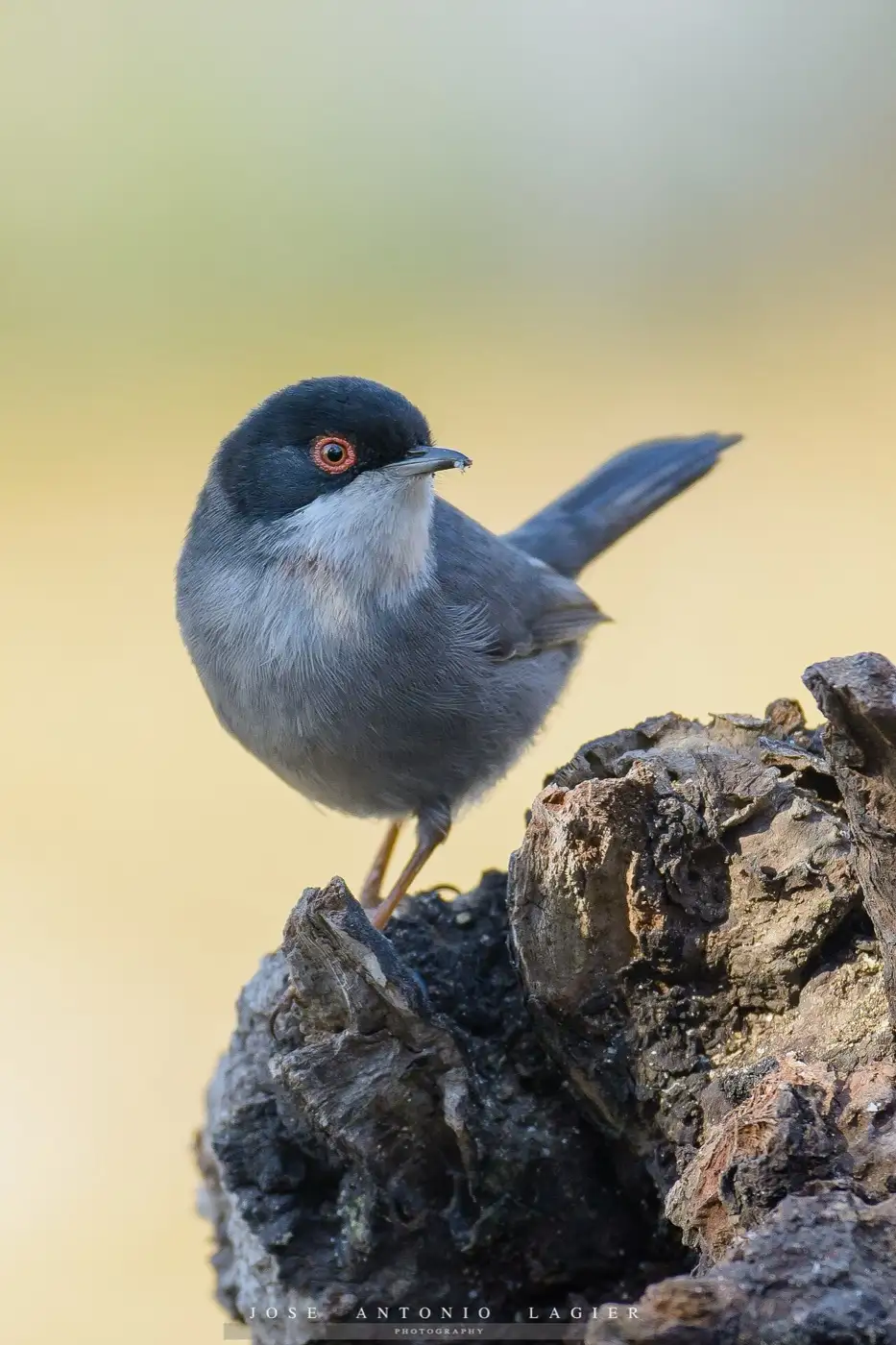
Male Sardinian Warbler on a rock, three-quarter view, with the black cap reaching below the eye and the white throatPhoto: José Antonio Lagier Martin, CC BY 3.0Photo 2 of 4
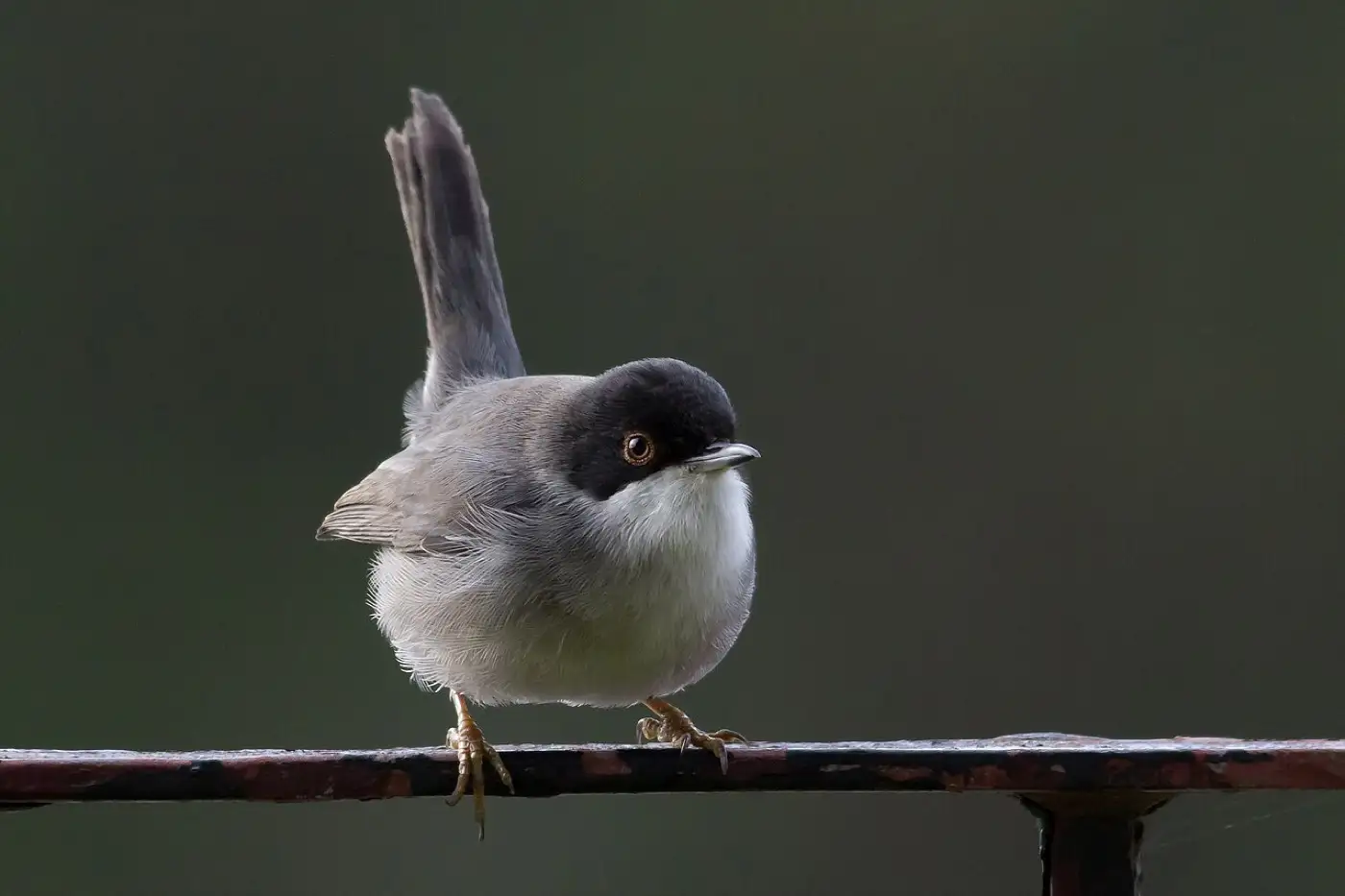
Male Sardinian Warbler from the front on a bar, with black cap, red eye-ring and whitish breastPhoto: Daniela, CC BY-SA 2.0Photo 3 of 4
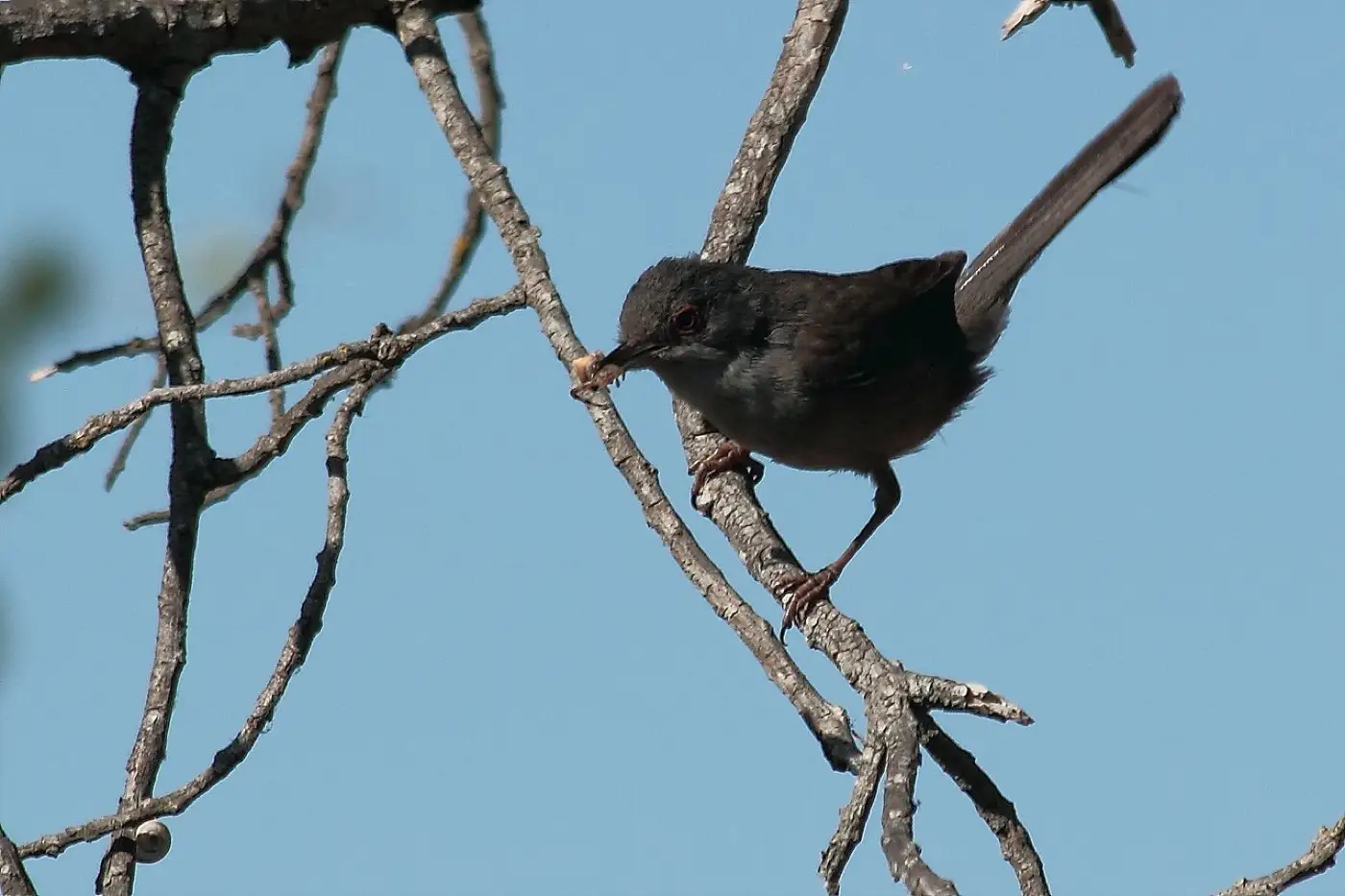
The Sardinian Warbler is a bird with a dark cap, which reaches below the eye. Males have greyish upperparts, which contrast with the paler underparts, and a black head, on which the red eye-ring and the white throat stand out. Females are browner on the back, with pale brown underparts and a greyish head.
Both sexes have a reddish eye-ring, pale legs (orange in males) and white outer tail feathers.
Browner back, pale brown underparts and greyish head.
Habitat and distribution of the Sardinian Warbler
As a breeder it is distributed across all the circum-Mediterranean countries: southern Europe from the Iberian Peninsula to Turkey and the Near East, and north-west Africa from Morocco to Libya. Several subspecies have been described. It is now named «Curruca melanocephala», because the genus Sylvia has been split1.
In Spain it is widely distributed across the southern half of the Peninsula, the Balearics, the Canaries, Ceuta and Melilla; it also penetrates up the Ebro valley to the Basque Country and the north-east of Castilla y León, and there is a discontinuous population along the Cantabrian coast and the Atlantic coasts of Galicia. It is absent or very scarce on the northern plateau, the Cantabrian range, the Pyrenees, the Iberian System and Asturias. On the Peninsula and the Balearics the subspecies «melanocephala» lives, and in the Canaries the subspecies «leucogastra».
It occupies the warmest, driest sectors, with the highest densities in medium-sized Mediterranean scrub (rockrose scrub, wild olive groves, mastic thickets, kermes oak thickets). It is also found in dehesas, pine woods and riverside woods with dense shrubby undergrowth, as well as in hedges and gardens.
Most Iberian populations are sedentary. Movements in winter towards localities in the south of the Peninsula and North Africa have been described, which may involve dispersing young birds, although their extent is unknown. In the south of Spain and in the Balearics numbers rise between September and November, owing to the post-breeding movement of young birds.
Areas where it is regularly recorded since 2010Squares of about 25 km where it is recorded regularly (occasional passage records are left out). Data from GBIF.org (679,342 records, retrieved October 2026); outline from Natural Earth.
Etymology of the Sardinian Warbler
«Melanocephala» comes from ancient Greek «mélas», «black», and «kephalé», «head»: the black-headed one, which is also the sense of the Spanish name. «Sylvia» comes from modern Latin «silvia», a woodland sprite, from «silva», «wood».
Population of the Sardinian Warbler
In the 2021 European Red List of Birds the European breeding population is estimated at between 15,400,000 and 32,100,000 mature individuals, with a stable trend. The Spanish population is currently close to eight million birds. The abandonment of the countryside and the resulting increase in scrub areas favour its spread, and it has consolidated its numbers in recently colonised areas: the demographic trend indicates moderate growth, perhaps also because of the effect of fires. It is very sensitive to cold spells, which could affect its distribution in the following springs. It is not a threatened species in Spain.
Nest of the Sardinian Warbler
Both parents take part in building the nest, a small cup of leaves and twigs, lined with dry leaves, hair and feathers, and set in the thicket of a small shrub.
Courtship and breeding of the Sardinian Warbler
The breeding season runs from March to July, with the possibility of two clutches a year and, occasionally, three. The clutch consists of three to six eggs, brown to pinkish and finely speckled, which both sexes incubate for 13 days. The chicks, which both parents care for and feed for 12 or 13 days, become independent two or three weeks later.
Diet of the Sardinian Warbler
It feeds mainly on insects, although in autumn and winter it eats a lot of fruit, above all of Mediterranean shrubs such as wild olive and mastic.
Curious facts about the Sardinian Warbler
It is expanding, perhaps because it benefits from the abandonment of the countryside and the invasion of scrub. In the Canaries a different subspecies lives. It is one of the three species of warblers that, in Cabañeros, make up most of the bird community of the scrub.
The Sardinian Warbler in Cabañeros
This website’s page on scrublands cites it as one of the three species of warblers, together with the Dartford Warbler and the Spectacled Warbler, that make up 80 % of the scrub bird community in Cabañeros.
Where to see the Sardinian Warbler in Cabañeros
In the scrublands of Cabañeros, among rockroses and mastic.
When
All year round: it is mostly sedentary.
What time
Throughout the day, singing from the tops of shrubs.
Where
In Mediterranean scrub (rockrose scrub, wild olive groves, mastic thickets, kermes oak thickets), dehesas, pine woods and rivers with undergrowth.
What to look for
A black cap with a red eye, which is heard before it is seen.
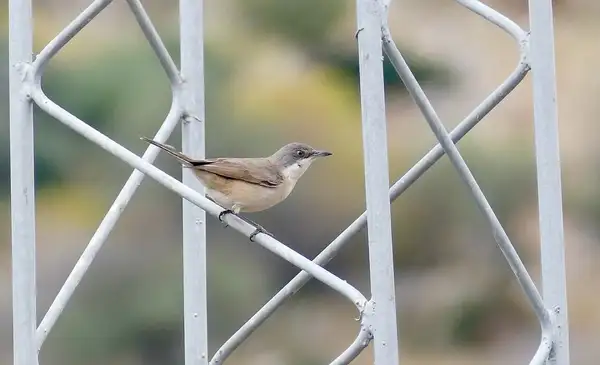
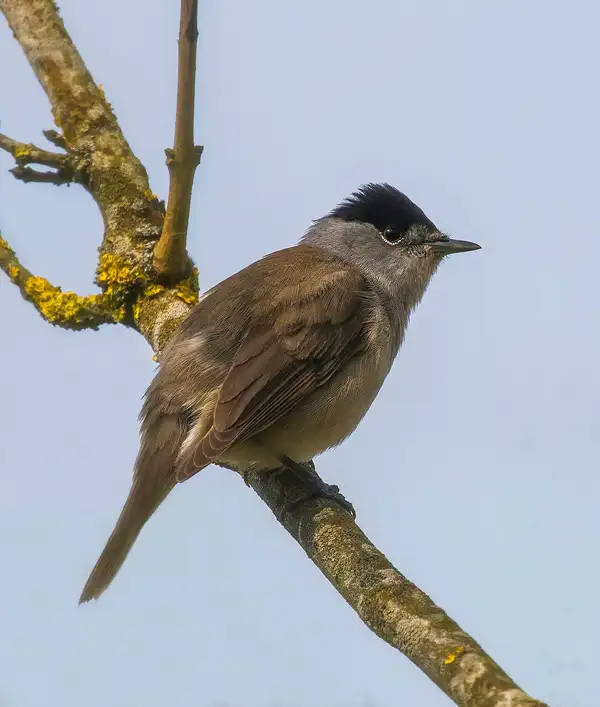
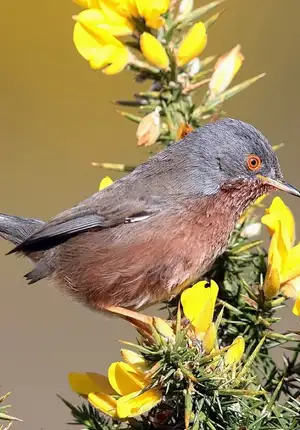
They are similar in appearance1. It is the largest and stockiest of our warblers, with greyish upperparts, a robust bill, pale yellow iris and white throat; the male has a dark band like an eye-mask.



 Same family
 Same family
 Same family
 Same family
 Also in scrubland
 Also in scrubland
 Also in scrubland
 Also in scrubland






