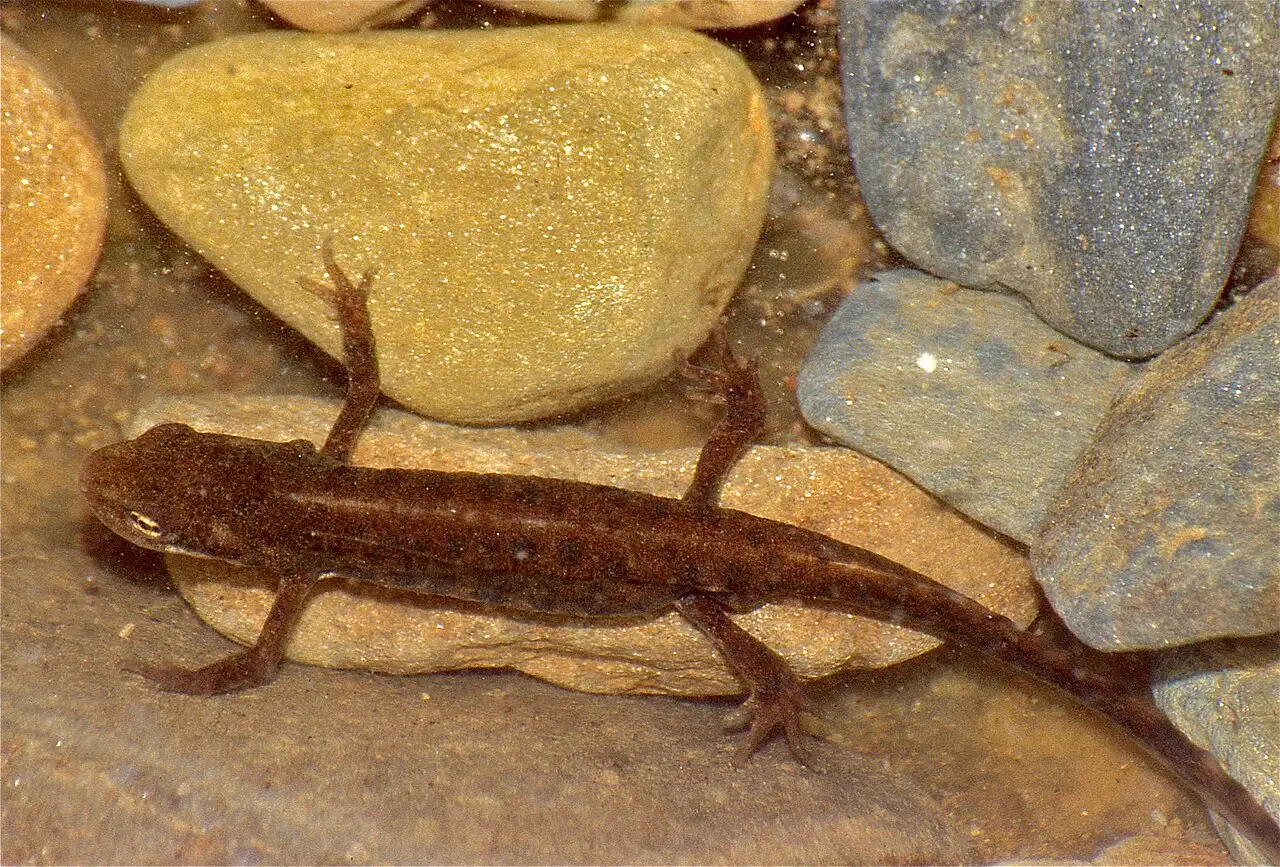
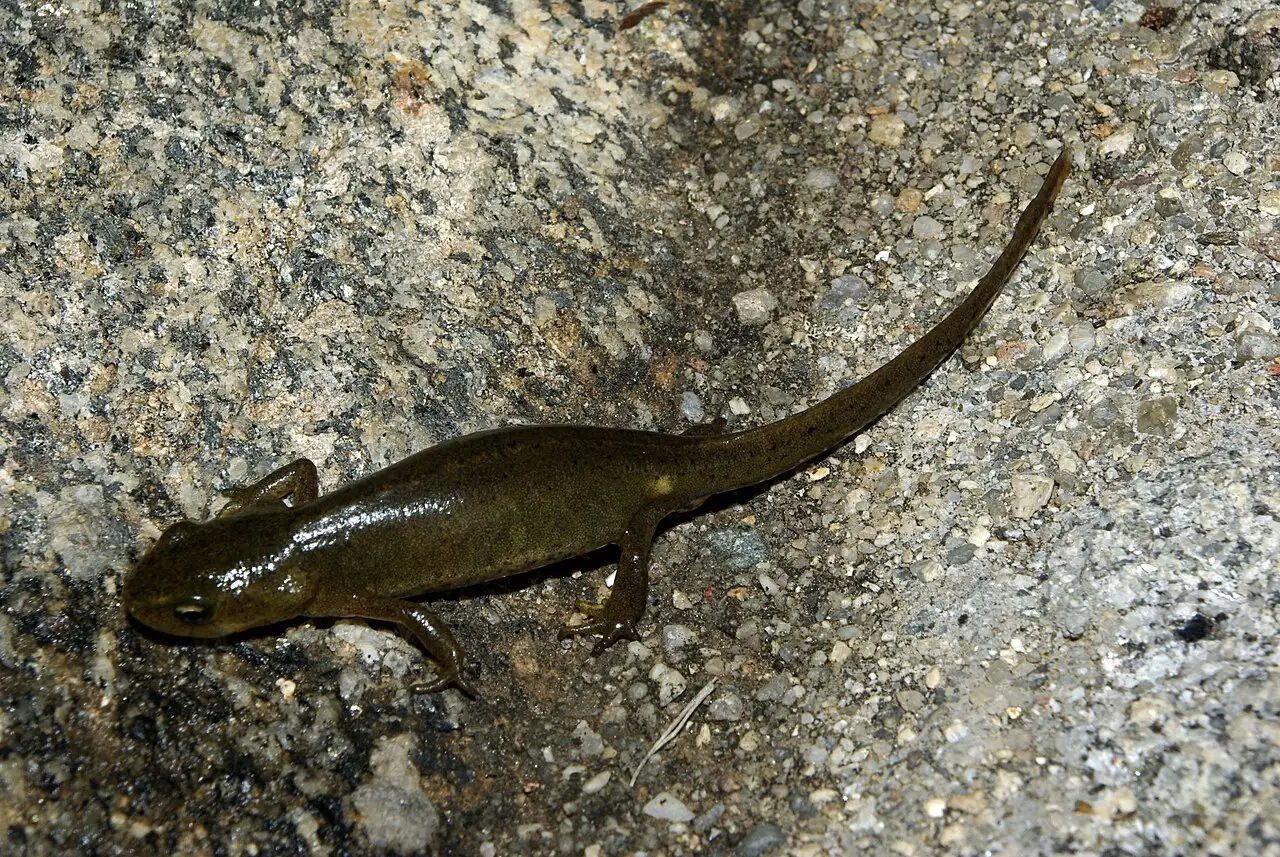
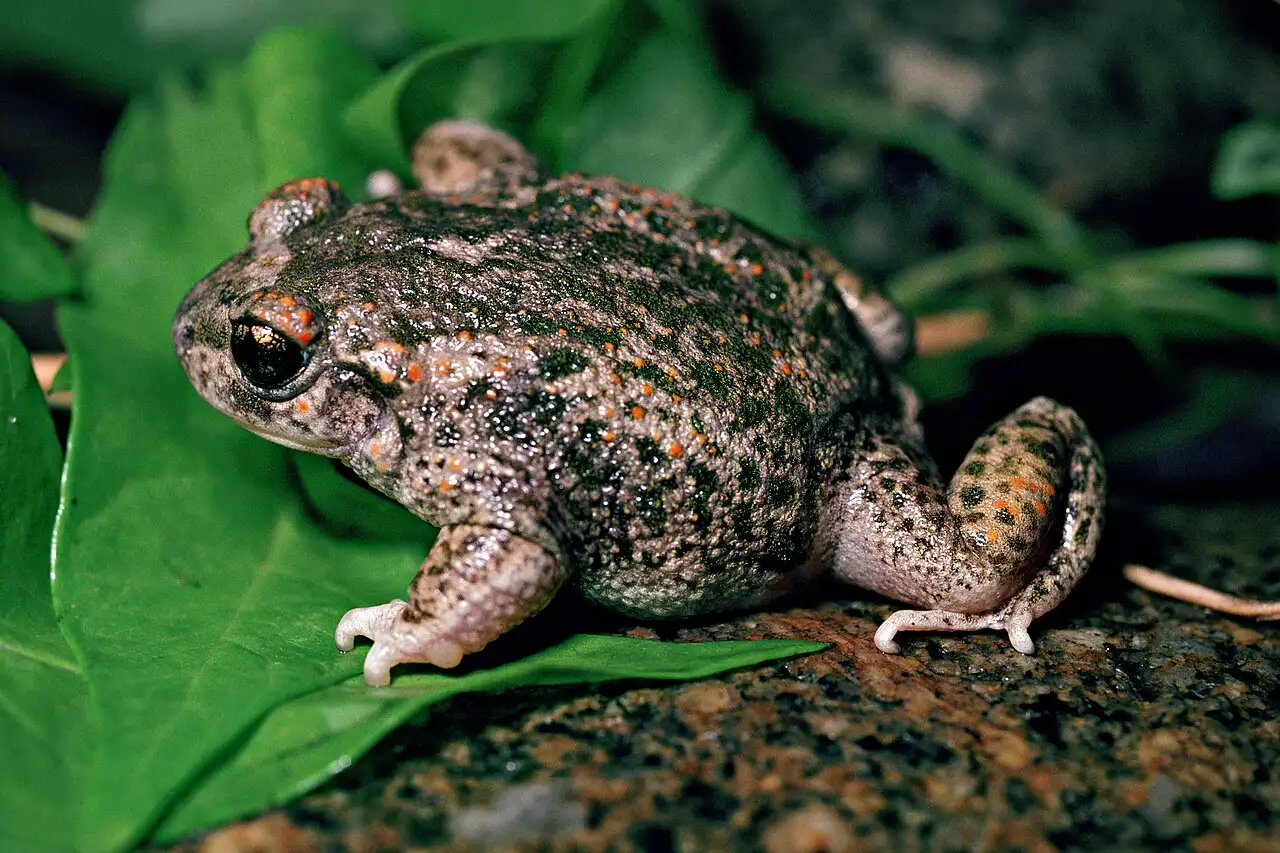
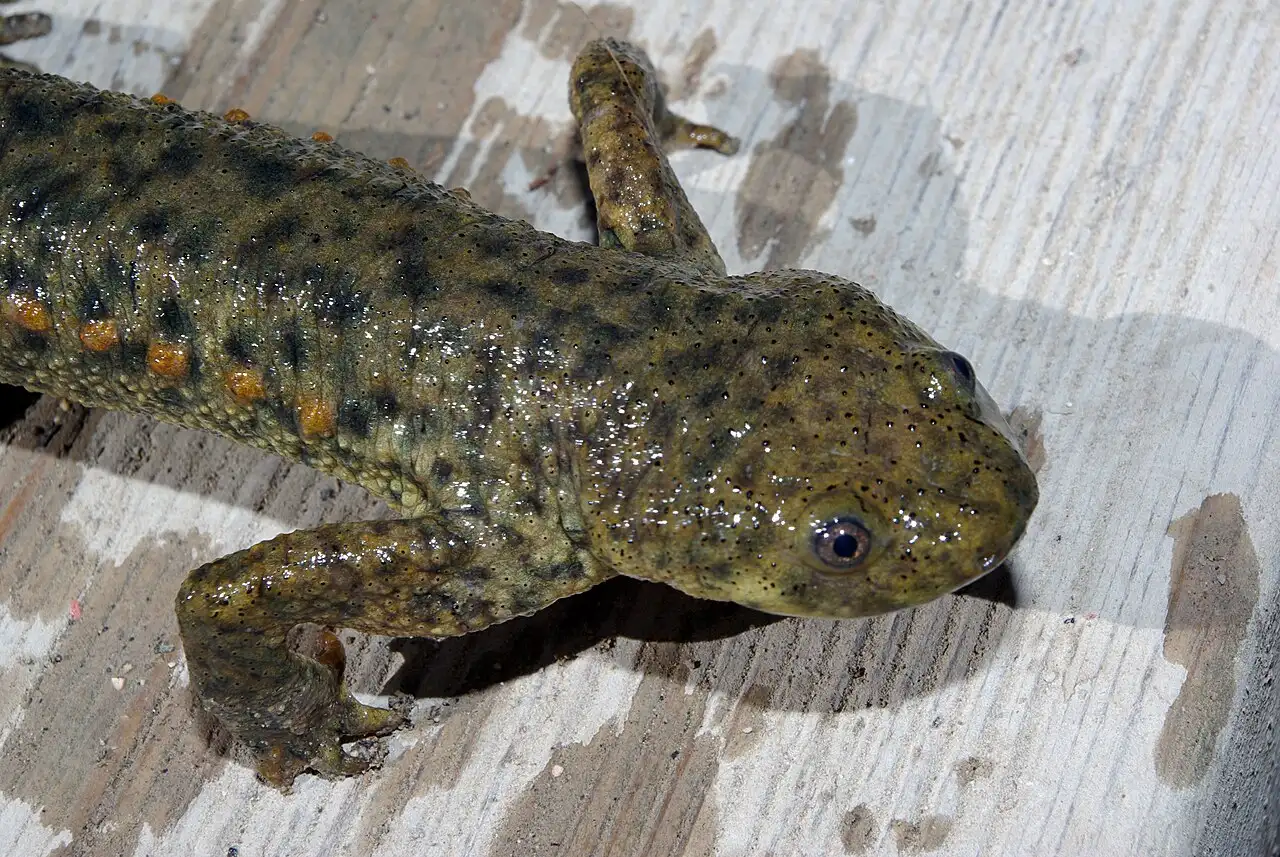
It is a small urodele, up to 9.7 centimetres, endemic to the peninsula. In the face of danger it arches its body, raises its tail and head and shows its orange belly.
Habitat and distribution of Bosca’s Newt
Ponds, streams and springs with vegetation, in a Mediterranean or Atlantic climate.
Areas where it is regularly recorded since 2010Squares of about 25 km where it is recorded regularly (occasional records are left out). Data from GBIF.org (3,378 records, retrieved October 2026); outline from Natural Earth.
Breeding of Bosca’s Newt
The larvae are seen from February to June, and the first complete their metamorphosis in May.
Diet of Bosca’s Newt
In the water, adults eat aquatic invertebrates, above all dipteran larvae; the larvae, planktonic crustaceans.
Bosca’s Newt in Cabañeros
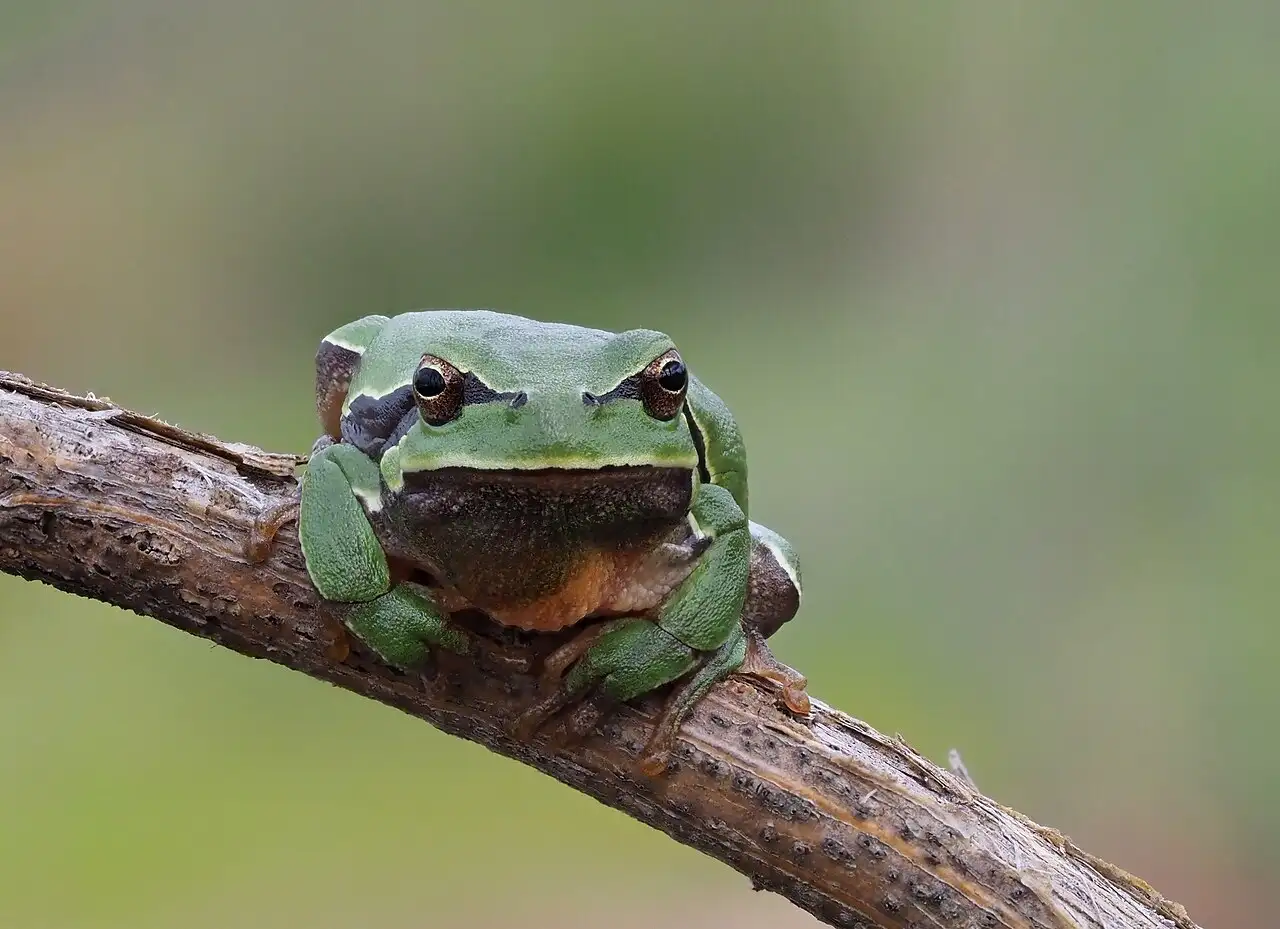
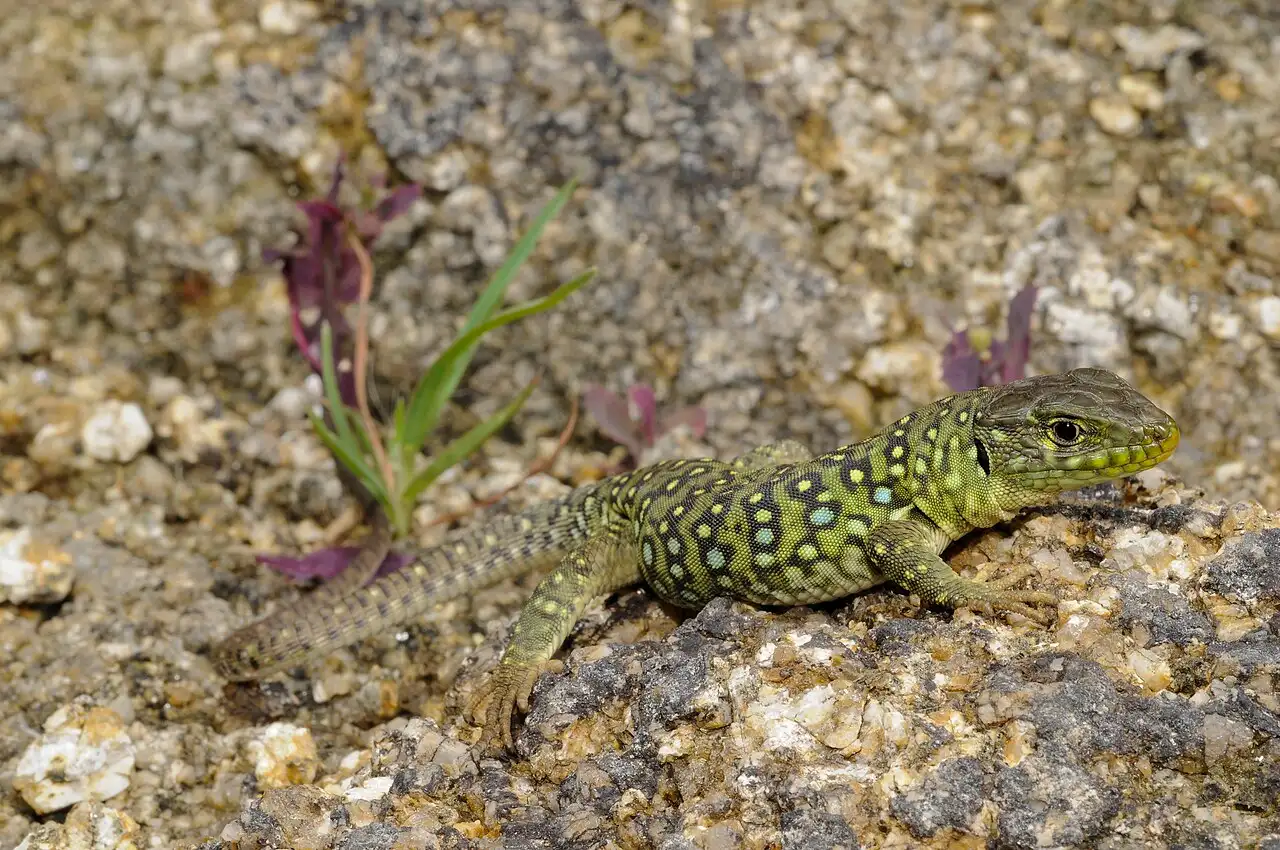
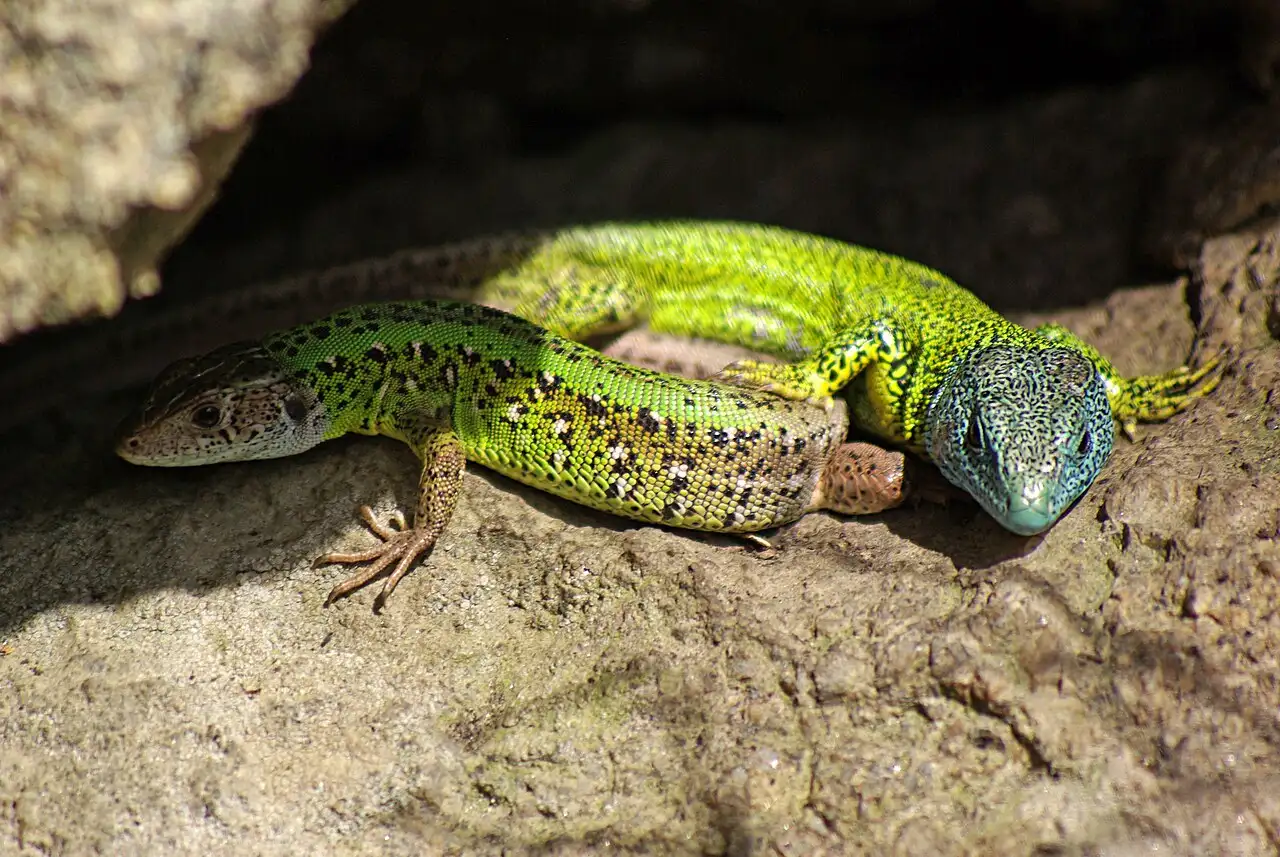
The guide cites it in the Laguna de los Cuatro Morros, together with the Sharp-ribbed Newt, the Southern Marbled Newt and the Iberian Tree Frog. The website places it near water in areas of very well developed vegetation and in the streams of the north, where it is easy to find alongside Schreiber’s Green Lizard.
Can it be seen in Cabañeros?
In spring, in ponds and streams with vegetation. Look without touching: amphibians are protected.
Díaz-Paniagua, C. (2014). Tritón ibérico – Lissotriton boscai. En: Salvador, A. y Marco, A. (eds.), Enciclopedia Virtual de los Vertebrados Españoles. Museo Nacional de Ciencias Naturales (CSIC). vertebradosibericos.org
OAPN (2011). Guía de visita del Parque Nacional de Cabañeros. PDF
Real Decreto 139/2011, Listado de Especies Silvestres en Régimen de Protección Especial y Catálogo Español de Especies Amenazadas. BOE