Mainly medium and large beetles; other invertebrates
Social life
Solitary
Conservation status
LC
NT
VU
EN
CR
EW
EX
Global (IUCN)
Near Threatened
Spain
On the List of Wild Species under Special Protection (Spain)
When to see it
Reptile · in Cabañeros
Very abundant and spread all over the park, according to the guide and the website.
Months of the yearly cycle
J
F
M
A
M
J
J
A
S
O
N
D
Breeding
no
no
no
yes
yes
no
no
no
no
no
no
no
Hatching
no
no
no
no
no
no
no
yes
yes
yes
no
no
Laying
no
no
no
no
no
yes
no
no
no
no
no
no
Photos of the Ocellated Lizard
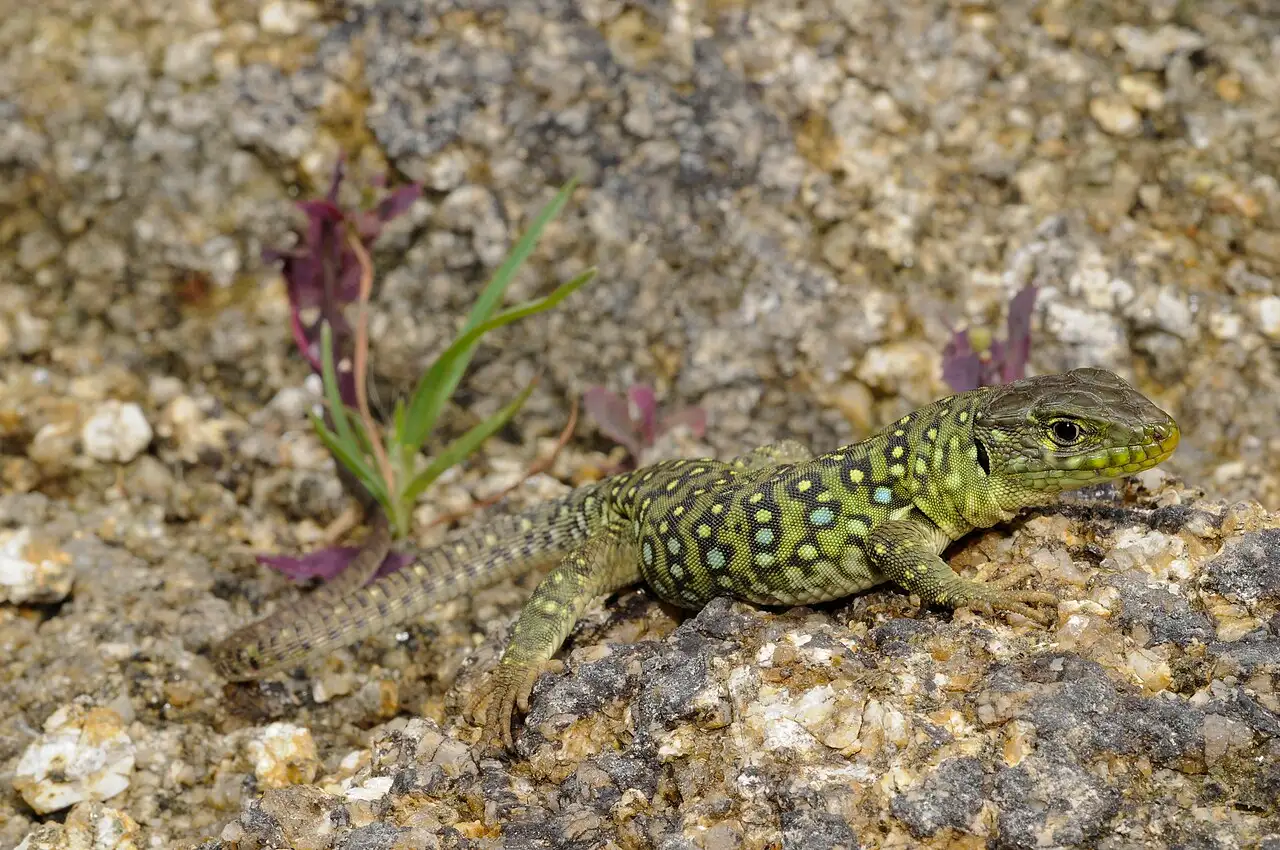
A young Ocellated Lizard, its back speckled with pale eyespotsPhoto: Benny Trapp, CC BY 3.0Photo 1 of 2
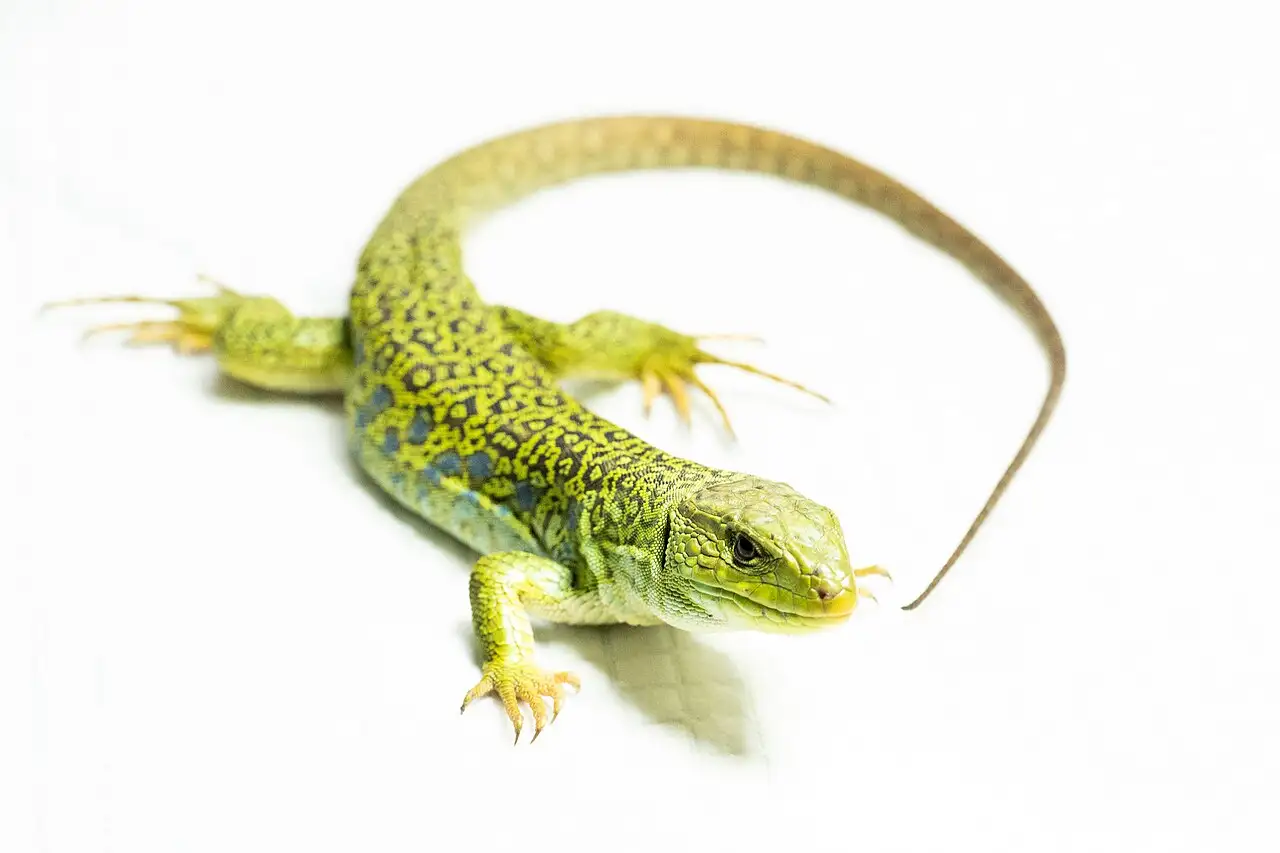
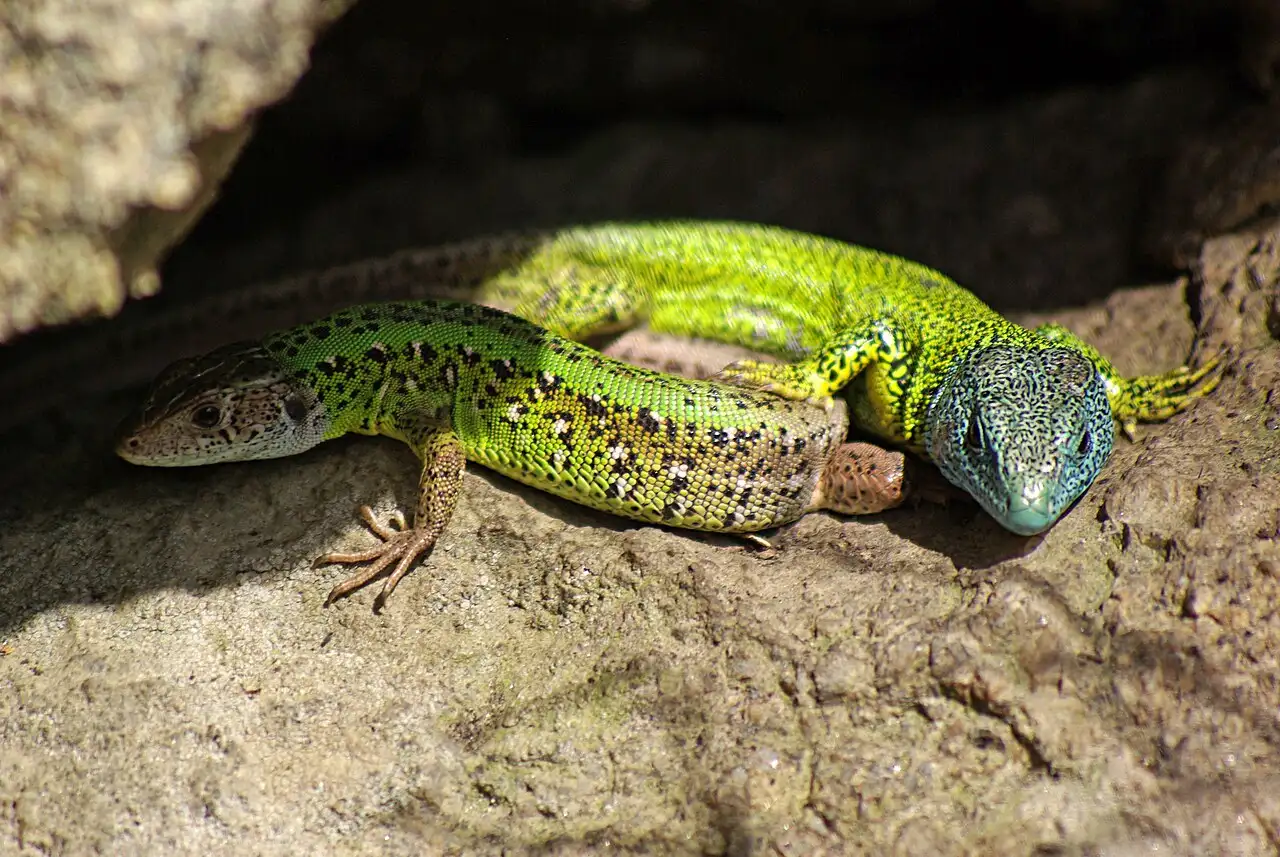
Adult Ocellated Lizard, green with a black network and blue eyespots on the sidesPhoto: Bernatburriel, CC0Photo 2 of 2
1 / 2
Identification of the Ocellated Lizard
It is the largest lizard of the peninsula. Adults have the back covered in yellow and black scales that can form eyespots, and blue spots on the sides; the young are greenish with pale eyespots.
Habitat and distribution of the Ocellated Lizard
Clearings in the Mediterranean woodland, track edges, stony ground and farmland.
Areas where it is regularly recorded since 2010Squares of about 25 km where it is recorded regularly (occasional records are left out). Data from GBIF.org (9,027 records, retrieved October 2026); outline from Natural Earth.
Breeding of the Ocellated Lizard
Courtship begins around April, mating in the second half of May and laying in the first half of June: one clutch a year, of 7 to 25 eggs depending on the size of the female. The young hatch between the end of August and early October.
Diet of the Ocellated Lizard
It actively looks for its prey and chooses by size: mainly medium and large beetles.
The Ocellated Lizard in Cabañeros
The guide gives it as spread all over the park, and the website describes it as very abundant: it is seen in open country, beside heaps of stones, in half-ruined buildings or in the hollows of old trees where it shelters. Because of its size, it is prey for many carnivores and raptors.
Where to see the Ocellated Lizard in Cabañeros
When
From spring to autumn.
What time
In the mild hours; in summer, first thing.
Where
Track edges, stony ground, ruins and old trees, all over the park.
What to look for
A big green lizard that runs to hide among the stones.
Mateo, J. A. (2017). Lagarto ocelado – Timon lepidus. En: Salvador, A. y Marco, A. (eds.), Enciclopedia Virtual de los Vertebrados Españoles. Museo Nacional de Ciencias Naturales (CSIC). vertebradosibericos.org
OAPN (2011). Guía de visita del Parque Nacional de Cabañeros. PDF
Real Decreto 139/2011, Listado de Especies Silvestres en Régimen de Protección Especial y Catálogo Español de Especies Amenazadas. BOE