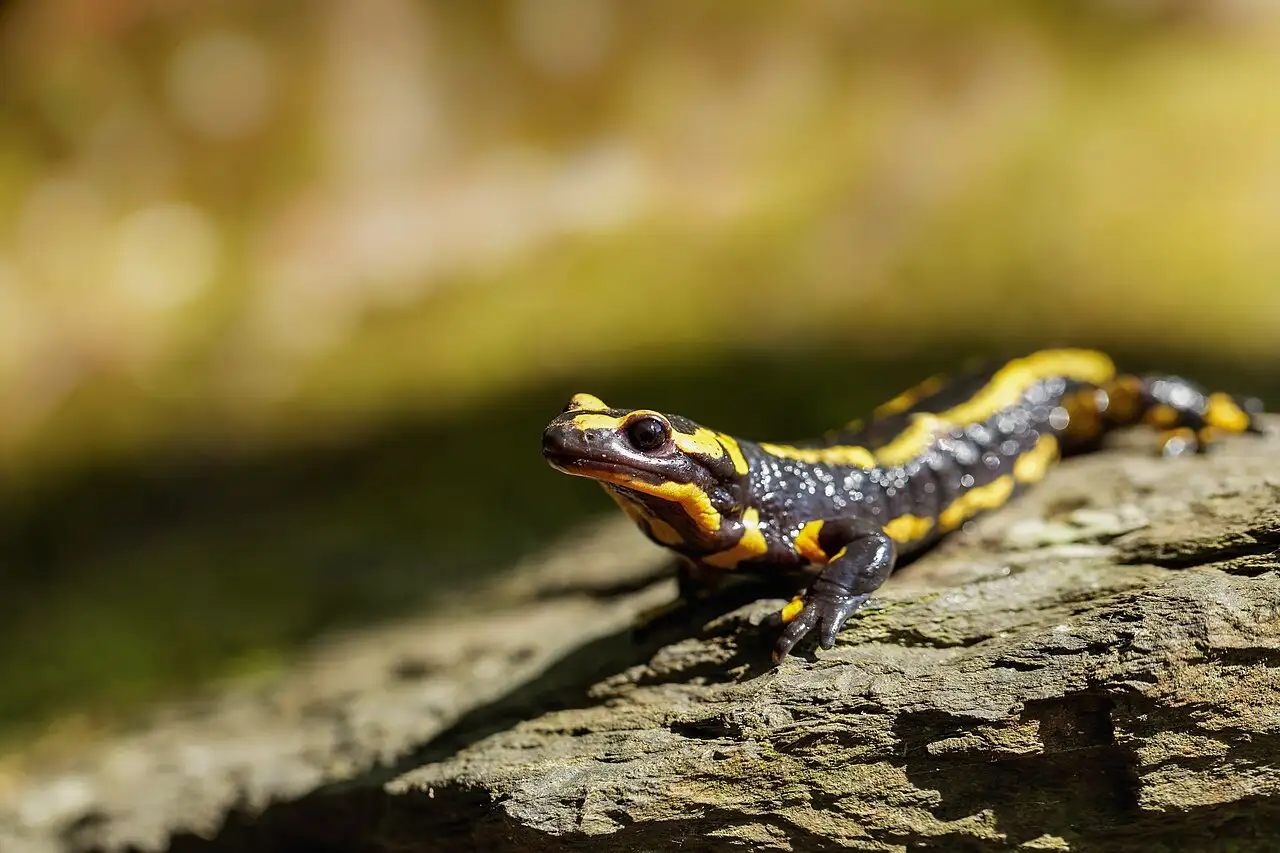
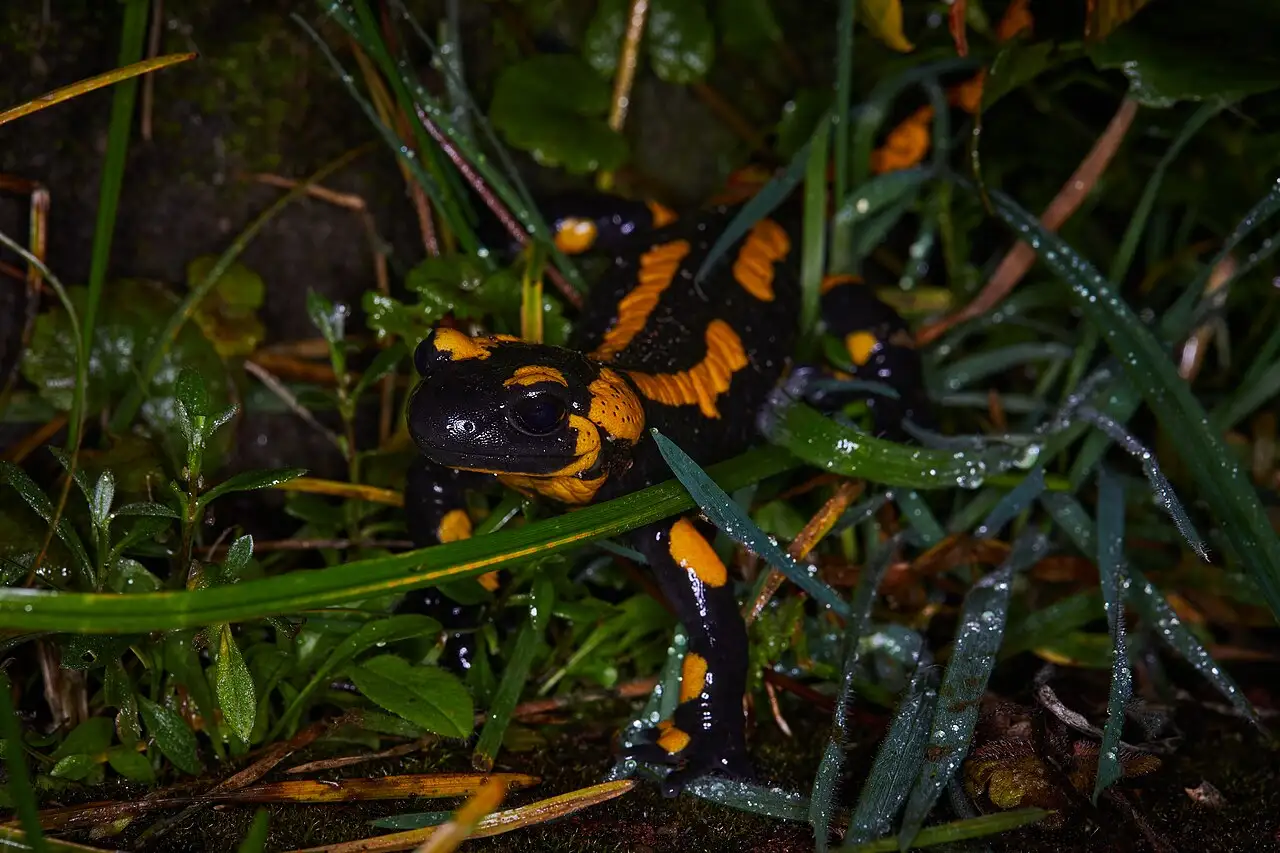
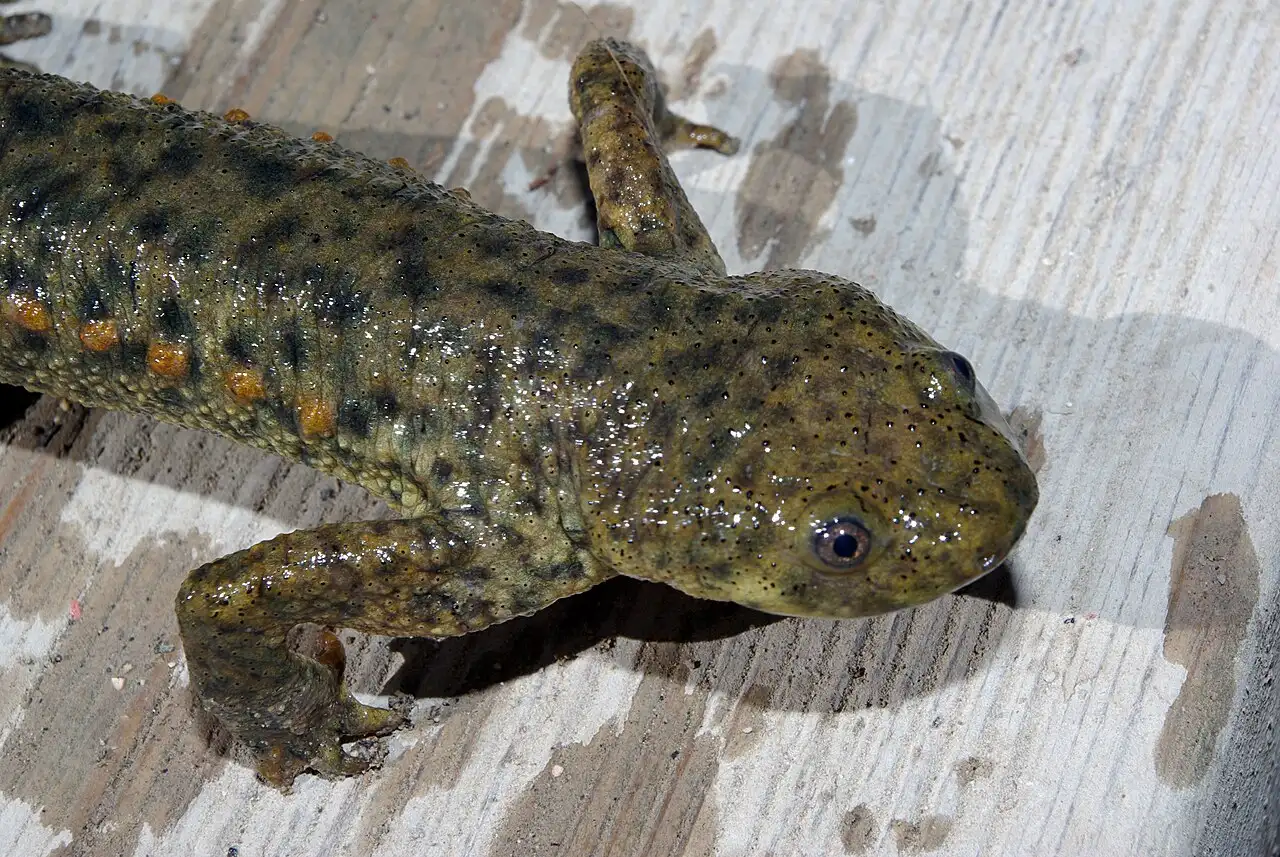
It is a robust urodele that does not usually exceed 20 centimetres, although in some populations it reaches 25. Its warning colouring, black and yellow, warns of the toxic secretions of its skin: it should not be touched.
Habitat and distribution of the Fire Salamander
Woods and scrub with a lot of moisture and water nearby, streams or ponds, where it releases the larvae.
Areas where it is regularly recorded since 2010Squares of about 25 km where it is recorded regularly (occasional records are left out). Data from GBIF.org (14,451 records, retrieved October 2026); outline from Natural Earth.
Breeding of the Fire Salamander
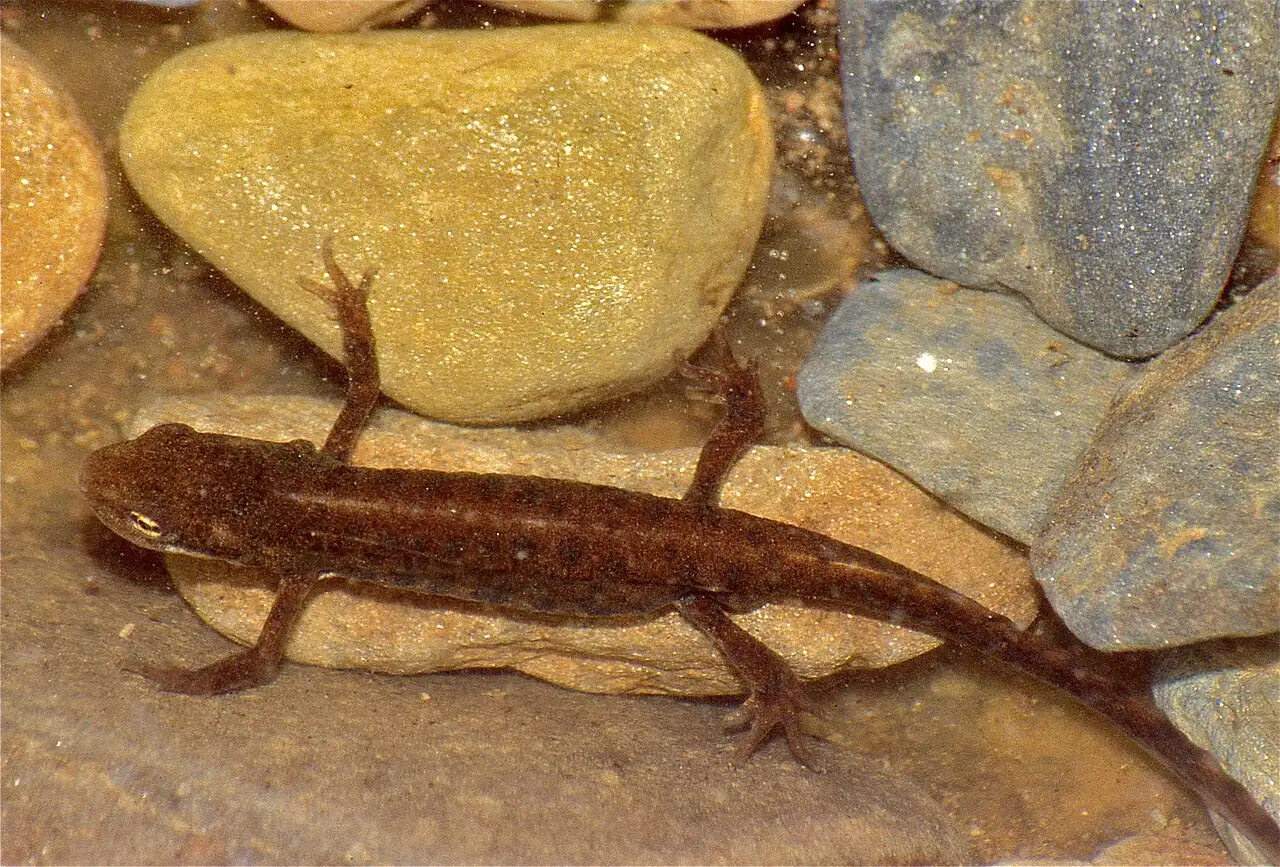
In most subspecies, females give birth to larvae in the water, between 30 and 40 per birth on average. In some populations the larvae complete their development inside the mother and are born already transformed.
Diet of the Fire Salamander
The larvae eat small aquatic invertebrates; adults, earthworms, ants, spiders, crickets and beetles.
The Fire Salamander in Cabañeros
According to the park guide, together with the Iberian Midwife Toad it is the species that distinguishes the amphibians of the woodland wetlands from those of the raña, and it reaches the highest areas. The website cites it on the leaf-litter-covered floor of the Pyrenean oak wood, beside the streams, in the rainy season.
Can it be seen in Cabañeros?
After rain, at nightfall, on tracks in the Pyrenean oak wood. If you see one on the track, do not touch it or move it.
Velo-Antón, G. y Buckley, D. (2015). Salamandra común – Salamandra salamandra. En: Salvador, A. y Marco, A. (eds.), Enciclopedia Virtual de los Vertebrados Españoles. Museo Nacional de Ciencias Naturales (CSIC). vertebradosibericos.org
OAPN (2011). Guía de visita del Parque Nacional de Cabañeros. PDF