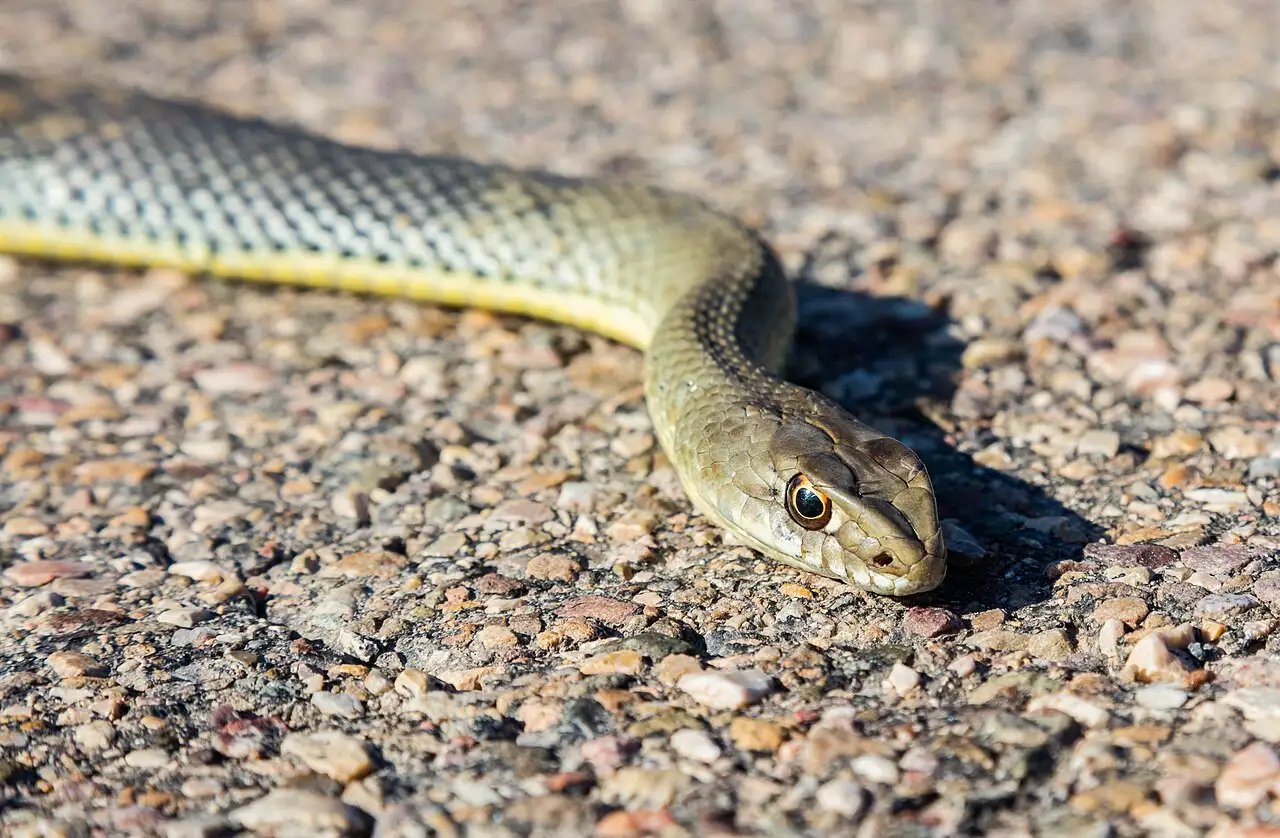
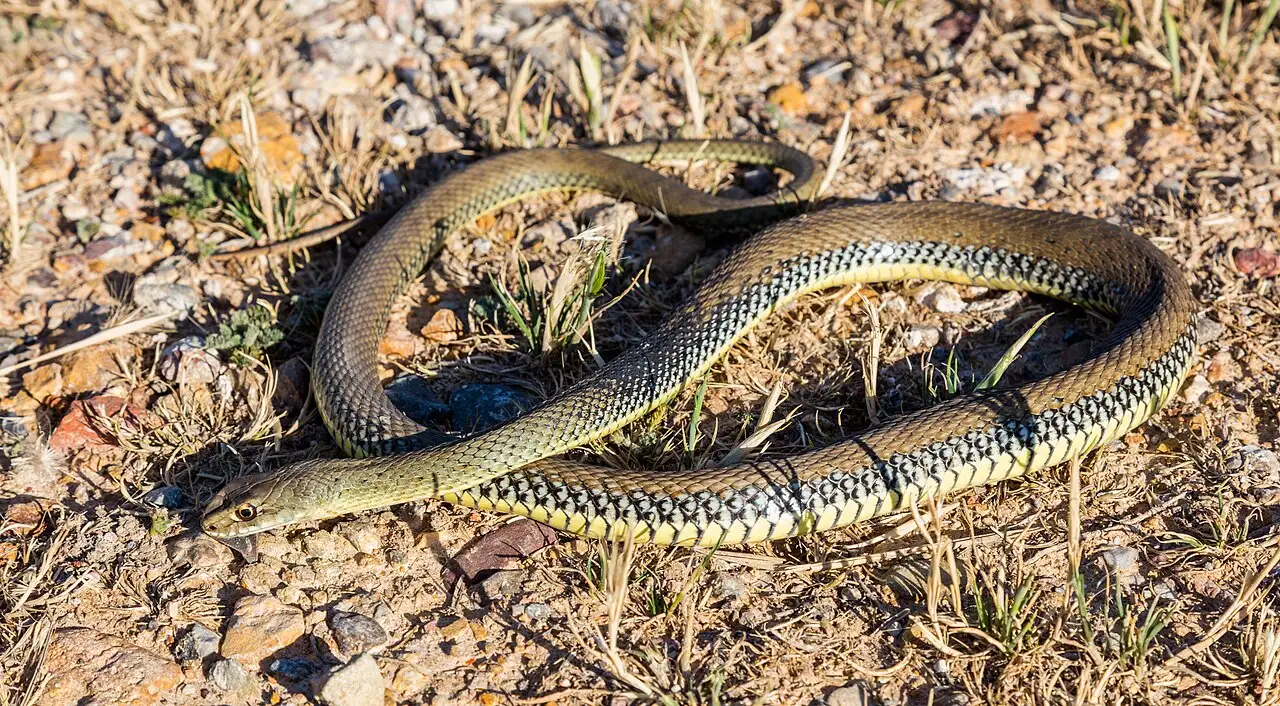
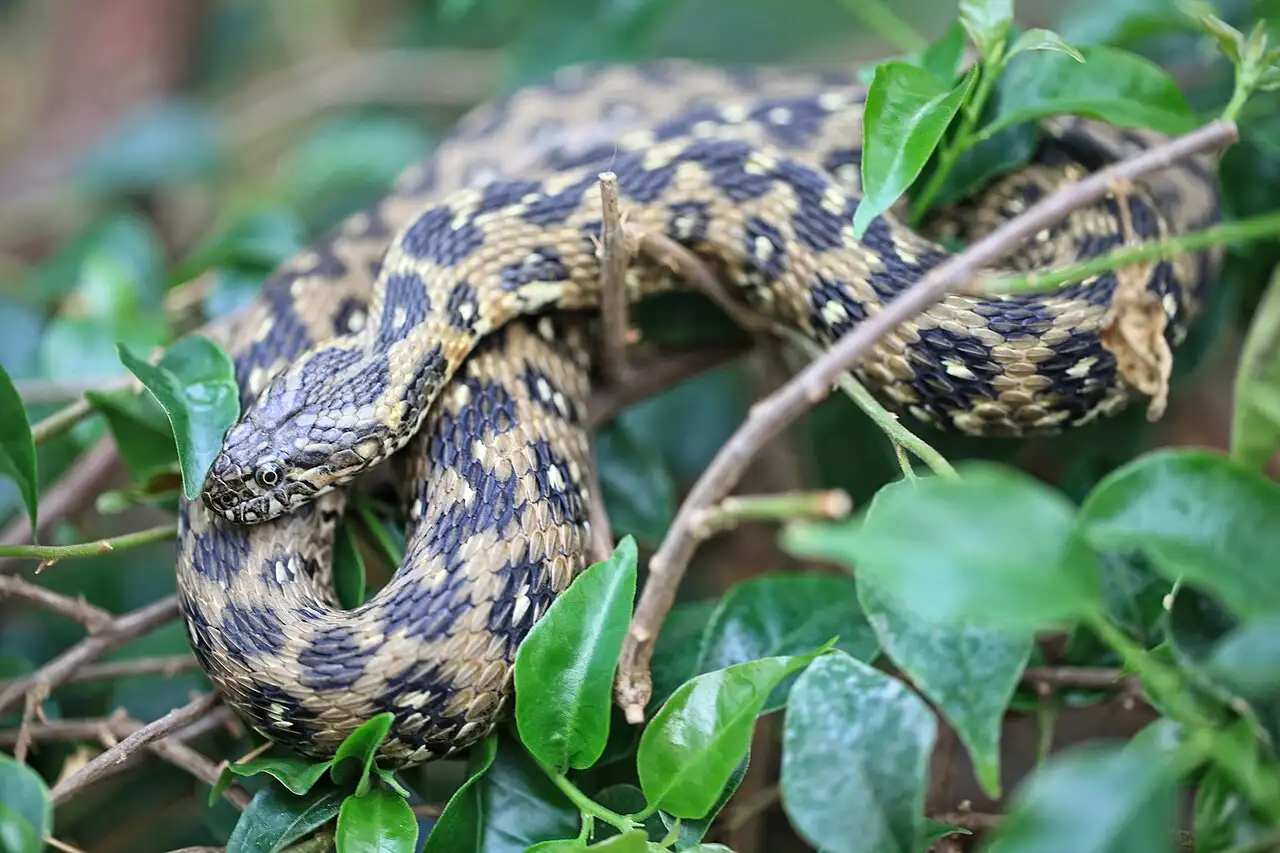
It is the largest snake of the peninsula: its maximum recorded total length is 2.29 metres. It has a tall, narrow head, with scales above the eyes that give it a serious expression.
Habitat and distribution of the Montpellier Snake
Medium or low scrub, open fields, stony ground and the edges of crops.
Areas where it is regularly recorded since 2010Squares of about 25 km where it is recorded regularly (occasional records are left out). Data from GBIF.org (7,927 records, retrieved October 2026); outline from Natural Earth.
Breeding of the Montpellier Snake
The rut is late: mating takes place in May and June. The clutch, at the beginning of July, is of 4 to 11 eggs. In the rut, males fight each other.
Diet of the Montpellier Snake
It is very much a generalist: more than thirty prey species are known, from lizards to small mammals and birds.
The Montpellier Snake in Cabañeros
According to the park guide, it is one of the commonest snakes, preferring low scrub and open spaces, and the only one that lives regularly on the raña.
Where to see the Montpellier Snake in Cabañeros
When
From spring to autumn.
What time
By day; in summer, first and last thing.
Where
The raña and the low scrub along its edges.
What to look for
A long, greenish snake that crosses the track quickly with its head raised.
Pleguezuelos, J. M. (2021). Culebra bastarda – Malpolon monspessulanus. En: Salvador, A. y Marco, A. (eds.), Enciclopedia Virtual de los Vertebrados Españoles. Museo Nacional de Ciencias Naturales (CSIC). vertebradosibericos.org
OAPN (2011). Guía de visita del Parque Nacional de Cabañeros. PDF