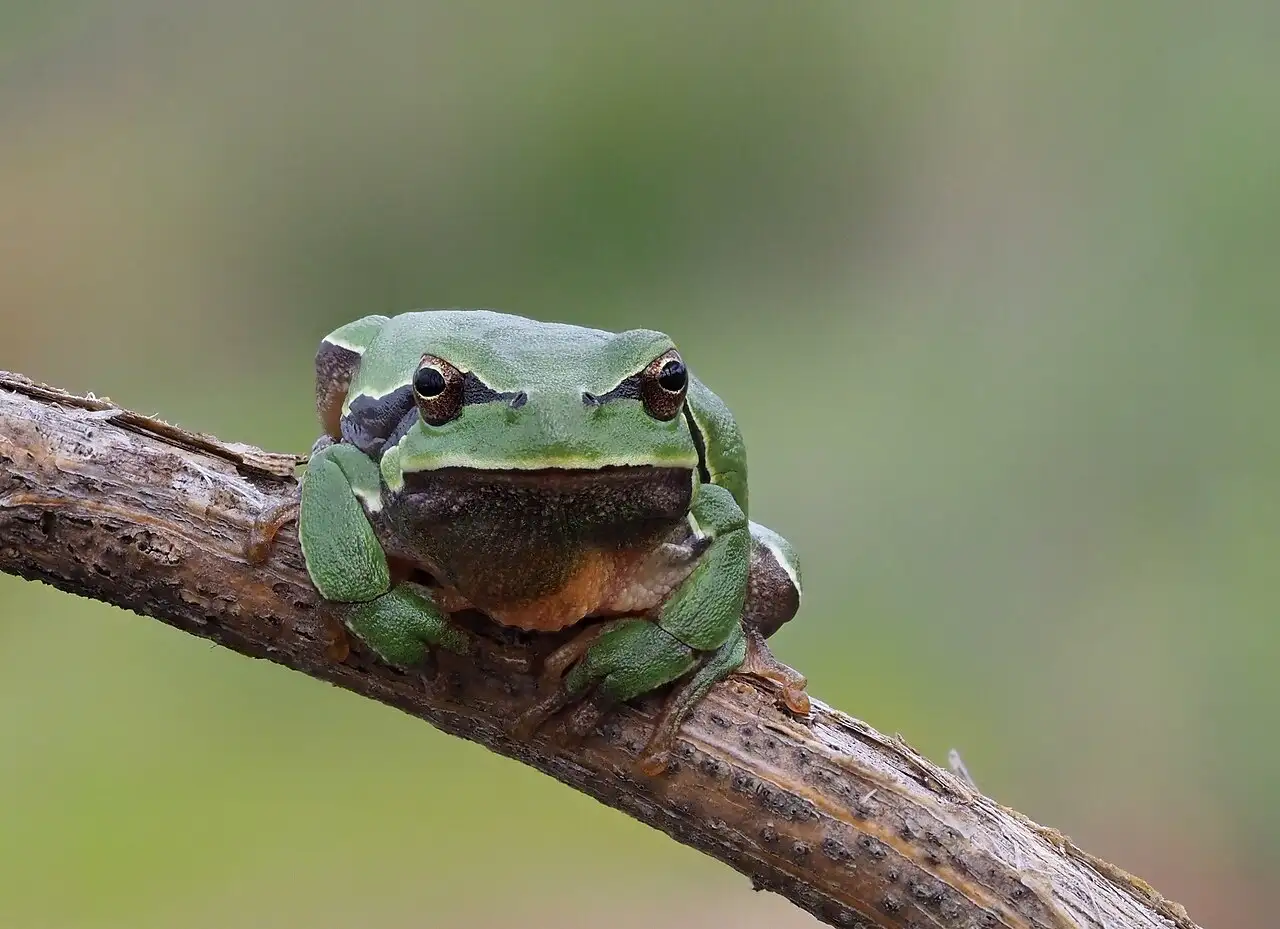
It is a small frog, up to 4.5 or 5 centimetres, with a broad head and a short snout. The dark stripe that runs along the flank and draws a loop on the hip distinguishes it from the Stripeless Tree Frog, which does not have it. The guide and the website cite it under the old name of Hyla arborea: today the tree frogs of the peninsula are considered a separate species, Hyla molleri.
Habitat and distribution of the Iberian Tree Frog
Stable ponds and lagoons with abundant aquatic vegetation, and scrub and trees nearby.
Areas where it is regularly recorded since 2010Squares of about 25 km where it is recorded regularly (occasional records are left out). Data from GBIF.org (1,519 records, retrieved October 2026); outline from Natural Earth.
Breeding of the Iberian Tree Frog
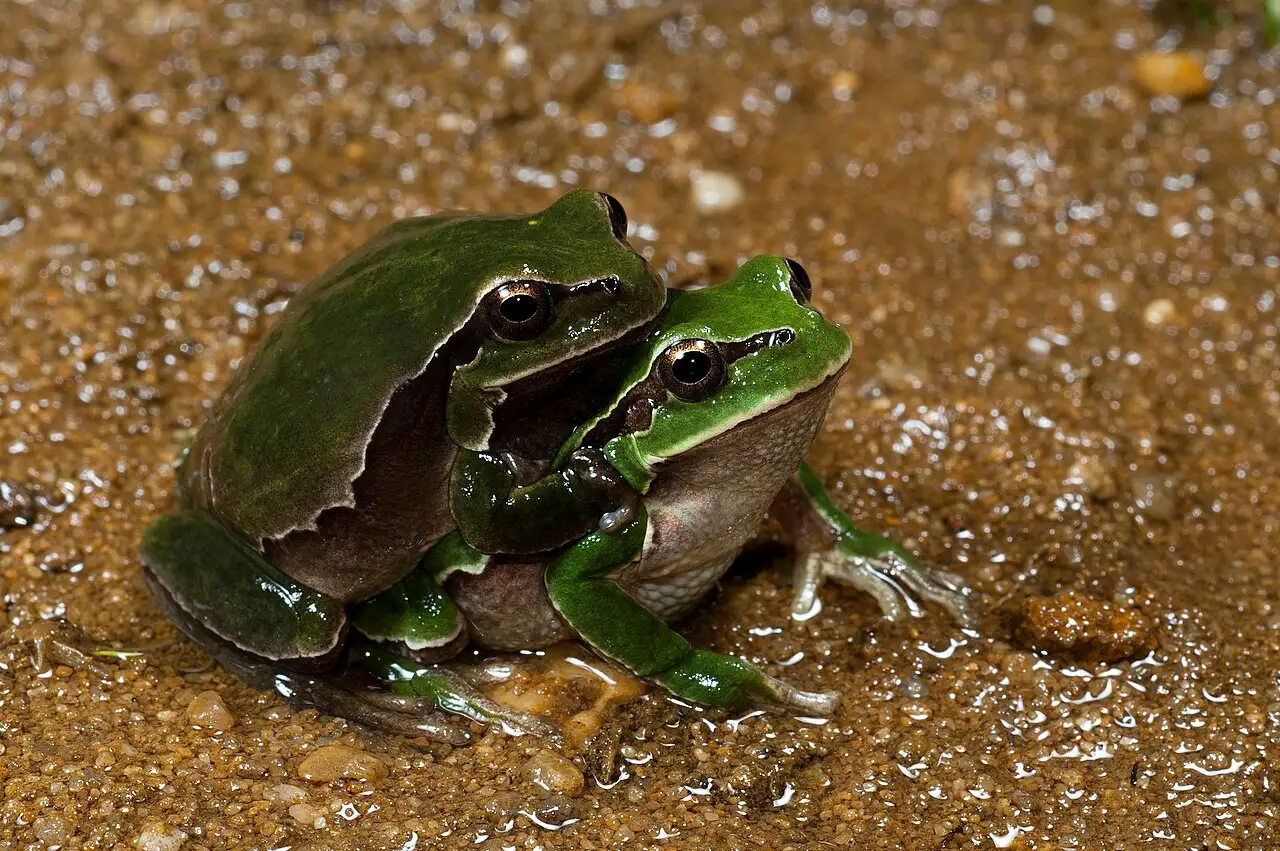
Males arrive first at the ponds and sing. Females lay in small packets of 30 to 60 eggs stuck to the vegetation, up to 1,250 in a season. The eggs hatch in 12 to 15 days and the larvae take about three months to transform.
Diet of the Iberian Tree Frog
The larvae eat plant matter; adults, insects and other invertebrates.
The Iberian Tree Frog in Cabañeros
The park guide cites it in the Laguna de los Cuatro Morros and stresses the interest of the seasonal ponds of the raña, without fish, for amphibian breeding. According to the website, it shares the same ponds with the Stripeless Tree Frog.
Can it be seen in Cabañeros?
It is heard more than seen: in spring, at nightfall, the chorus of the males gives away the ponds where they breed.
Ortiz-Santaliestra, M. E. (2015). Ranita de San Antón – Hyla molleri. En: Salvador, A. y Marco, A. (eds.), Enciclopedia Virtual de los Vertebrados Españoles. Museo Nacional de Ciencias Naturales (CSIC). vertebradosibericos.org
OAPN (2011). Guía de visita del Parque Nacional de Cabañeros. PDF
Real Decreto 139/2011, Listado de Especies Silvestres en Régimen de Protección Especial y Catálogo Español de Especies Amenazadas. BOE