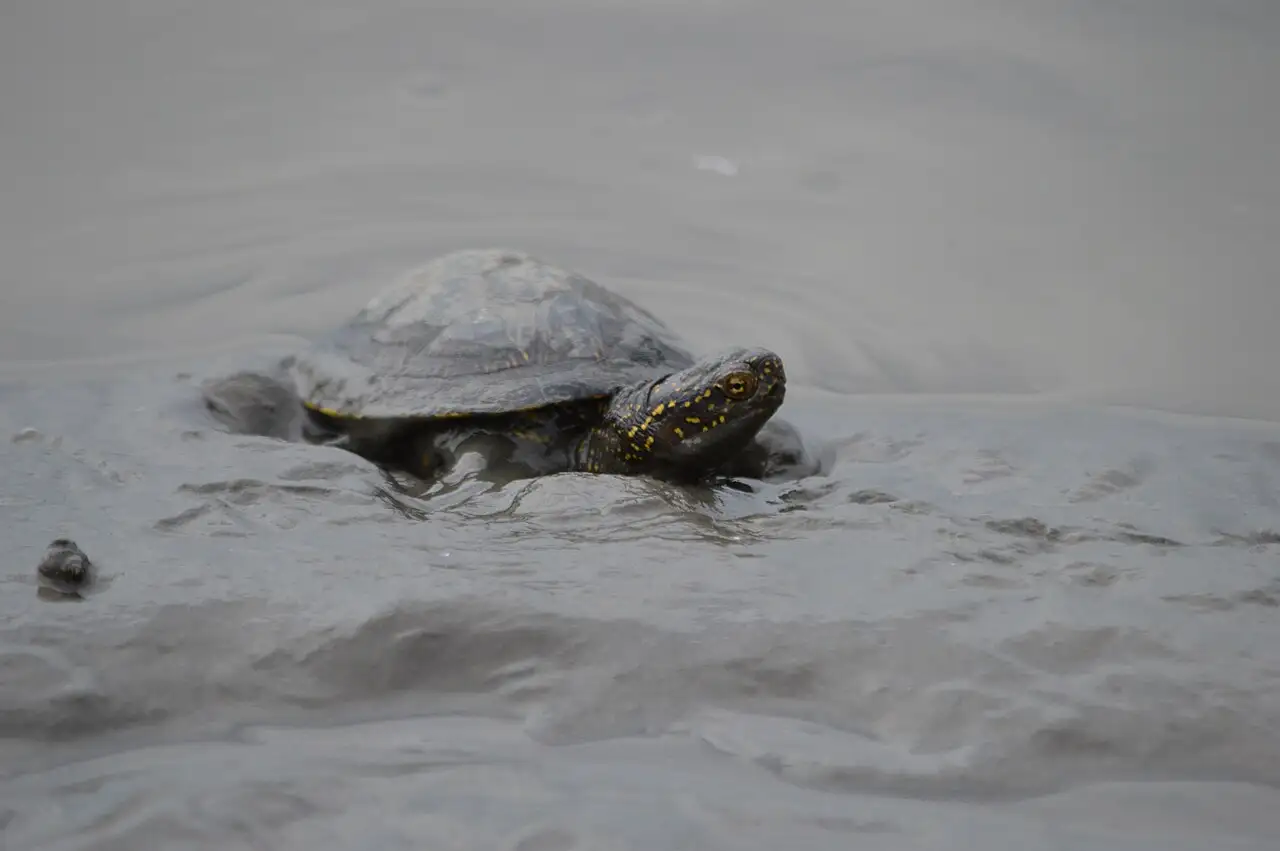
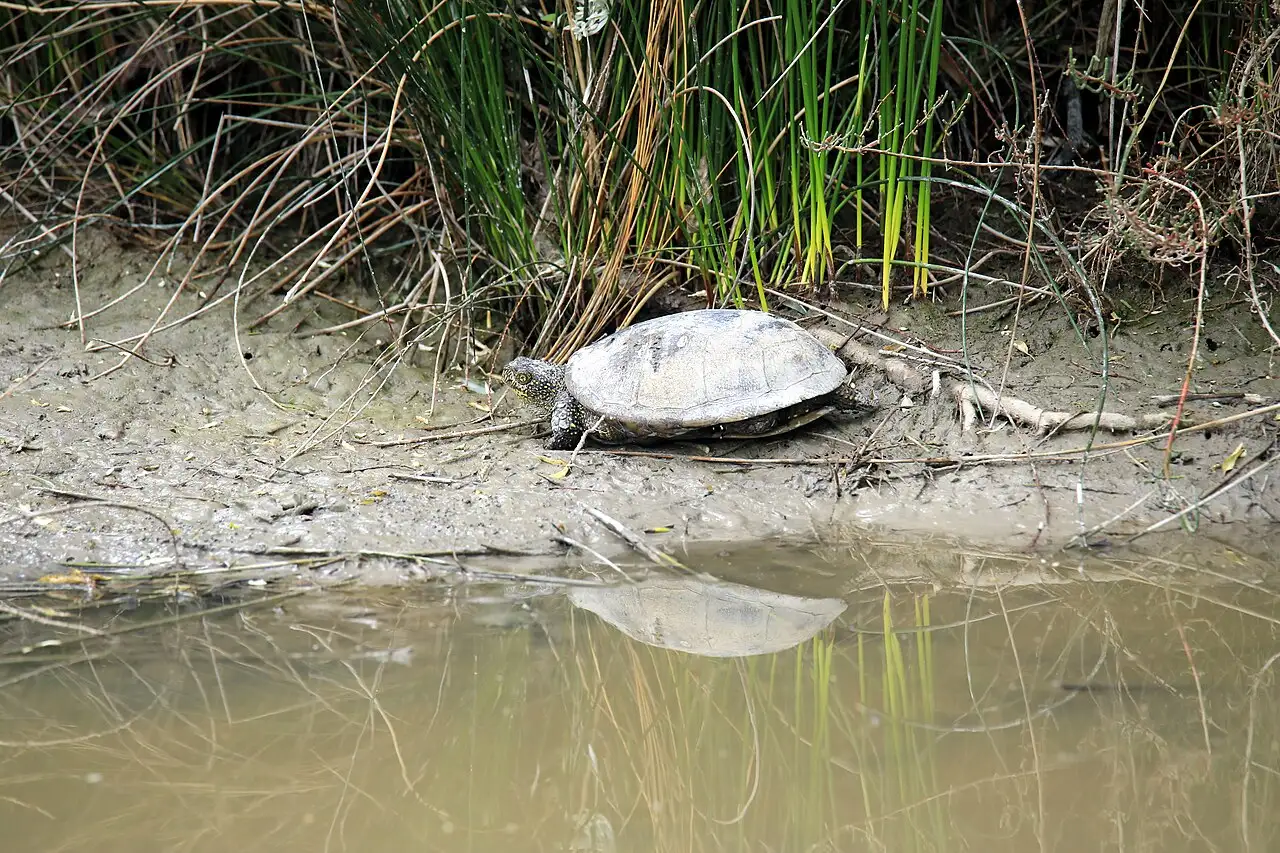
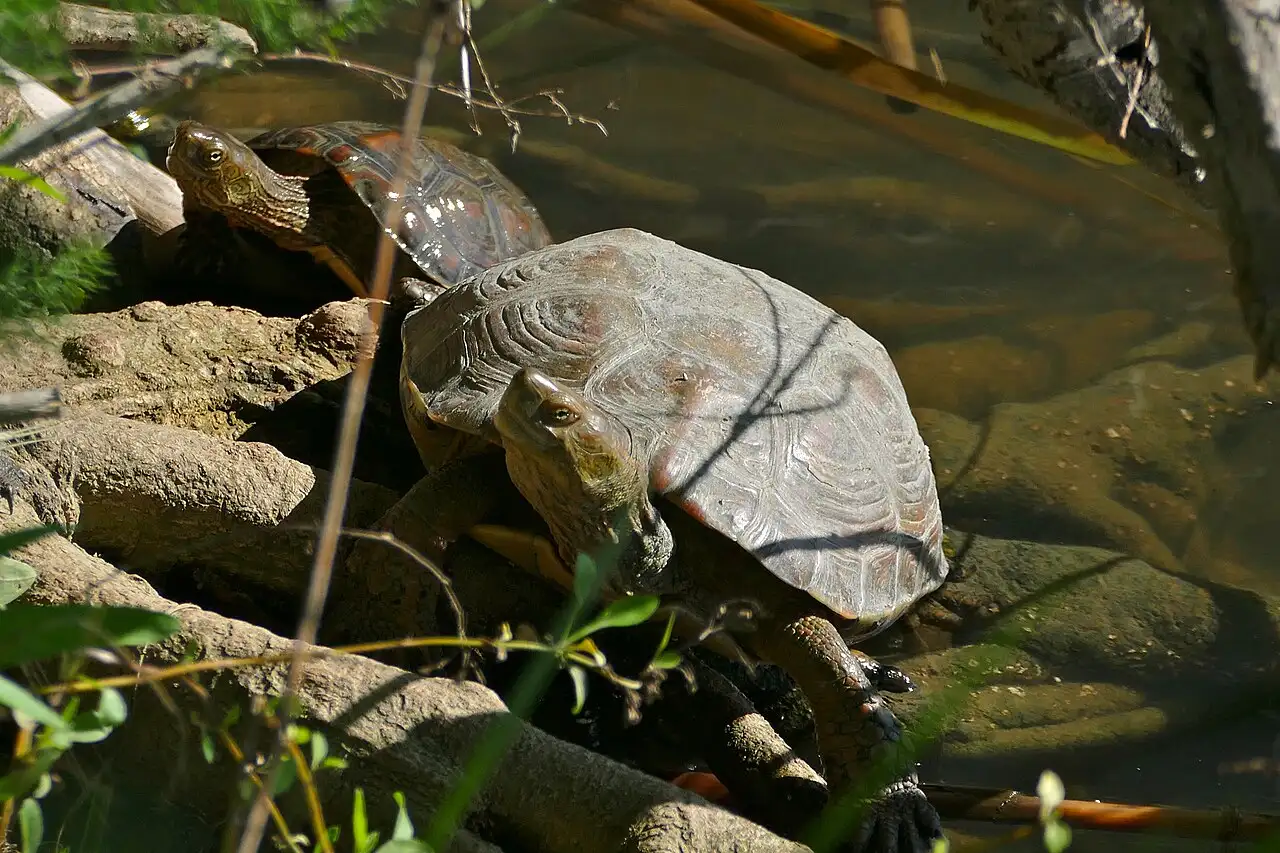
Its shell measures up to 16.3 centimetres. The yellow dots on a dark background distinguish it from the Spanish Pond Turtle, which is browner and has stripes on the neck.
Habitat and distribution of the European Pond Turtle
Ponds, streams and lagoons with clean, vegetated water. According to the park guide, it is more tied than the Spanish Pond Turtle to little-altered habitats.
Areas where it is regularly recorded since 2010Squares of about 25 km where it is recorded regularly (occasional records are left out). Data from GBIF.org (867 records, retrieved October 2026); outline from Natural Earth.
Breeding of the European Pond Turtle
Courtship begins with activity in spring, and there is some courtship in autumn. It lays in June and July, sometimes twice. Mortality of eggs and young is very high.
Diet of the European Pond Turtle
It eats mainly invertebrates and, to a lesser extent, amphibians and fish, with some plant matter in summer.
The European Pond Turtle in Cabañeros
It is rarer than the Spanish Pond Turtle. According to the website, it prefers the small pools in the upper courses of clean-water streams: on the Brezoso stream, upstream of the reservoir, there is a string of clear pools with a current where it can easily be seen. It also appears in the pools of the Boquerón, although the Spanish Pond Turtle is commoner there. It is listed as vulnerable in the Spanish Catalogue.
Can it be seen in Cabañeros?
With patience, in clean, quiet pools of the streams. Do not disturb it or take it out of the water: it is protected and very sensitive.
Ayres, C. (2015). Galápago europeo – Emys orbicularis. En: Salvador, A. y Marco, A. (eds.), Enciclopedia Virtual de los Vertebrados Españoles. Museo Nacional de Ciencias Naturales (CSIC). vertebradosibericos.org
OAPN (2011). Guía de visita del Parque Nacional de Cabañeros. PDF
Real Decreto 139/2011, Listado de Especies Silvestres en Régimen de Protección Especial y Catálogo Español de Especies Amenazadas. BOE