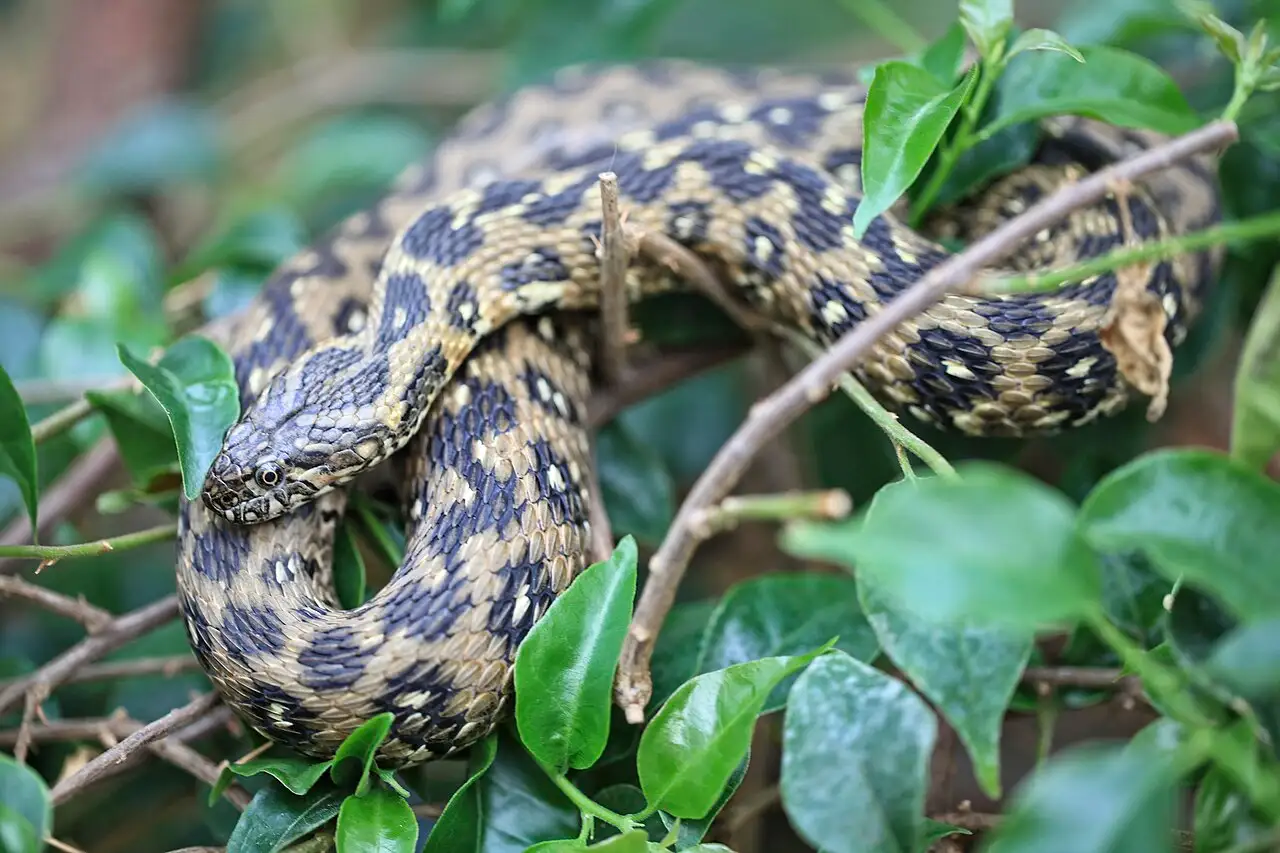
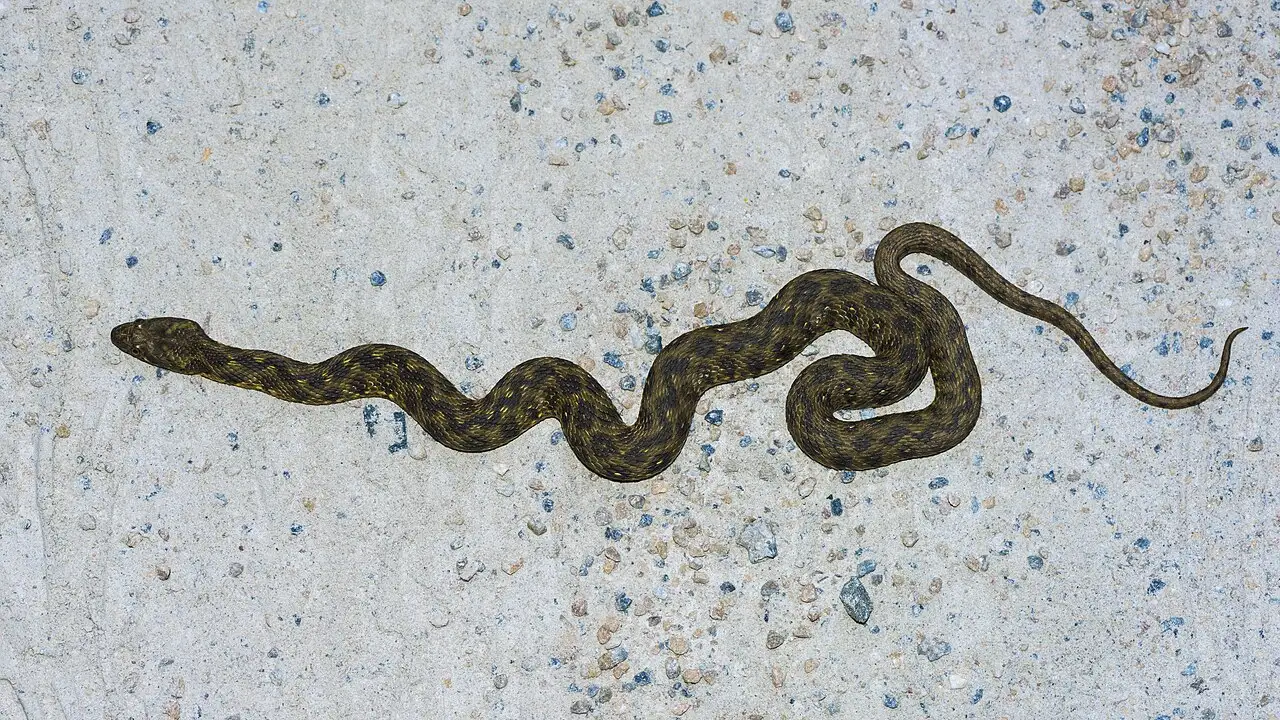
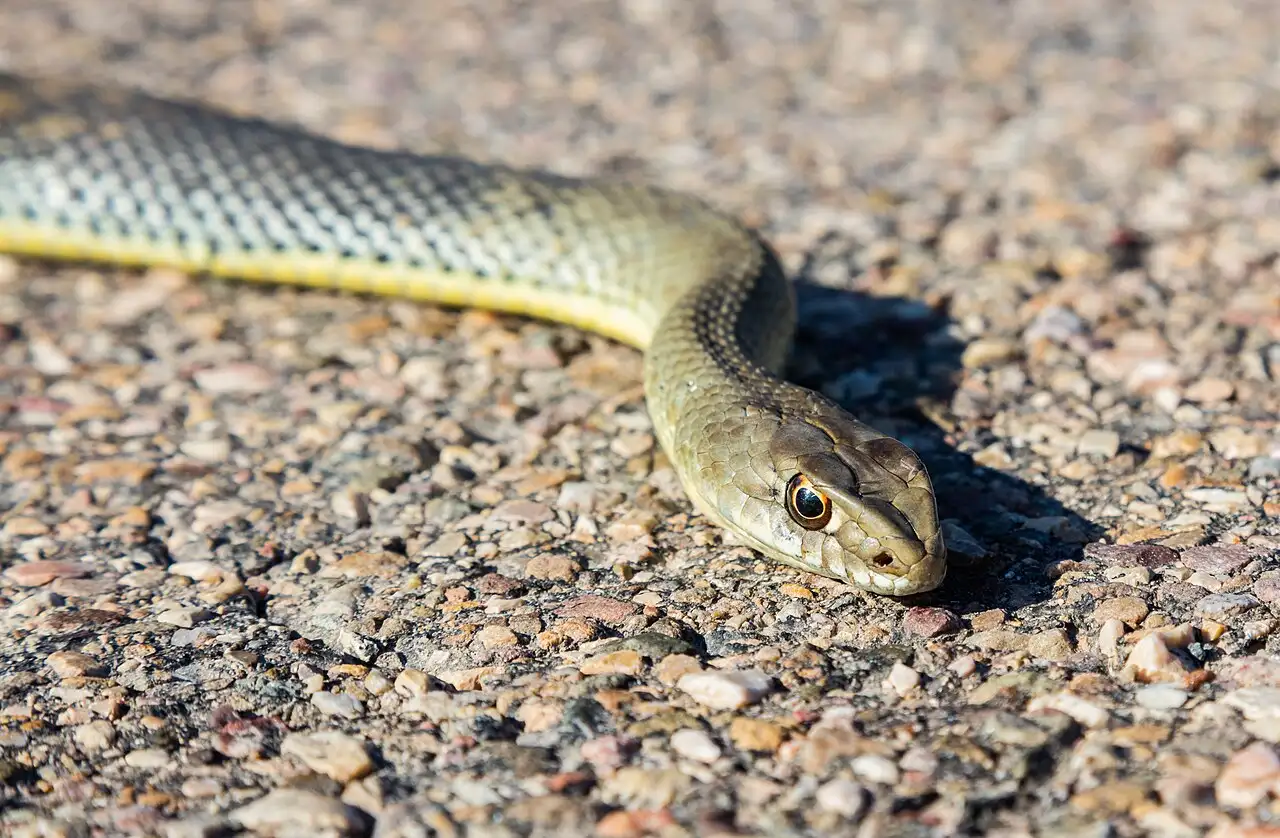
It is a medium-sized snake, up to 91 centimetres on the peninsula, with a broad head. Its zigzag pattern recalls that of a viper, and when it feels threatened it flattens its head and hisses to imitate one, but it is harmless.
Habitat and distribution of the Viperine Snake
Rivers, streams, ponds and reservoirs.
Areas where it is regularly recorded since 2010Squares of about 25 km where it is recorded regularly (occasional records are left out). Data from GBIF.org (7,873 records, retrieved October 2026); outline from Natural Earth.
Breeding of the Viperine Snake
Mating is in spring and the clutch is of 2 to 32 eggs depending on the size of the female. Incubation lasts 40 to 45 days.
Diet of the Viperine Snake
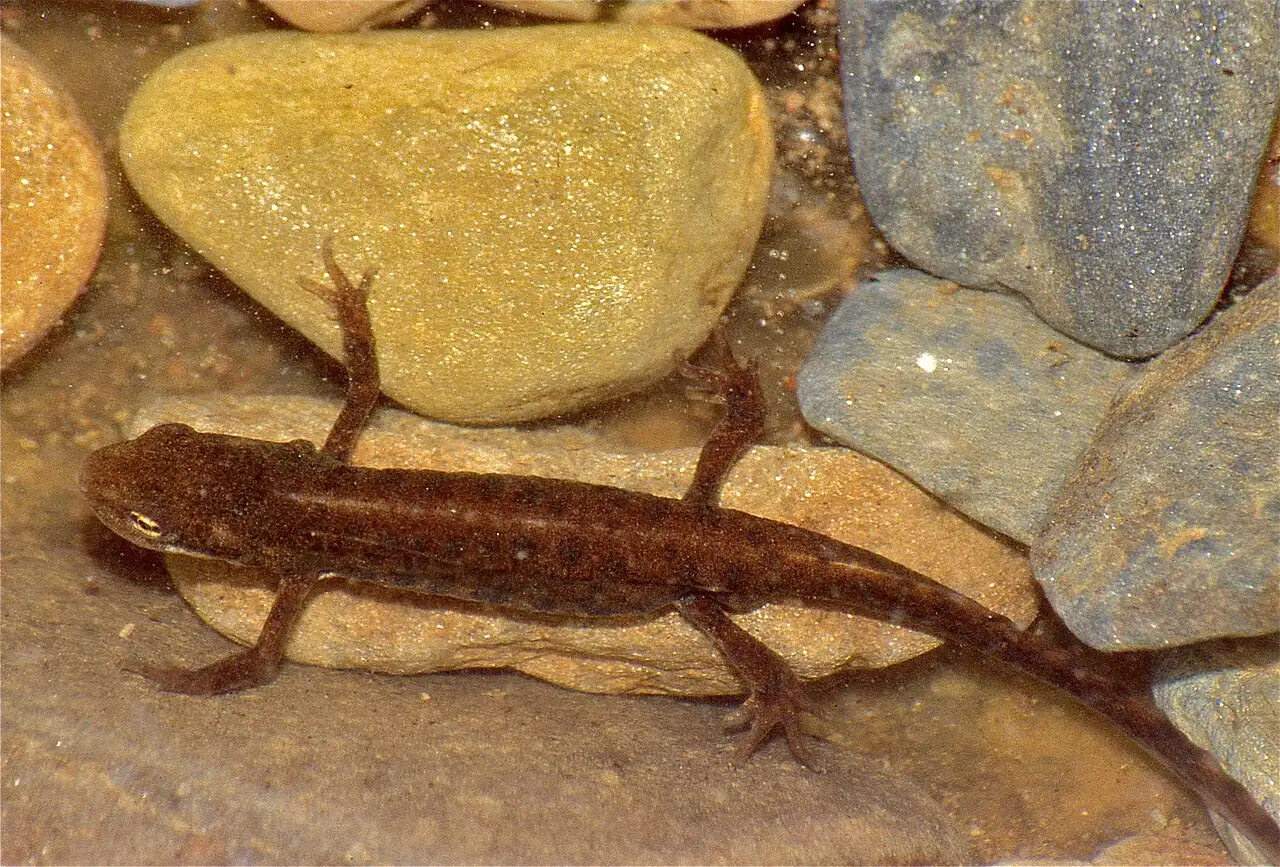
It eats mainly amphibians and their larvae, and fish; the smallest also eat earthworms and arthropods.
The Viperine Snake in Cabañeros
The park guide gives it as the commonest snake in the park, largely tied to water areas. The website cites it in the ponds of the raña and in the reservoir of the Brezoso stream.
Where to see the Viperine Snake in Cabañeros
When
From spring to autumn.
What time
By day in spring and autumn; in summer, at dusk.
Where
Any stream, pond or pool in the park.
What to look for
A snake with a zigzag, swimming in the water or sunning itself on a stone on the bank.
Santos, X. (2015). Culebra viperina – Natrix maura. En: Salvador, A. y Marco, A. (eds.), Enciclopedia Virtual de los Vertebrados Españoles. Museo Nacional de Ciencias Naturales (CSIC). vertebradosibericos.org
OAPN (2011). Guía de visita del Parque Nacional de Cabañeros. PDF
Real Decreto 139/2011, Listado de Especies Silvestres en Régimen de Protección Especial y Catálogo Español de Especies Amenazadas. BOE