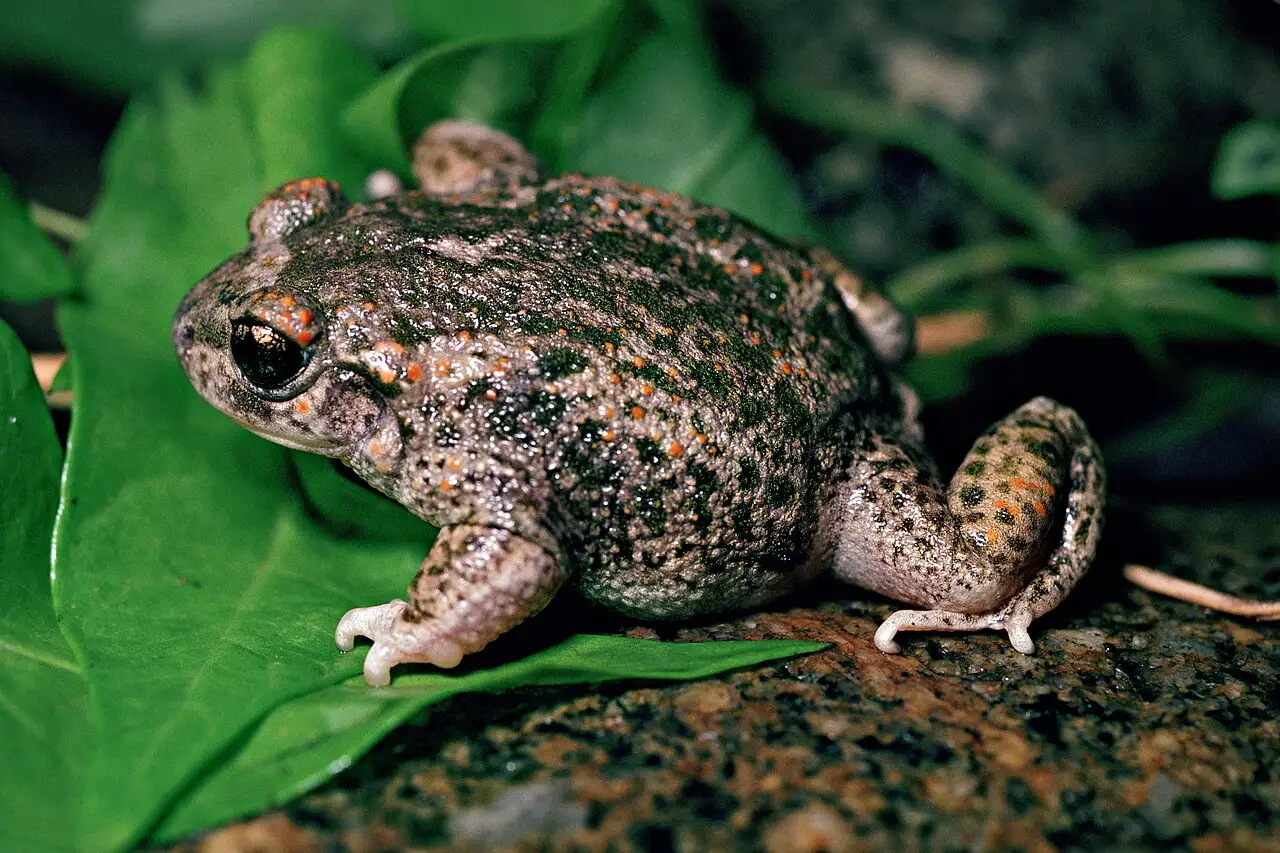
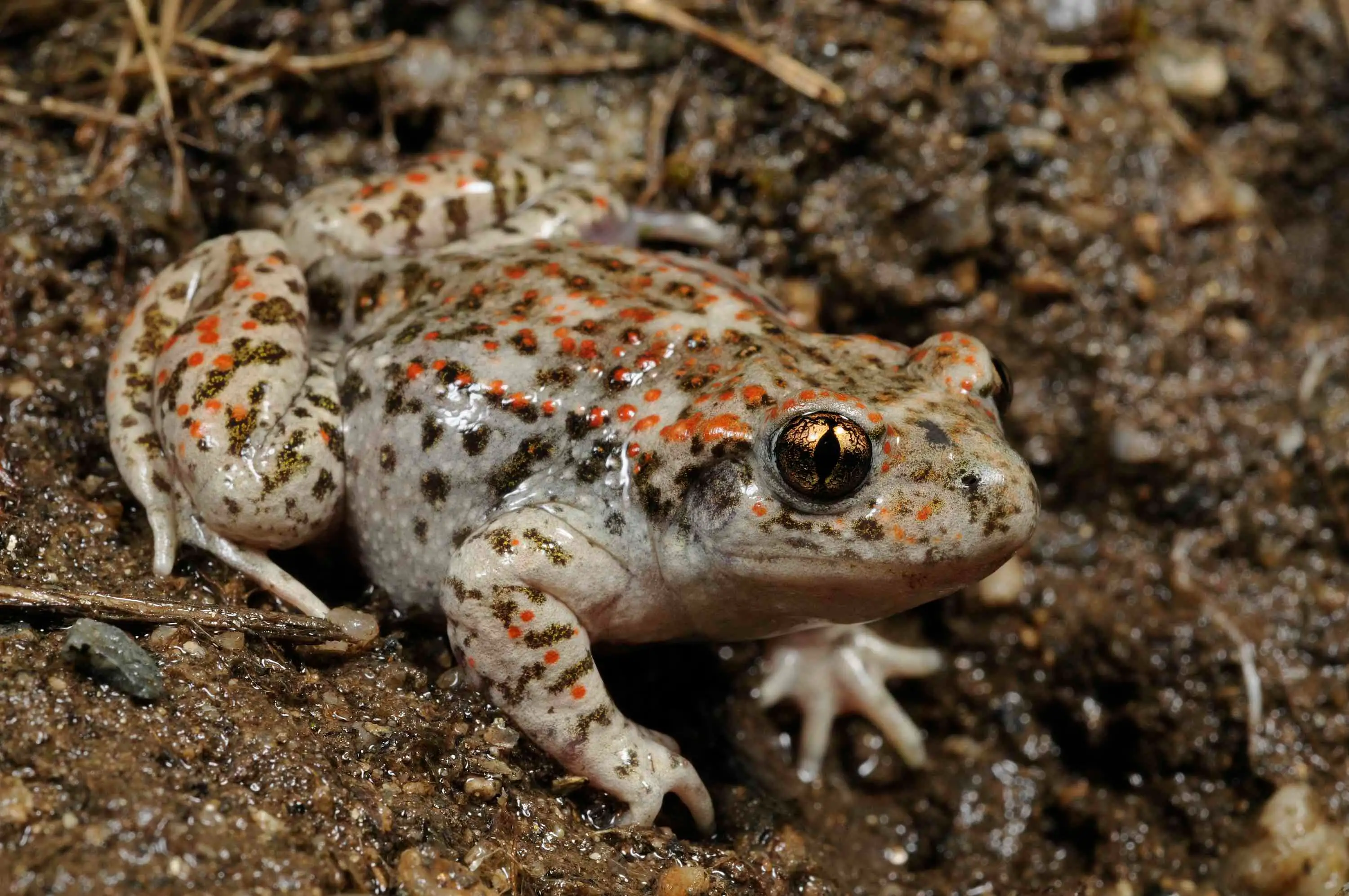
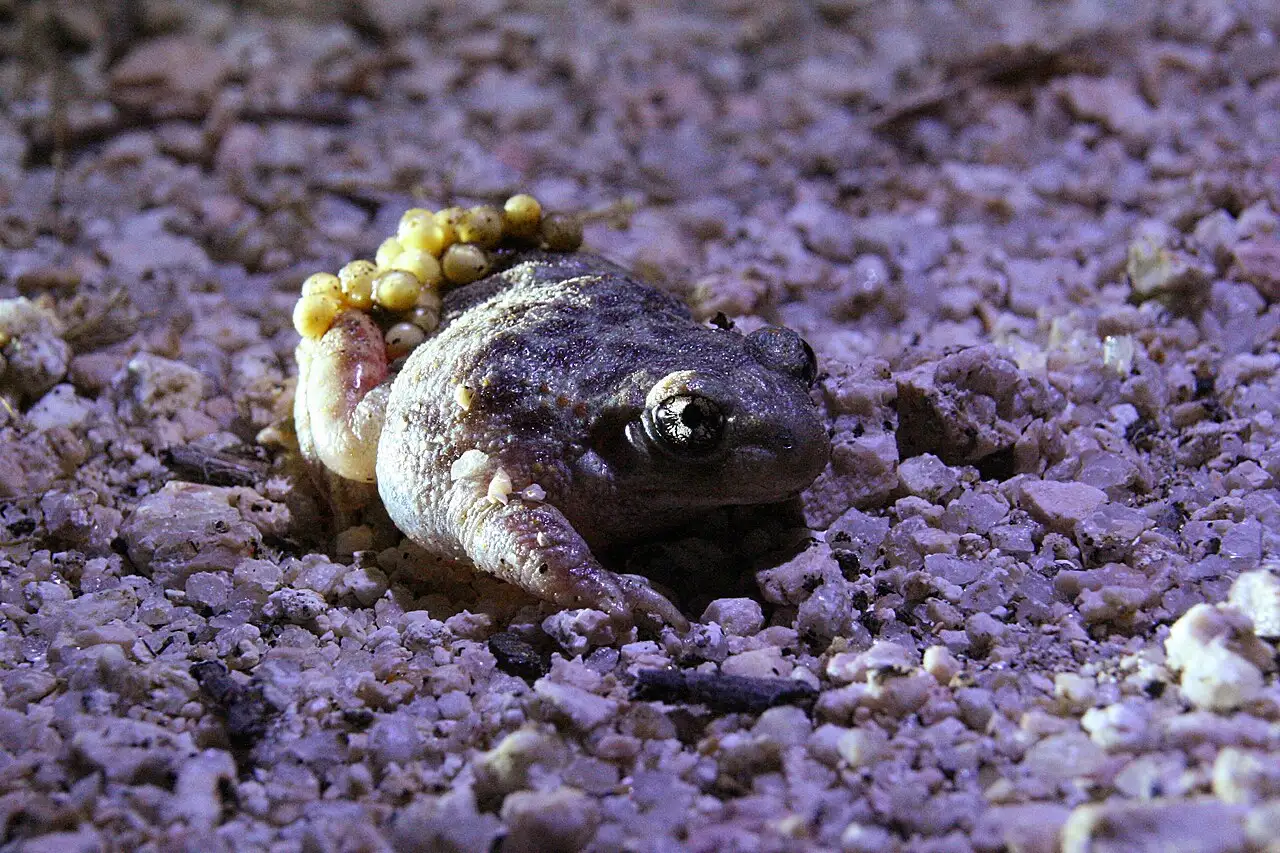
It is a small toad, under five centimetres, endemic to the peninsula. Its most famous feature is the care of the eggs by the male.
Habitat and distribution of the Iberian Midwife Toad
Open woodland and scrub near streams and ponds.
Areas where it is regularly recorded since 2010Squares of about 25 km where it is recorded regularly (occasional records are left out). Data from GBIF.org (780 records, retrieved October 2026); outline from Natural Earth.
Breeding of the Iberian Midwife Toad
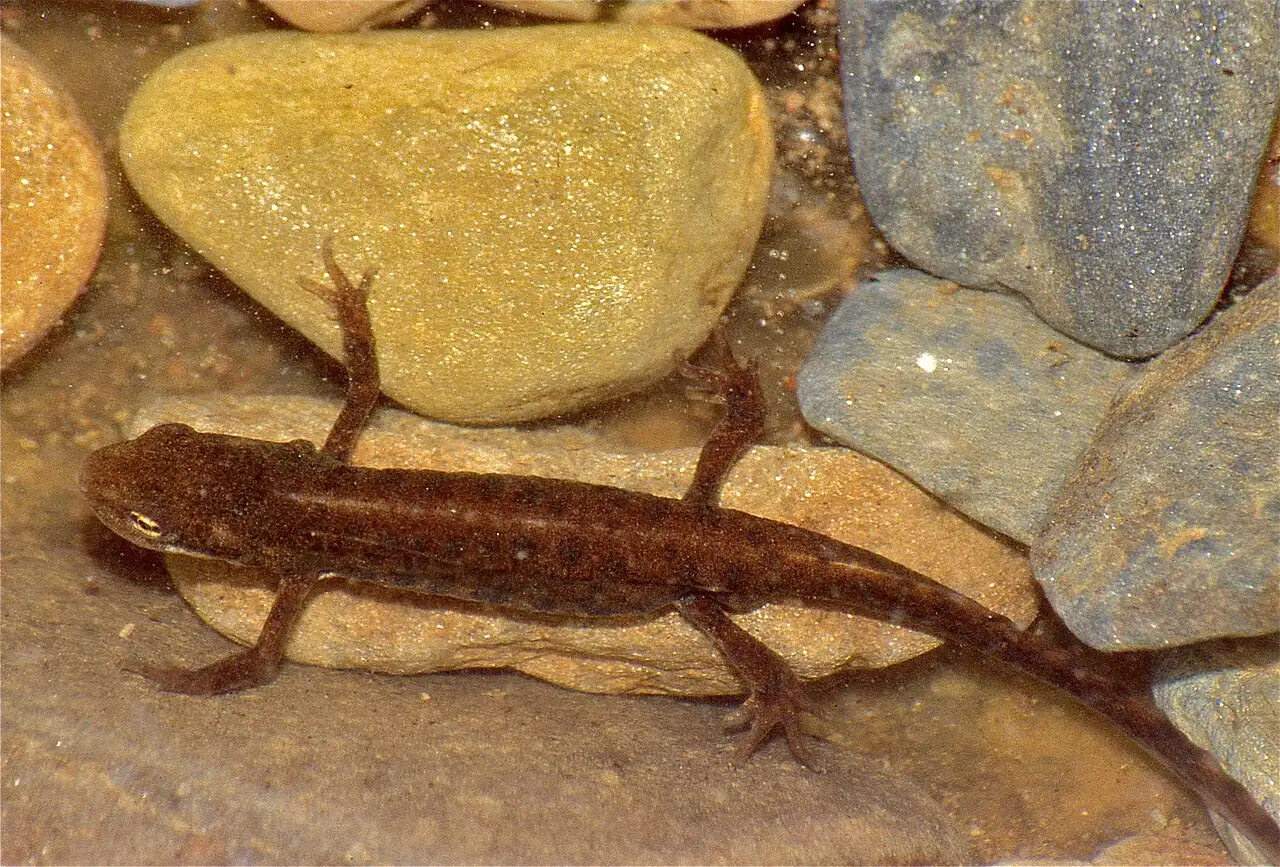
It mates on land, with a complex courtship. Afterwards, the male carries the eggs tied to his hind legs for a month, and when the tadpoles are already formed inside, he goes to the water to release them.
Diet of the Iberian Midwife Toad
It is a generalist predator of land invertebrates, with many ants in its diet.
The Iberian Midwife Toad in Cabañeros
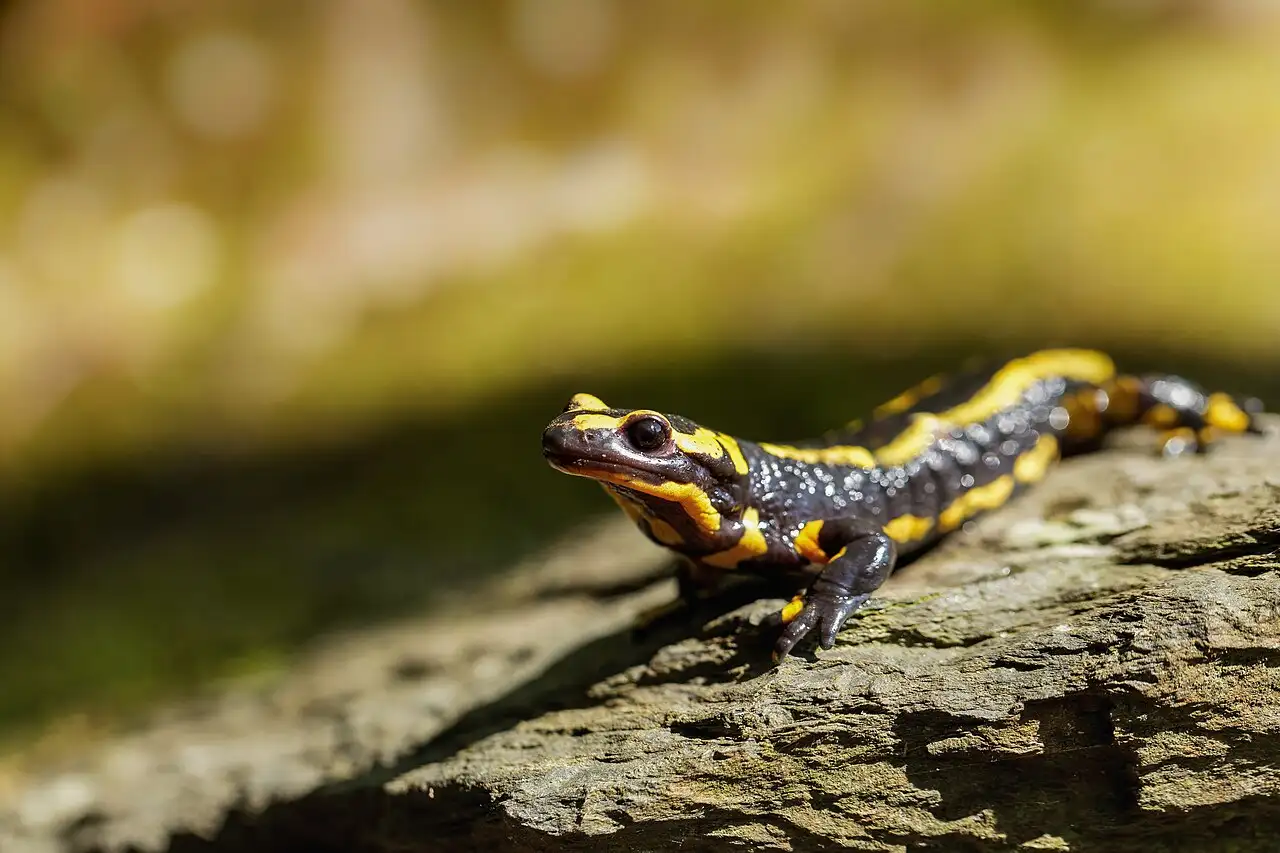
According to the park guide, the amphibian communities of the woodland and scrub wetlands (lagoons, streams and peat bogs) are distinguished from those of the raña by the presence of the Iberian Midwife Toad and the Fire Salamander. The website cites it in areas near streams.
Can it be seen in Cabañeros?
It is nocturnal and discreet. The most likely thing is to hear its song at nightfall in autumn, near a stream.
Márquez, R. (2017). Sapo partero ibérico – Alytes cisternasii. En: Salvador, A. y Marco, A. (eds.), Enciclopedia Virtual de los Vertebrados Españoles. Museo Nacional de Ciencias Naturales (CSIC). vertebradosibericos.org
OAPN (2011). Guía de visita del Parque Nacional de Cabañeros. PDF