Wingspan compared with a person with arms outstretched.
Length
58–65 cm
Wingspan
0.9–1 m
Weight
650 g
Social life
Colonial when breeding, often mixed with other herons in noisy heronries
Lifespan
Record of 21.1 years in the wild according to AnAge; EURING lists a bird ringed in Belgium that lived 21 years and 9 months
Conservation status
LC
NT
VU
EN
CR
EW
EX
Global (IUCN)
Least Concern
Spain
Near Threatened (NT) as a winter visitor, passage migrant and breeder in the Red Book of the Birds of Spain; on the List of Wild Species under Special Protection, but not in the Spanish Catalogue of Threatened Species
When to see it
Summer visitor
Months of the year when it is present
J
F
M
A
M
J
J
A
S
O
N
D
In Iberia
yes
yes
yes
yes
yes
yes
yes
yes
yes
yes
yes
yes
Breeding season
no
no
no
no
yes
yes
yes
no
no
no
no
no
Song or voice of the Black-crowned Night Heron
It is a fairly noisy species, which in flight gives an «uaarj» or an «uorc» like a hoarse croak, like those of ravens, which gives rise to its scientific name1. The recording (night flight call) is by Xavier Riera and was made in Montsià (near El Poble Nou del Delta), Tarragona, Catalonia (xeno-canto XC1180903, quality A). It lasts 9 seconds and is a trimmed section of the original, without repeating or lengthening, from which we have removed the bass below 300 Hz, reduced the background noise and adjusted the volume; neither pitch nor speed has been changed.
In flight, which it performs in an unhurried and elegant way, it has a very stocky look, with relatively short, rounded wings. It is mostly a summer visitor on the Peninsula, from March to October1. In July and August the young disperse in all directions before joining the southward passage1.
Flight typeUnhurried and elegant, with a very stocky look
It is a heron of crepuscular and nocturnal habits: it begins its activity when the rest of the herons of the heronry retire to rest.
In flight, which it performs in an unhurried and elegant way, it has a very stocky look, with relatively short, rounded wings.
In flight it gives an «uaarj» or an «uorc», like a hoarse croak, like the ravens'.
Photo gallery of the Black-crowned Night Heron
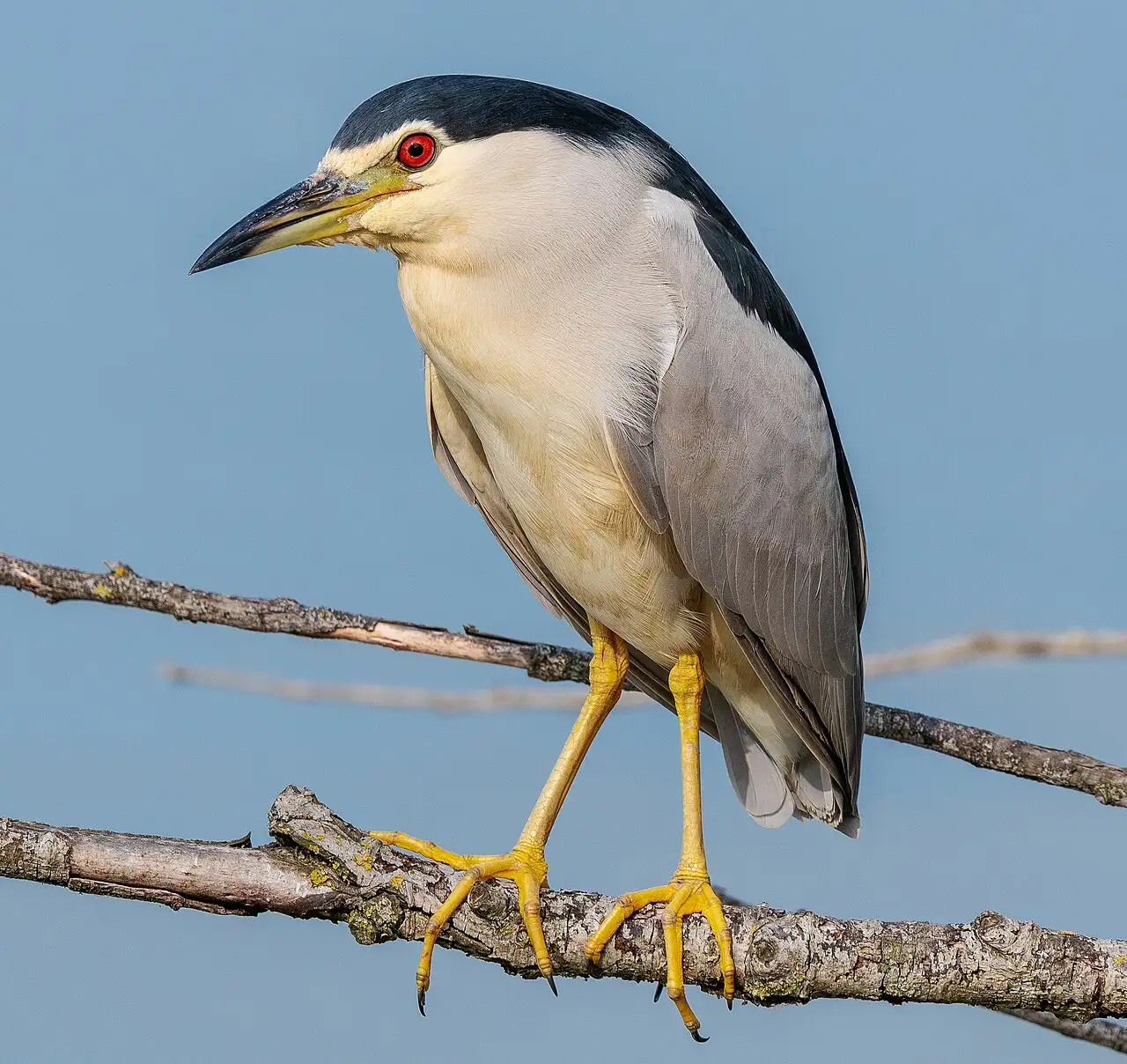
Adult Black-crowned Night Heron perched on a branch, in profile, with black cap, red eye, white neck and yellow legsPhoto: Curzio Cavicchioli, CC BY-SA 4.0Photo 1 of 5
Black-crowned Night Heron with a fish speared on its bill, standing in a shallow river, with black cap and white neckPhoto: Alain Carpentier, CC BY 3.0Photo 2 of 5
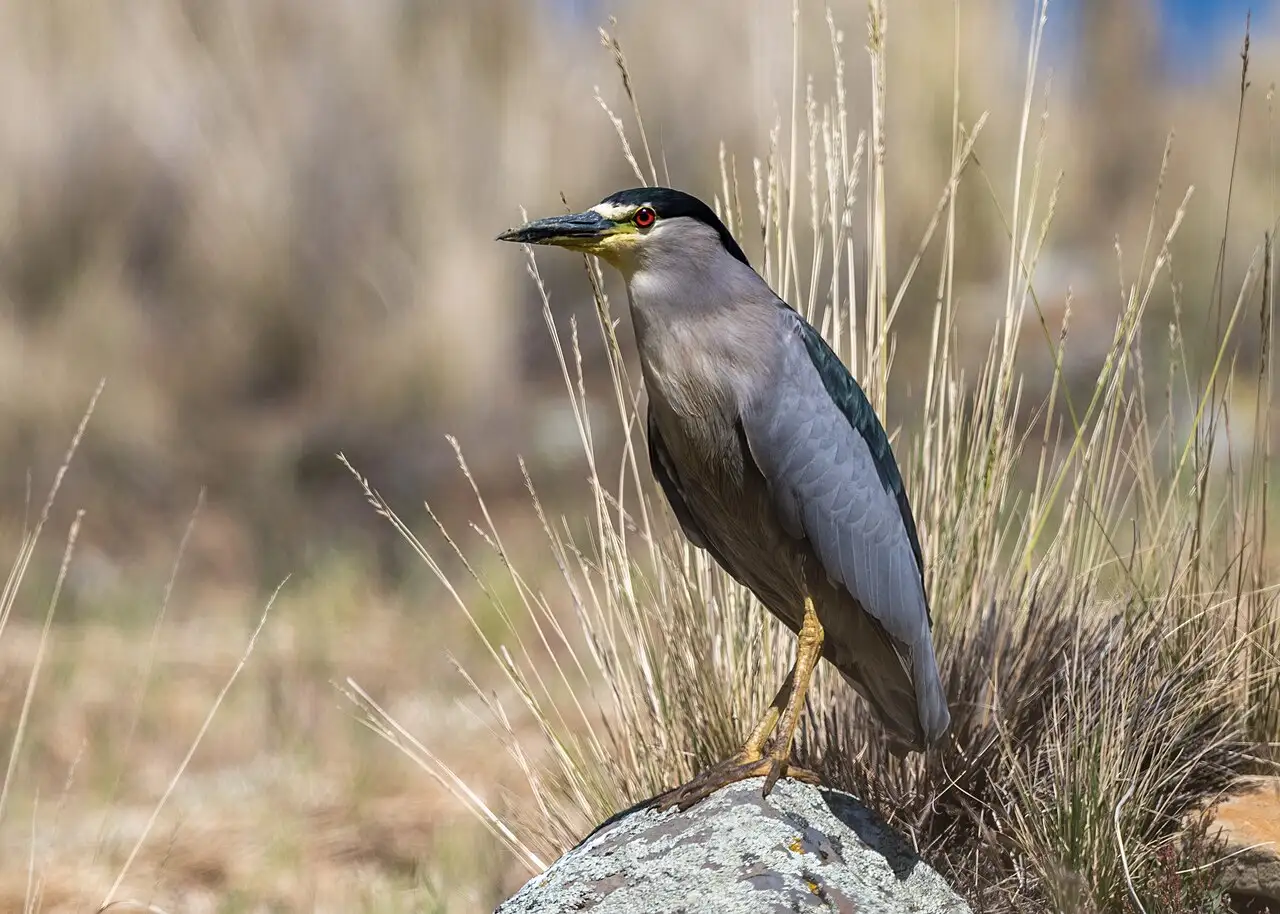
Black-crowned Night Heron in profile on a stone among dry grass, with black cap and yellow legsPhoto: CLAUDIOLD, CC BY-SA 4.0Photo 3 of 5
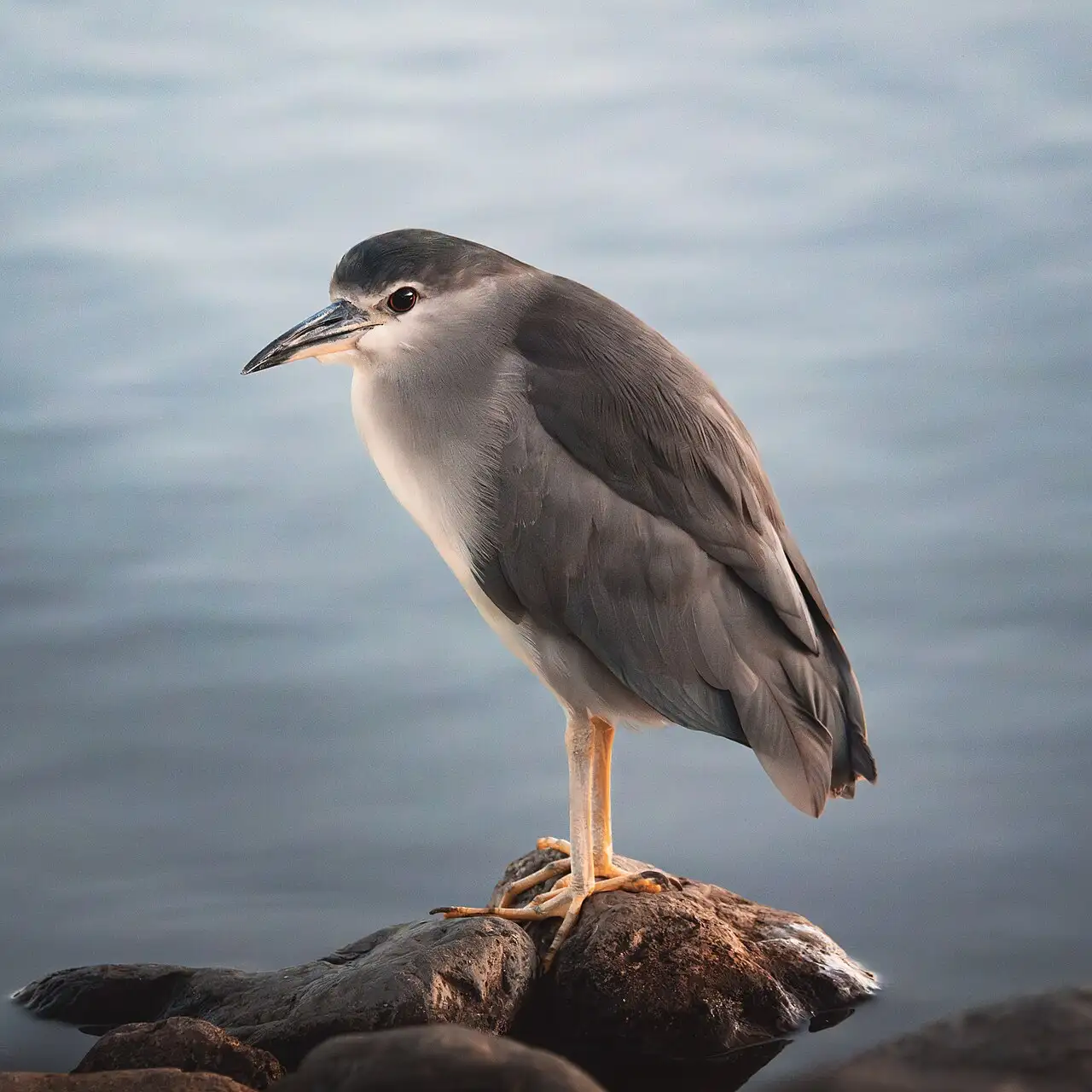
Black-crowned Night Heron in dull grey plumage, perched in profile on some rocks beside the water, with black bill and orange legsPhoto: Aneta p, CC BY 4.0Photo 4 of 5
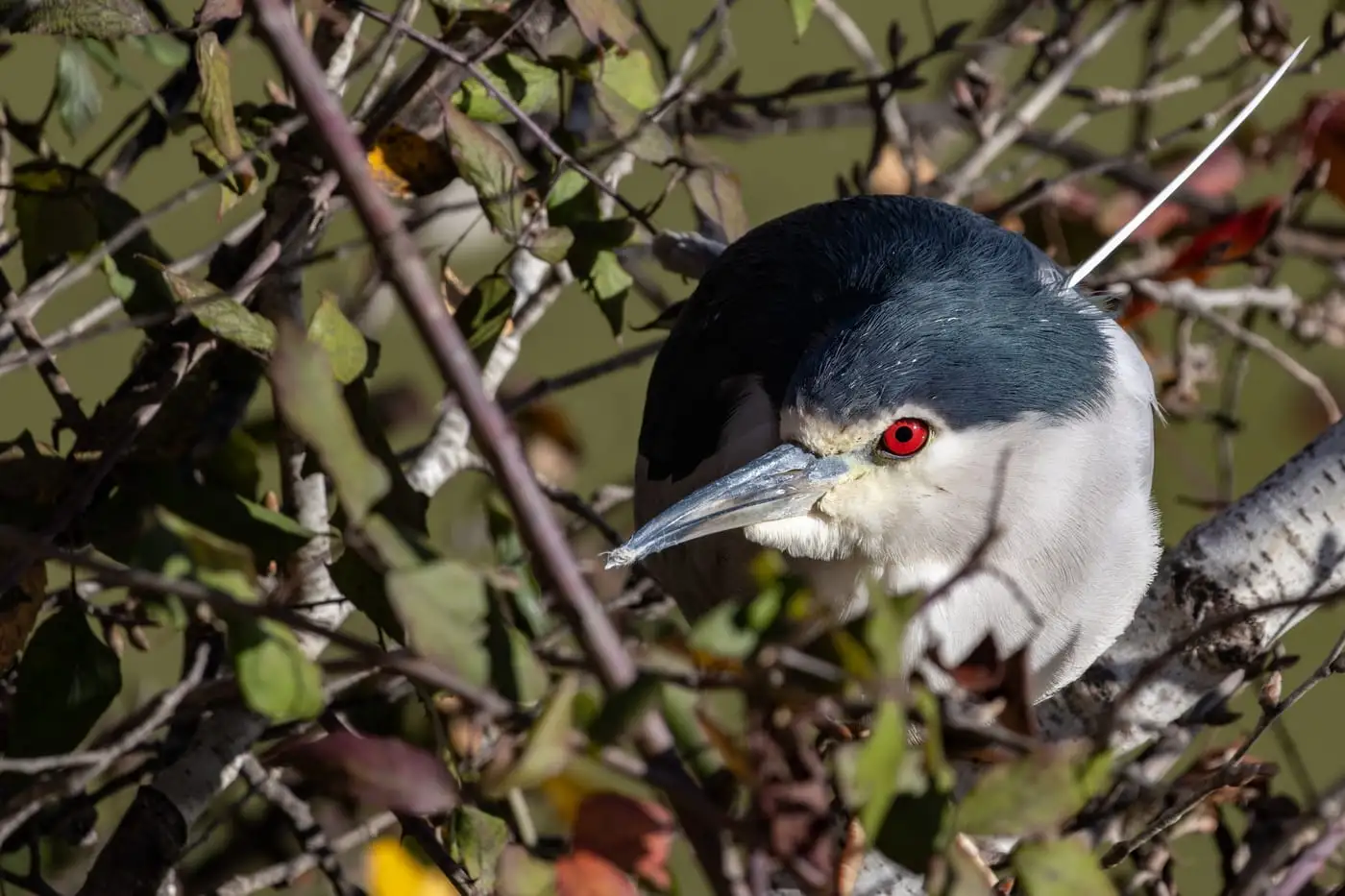
Adult Black-crowned Night Heron peering out among the branches, with blue-black crown and red eye (Andalusia)Photo: Diego González Dopico, CC BY 4.0Photo 5 of 5
1 / 5
Identification of the Black-crowned Night Heron
It is a medium-sized, stocky heron with a robust bill and showy plumage, characterised by its decidedly crepuscular and nocturnal habits. Adults, which show no sexual dimorphism in plumage, display a white or greyish-white colour on the neck, which turns jet black with iridescent shades on the cap, back and part of the wings. One of the distinctive features of breeding birds is the possession of two or three white head feathers up to 24 centimetres long, as well as the greater intensity of the plumage’s iridescence. The iris is a striking coral red, the bill black and the legs yellow. In flight, which it performs in an unhurried and elegant way, it has a very stocky look, with relatively short, rounded wings. The young bird wears much more modest plumage, with brown and greyish tones dominant and a good number of white spots concentrated mainly on the wings and back; the underparts are somewhat paler and heavily streaked, and the eye, bill and legs are a dirty yellow. There are various transitional plumages until the adult dress is reached.
Adult
Neck white or greyish white; cap, back and part of the wings jet black, iridescent.
Coral-red eye, black bill and yellow legs; in breeding, two or three white plumes on the nape.
Young bird
Brown and greyish, with white spots on the wings and back and streaked underparts.
Eye, bill and legs dirty yellow.
Habitat and distribution of the Black-crowned Night Heron
It is spread as a breeder, in a fragmented way, over a good part of the temperate and tropical regions of almost the whole planet, with the exception of Australia. Several subspecies have been described.
It is widely distributed across Spain, associated with the middle and lower stretches of the great rivers and their main tributaries and with the wetlands of the Mediterranean seaboard, with the Balearics and the Canaries, but that its presence is practically nil on the Cantabrian fringe, Galicia, the Pyrenean area, the east of Castilla y León and Castilla-La Mancha, the south of Aragon and a good part of the south-east of the Peninsula1. Its recent colonisation of the Canaries and Ceuta is noteworthy. Traditionally considered a migrant, for decades the wintering of a growing number of birds has been confirmed, above all in the Guadalquivir marshes, the Guadiana floodplains, the Tagus valley and the Mediterranean coastal wetlands, although there are winter records in almost any part of Spain.
It chooses quite varied environments, with a special preference for the fresh water of rivers and lakes, and adapts to some brackishness in the colonies of coastal wetlands. It can appear on freshwater banks, inland wetlands, reservoirs, rice fields and even abandoned gravel pits, irrigation ditches and canals, provided there is abundant plant cover, marsh or tree. On migration passage it occupies the same habitats and also floodplains and coastal areas, and may range considerably far from water.
It is mostly a summer visitor on the Peninsula: birds stay from March to October and then set off on migration to tropical Africa. Even so, wintering has been increasing, and the country also receives an important passage of Central European birds.
Areas where it is regularly recorded since 2010Squares of about 25 km where it is recorded regularly (occasional passage records are left out). Data from GBIF.org (66,120 records, retrieved October 2026); outline from Natural Earth.
Etymology of the Black-crowned Night Heron
Its scientific name, «Nycticorax», means «night raven», for the hoarse croak it gives in flight, like the ravens’1. In other languages it is called «martinet de nit comú» in Catalan, «garza noiteira común» in Galician, «amiltxori arrunta» in Basque and «black-crowned night heron» in English1.
Population of the Black-crowned Night Heron
In the 2021 European Red List of Birds, the European breeding population is estimated at between 114,000 and 169,000 mature individuals, with a stable trend. The Spanish contingent is 4,964–5,354 pairs, with notable fluctuations from one year to the next, probably linked to the water levels of the wetlands; the numbers point to some stability or even a slight increase. In the 2011 winter census 2,828 birds were counted.
Because of its dependence on water levels, large-scale hydrological plans may limit the maintenance of populations. The building of reservoirs, the destruction of wetlands and the alteration or disappearance of riverside groves also affect it very negatively, and disturbance in the colonies can cause their abandonment, which is why its legal protection is considered essential1.
Nest of the Black-crowned Night Heron
Nests are in trees or shrubs, and much less often among marsh vegetation; platforms more than four metres high have been recorded. They are crude platforms of stems and branches some 30–45 centimetres across and 20–30 high, built by the female with material brought by the male, and are usually bigger than those of the Little Egret or the Squacco Heron.
Courtship and breeding of the Black-crowned Night Heron
It is a colonial species, which often mixes with other herons, such as egrets, Cattle Egrets and Grey Herons, or with other waders, such as the Glossy Ibis, in noisy breeding colonies. Laying runs from May to early July and consists of three to five eggs, although it varies between one and eight, of pale greenish blue. Incubation lasts 21 or 22 days and is done by both sexes, with greater dedication from the female. The chicks are tended by both parents and are very precocious: they leave the nest momentarily at 10 days and at 20 they constantly wander the branches around. At 40–50 days they are fully developed. That is why May and early July are the laying months, not the whole cycle: incubation and chick development stretch it quite a bit longer.
Diet of the Black-crowned Night Heron
Its diet is very varied and adapts to each place, but is based on aquatic vertebrates and invertebrates, from small insects to fish the size of an eel, as well as larvae, tadpoles, adult amphibians, snakes, American crayfish (a very important prey in some Iberian wetlands), water voles and many fish. It hunts by stalking from the shore or a low branch, motionless, until prey comes within reach and it catches it with a quick movement of the neck.
Curious facts about the Black-crowned Night Heron
It is called the elusive night heron: a heron of nocturnal habits that begins its activity when the rest of the herons in the noisy heronries retire to rest1. Its longevity record in the wild, 21.1 years according to AnAge, matches EURING’s: 21 years and 9 months for a bird checked by the ringer in Belgium.
The Black-crowned Night Heron in Cabañeros
The habitat pages of this website do not mention it, and we have not found any other published source on it in the Park; nor does it appear in the bird list of the «Visitor guide to Cabañeros National Park» (OAPN). GBIF.org records 8 observations of the Black-crowned Night Heron in Cabañeros and its surroundings. The Guadiana floodplains and the Tagus valley are wintering areas, and its presence is practically nil in the east of Castilla-La Mancha1. Of those observations, 2 fall within the Park boundary (according to OpenStreetMap); the rest are from the surroundings.
Where to see the Black-crowned Night Heron in Cabañeros
In Cabañeros and its surroundings, on passage and occasionally, beside rivers, reservoirs and ponds with vegetation.
When
Present mainly from March to October; a few winter.
What time
At dusk and at night; by day it is usually hidden among the vegetation.
Where
On banks, reservoirs, rice fields and wetlands with a lot of plant cover.
What to look for
Look for the black cap, the red eye and the stocky flight; listen for the hoarse «uaarj» as it passes.
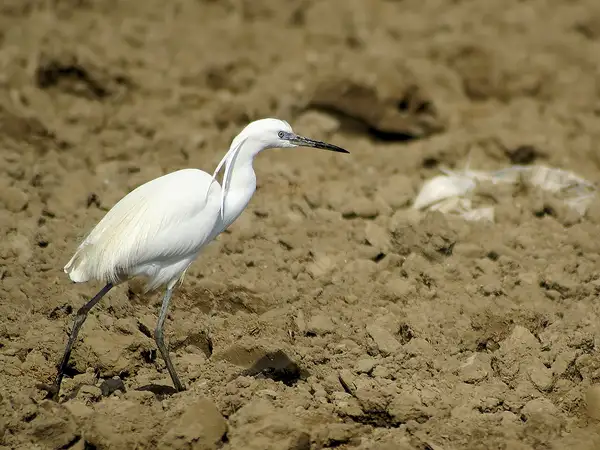
It is not clearly similar1. It is another heron of the heronries where the night heron breeds, and the size of its nests is compared with the night heron’s; the adult night heron has a black back and crown, grey wings and red eye, while the Little Egret is white, more slender and black-billed1.




 Same family
 Same family
 Same family
 Same family
 Same season in the park
 Same season in the park
 Same season in the park
 Same season in the park






