Wingspan compared with a person with arms outstretched.
Length
32–36 cm
Wingspan
54–60 cm
Weight
93–143 g
Social life
It does not breed itself: the female lays her eggs in the nests of other species (brood parasitism)
Lifespan
Record of 12 years and 11 months in the wild (a bird ringed in Germany and found dead)
Conservation status
LC
NT
VU
EN
CR
EW
EX
Global (IUCN)
Least Concern
Spain
Least Concern (LC) in the Red Book of the Birds of Spain; on the List of Wild Species under Special Protection, but not in the Spanish Catalogue of Threatened Species
When to see it
Summer visitor
Months of the year when it is present
J
F
M
A
M
J
J
A
S
O
N
D
In Iberia
no
no
no
yes
yes
yes
yes
yes
yes
no
no
no
Song or voice of the Common Cuckoo
The male’s usual song is a characteristic, recognisable two-syllable «cuu-cu, cuu-cu», which he repeats regularly in long sessions. The phrase can speed up nervously when he comes into contact with the female, who gives a very fast, bubbling trill: «guik-kui-kui-kui-kui-kui». They sometimes also make other hoarse, harsh sounds.
SongCommon Cuckoo
0:00 / 0:25
10 kHz5
The sonogram draws the sound: time runs from left to right, and the higher a trace sits, the higher the note.Recording by Benoît Van Hecke, xeno-canto XC546155 (Francia) (CC BY-SA 4.0).
Flight of the Common Cuckoo
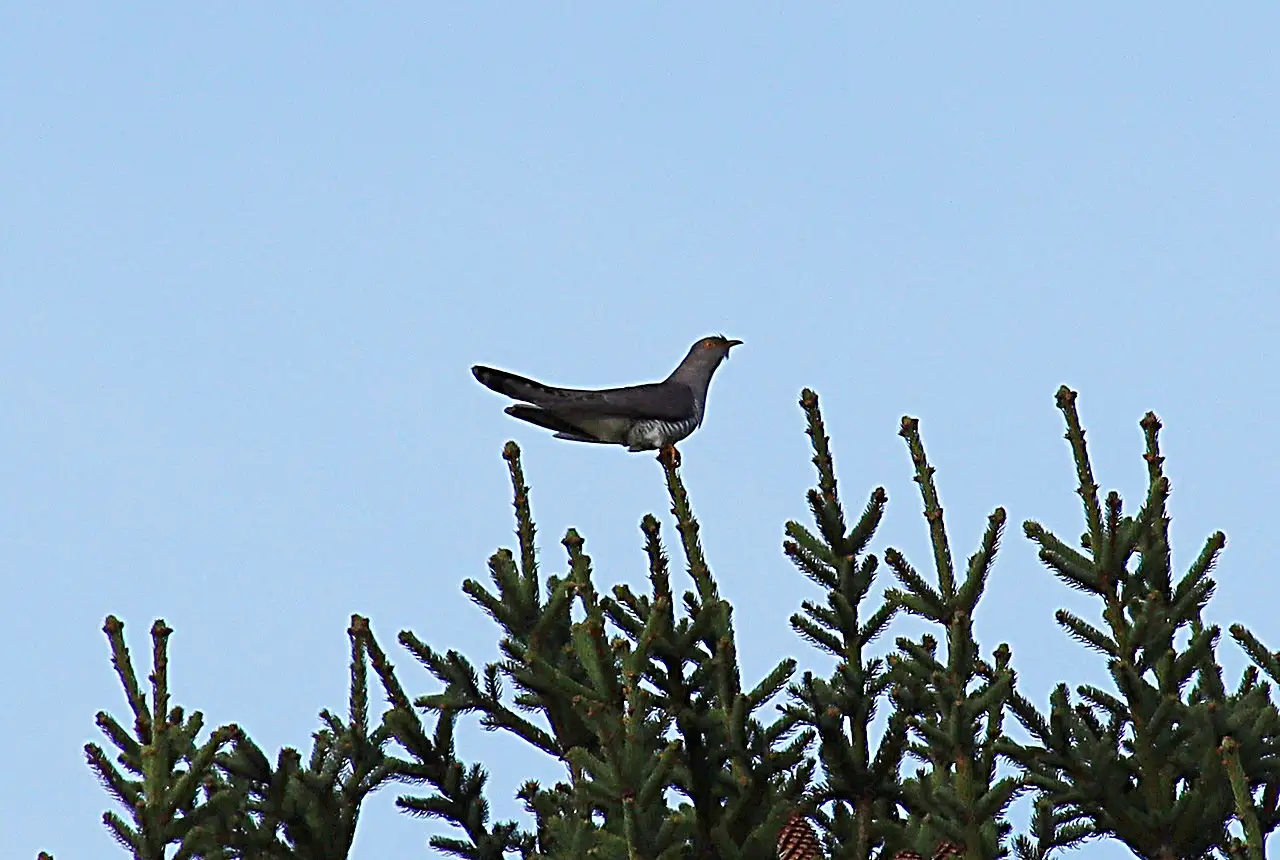
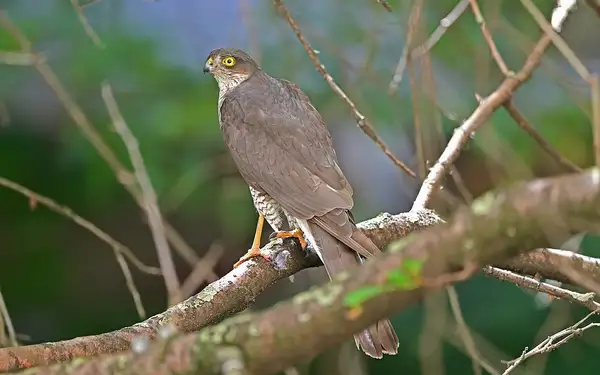
With a long tail and pointed wings, its silhouette in flight can be mistaken for that of a small raptor, such as the Common Kestrel or the Sparrowhawk.
Flight typeWith the silhouette of a small raptor
It leaves the branch where it sings. The male repeats his two-syllable song, «cuu-cu, cuu-cu», in long sessions.
With its long tail and pointed wings, its silhouette in flight can be mistaken for that of a small raptor, such as the Common Kestrel or the Sparrowhawk.
The female selects nests of other species, where she lays her eggs one by one, and lets their owners incubate them and rear the chick.
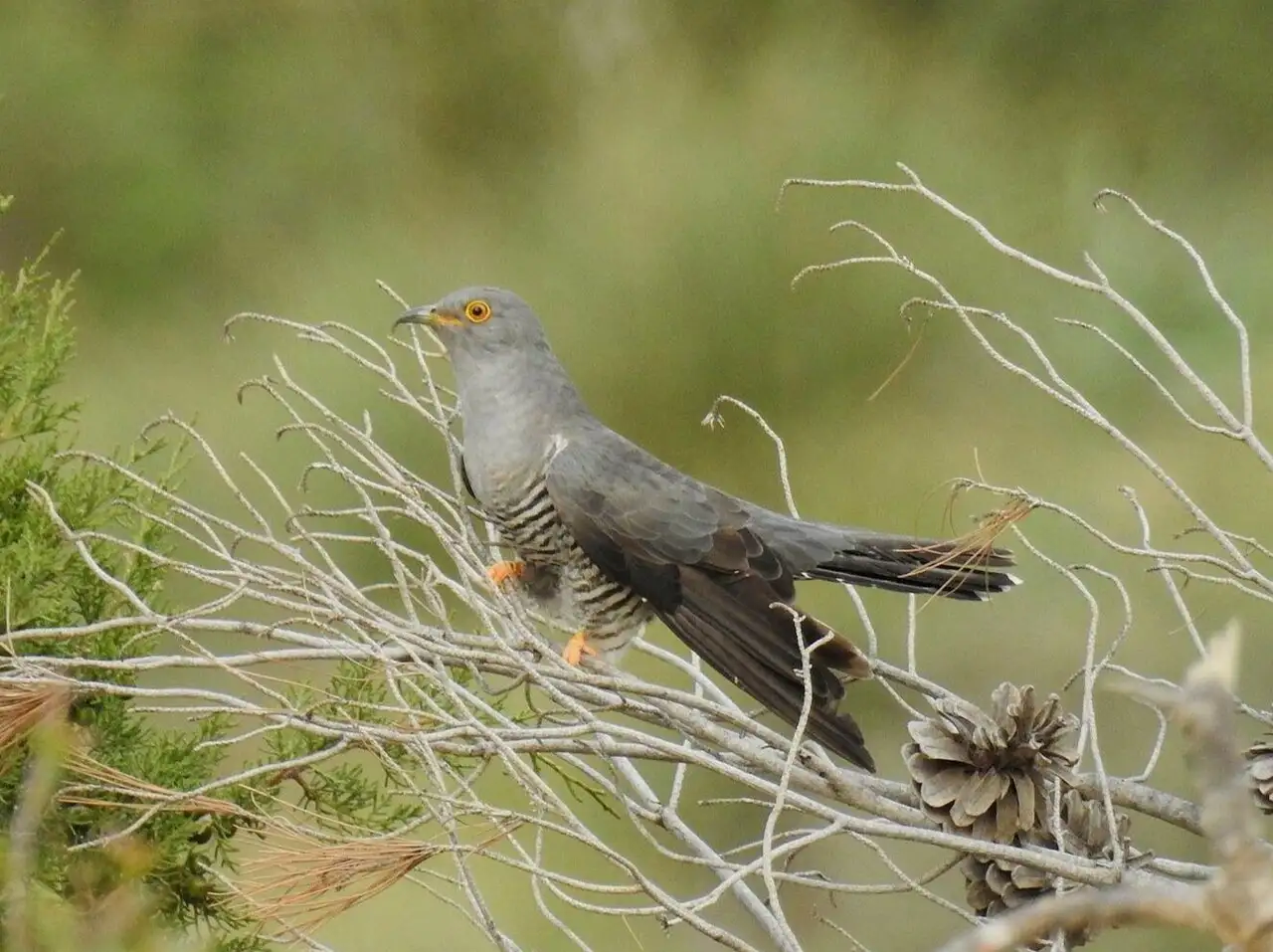
Common Cuckoo among dry pine branches, in profile, with curved bill and long tail pointing backPhoto: mourad-harzallah, CC BY 4.0Photo 2 of 4
Common Cuckoo at the tip of a fir, with pointed wings and long tailPhoto: Georgi.petrov66, CC BY-SA 4.0Photo 3 of 4
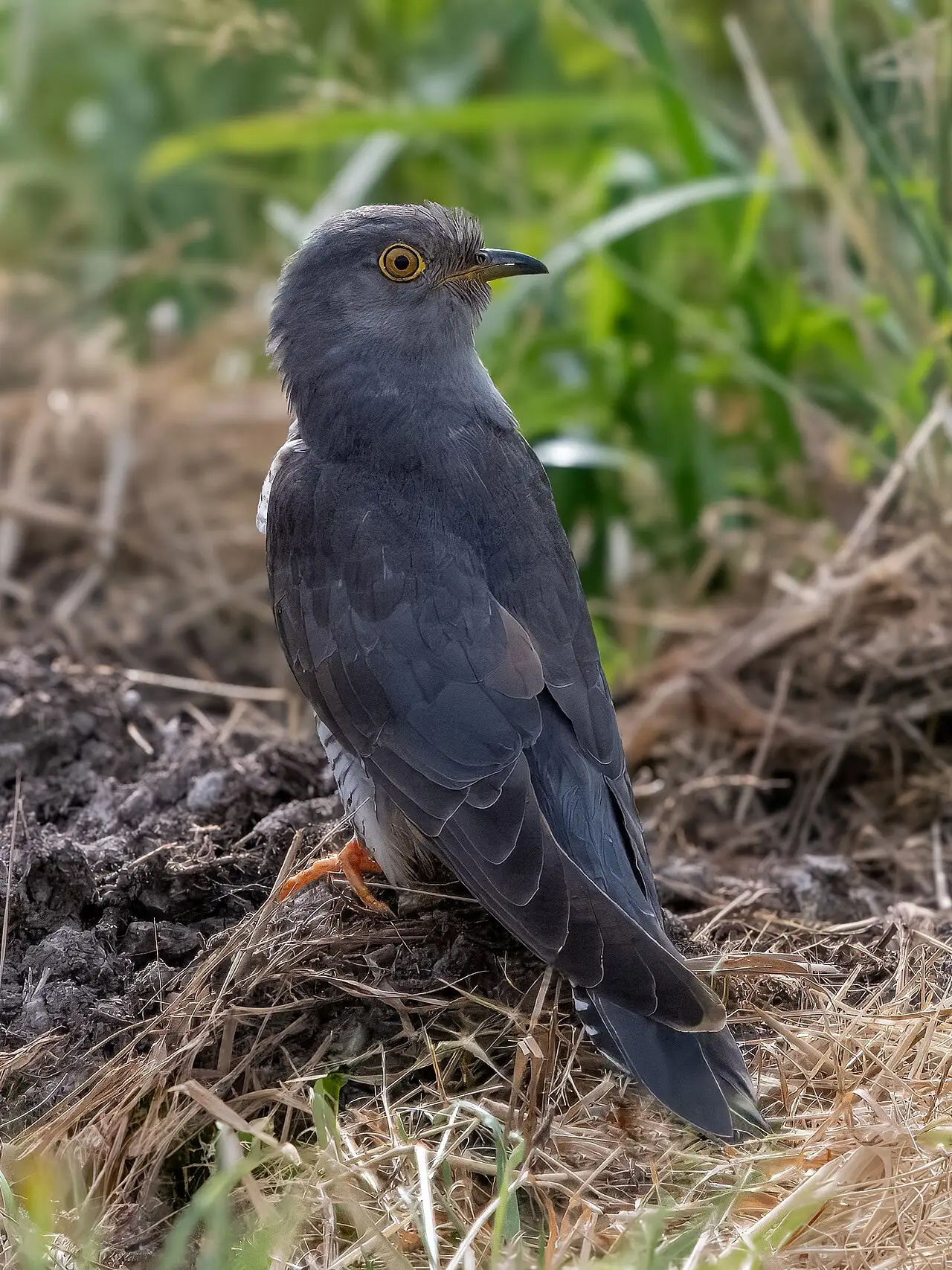
Common Cuckoo on the ground, seen from behind, with grey head and long, dark tailPhoto: Reinhold Möller Ermell, CC BY-SA 4.0Photo 4 of 4
1 / 4
Identification of the Common Cuckoo
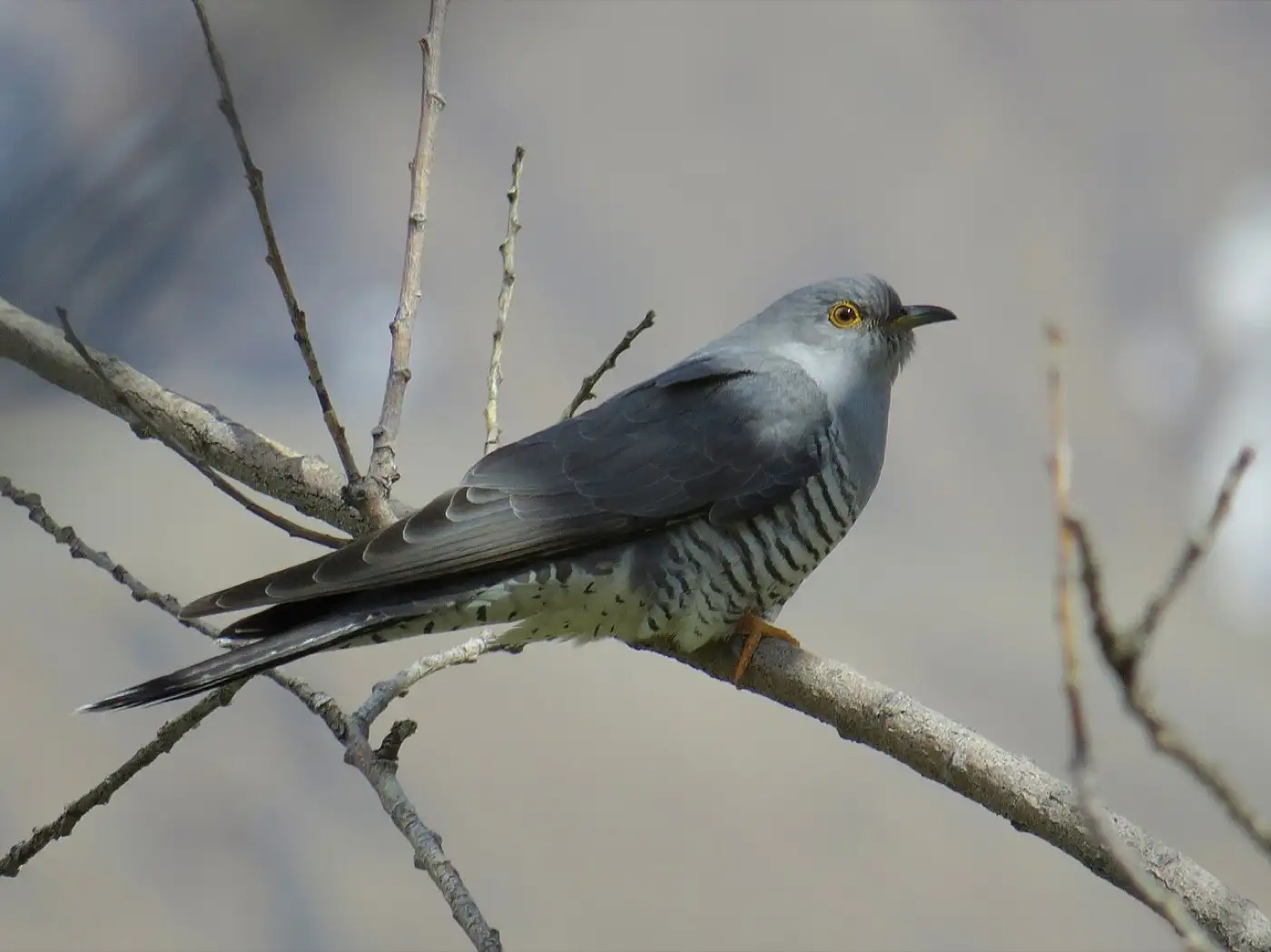
The Common Cuckoo, medium-sized and of slender appearance, is characterised by a long tail and pointed wings, so its silhouette can be mistaken in flight for that of a small raptor, such as the Common Kestrel or the Sparrowhawk. Grey tones dominate the male’s colouring, above all on the back, head and neck. The underparts are white, but finely barred.
The female can wear two kinds of plumage: a greyish one, very like the male’s, and a rufous one, much less frequent. Immatures partly resemble rufous-phase females, although they have white-edged feathers and a characteristic white patch on the nape.
Male
Grey on the back, head and neck.
White underparts, finely barred.
Female
Greyish plumage, very like the male’s, or rufous, much less frequent.
Immature
Like the rufous-phase female, with white-edged feathers.
Characteristic white patch on the nape.
Habitat and distribution of the Common Cuckoo
It is very widely distributed over much of Europe, Asia and North Africa. The wintering area is in subtropical and southern Africa. Four subspecies are recognised; in Spain the subspecies «bangsi» is present, which also extends across North Africa.
With the sole exception of the Canaries and Melilla, it can be considered a summer resident across practically the whole of Spain, where it avoids the highest mountain summits, heavily deforested regions, semi-desert landscapes and excessively urbanised areas.
It occupies every kind of woodland environment, regardless of the density of the tree cover, its degree of maturity and the dominant species: closed woods of holm oak, oak, pine or cork oak, dehesas, riverside groves, beech woods, Lusitanian oak woods or fir woods. It reaches its highest densities in Atlantic-type formations. It also seems quite common in the vicinity of wetlands with abundant marsh vegetation, where several of the birds it most often parasitises live.
It is a strictly migratory species: the whole western Palearctic population, including birds from the Maghreb, spends the unfavourable season in tropical or subtropical areas of Africa. The post-breeding migration takes place in August and September, and the return to the breeding areas around April.
Areas where it is regularly recorded since 2010Squares of about 25 km where it is recorded regularly (occasional passage records are left out). Data from GBIF.org (108,585 records, retrieved October 2026); outline from Natural Earth.
Etymology of the Common Cuckoo
According to Wikipedia, the scientific name comes from Latin: «cuculus» is «cuckoo» and «canorus», «melodious», from «canere», «to sing». The family name and the genus name are onomatopoeias of the male’s song. In other languages it is called «cucut comú» in Catalan, «cuco común» in Galician, «kukua» in Basque and «common cuckoo» in English1.
Population of the Common Cuckoo
In the 2021 European Red List of Birds the European breeding population is estimated at between 8,640,000 and 13,600,000 mature individuals, with a stable trend. The Spanish contingent has been calculated at between 385,000 and 410,000 individuals, with a trend that seems to remain stable, although with notable regional differences: while the northern plateau and the Central System have increased the number of birds, the Eurosiberian and Catalan regions have seen their populations fall by up to a third. The causes point to the decline of its preferred hosts, high mortality on certain migration routes and the disappearance of the macrolepidoptera it feeds on, without ruling out a possible phenological mismatch with its hosts because of climate change.
Because of its peculiar breeding strategy it is little sensitive to habitat changes, although locally it can be affected by forest fires, agricultural transformations, the use of insecticides (which reduce the supply of prey) and the removal of trees on riverbanks and hedgerows. The efforts to eradicate pine processionary caterpillars, which are a food resource of the first order for this bird, stand out, and conservation problems in the wintering areas and along the long migratory journey are not ruled out1.
Nest of the Common Cuckoo
The cuckoo does not build a nest. Its breeding strategy is based on brood parasitism: it lays its eggs inside the nest of another species, which incubates them and takes care of and feeds the parasite’s offspring.
Courtship and breeding of the Common Cuckoo
Each female produces up to 25 eggs, which she places one at a time (rarely two) in nests selected beforehand. If the owner pair does not detect the intrusion, it will incubate the parasite egg, which imitates their own in pattern and colour, for 12 days. The cuckoo’s hatching usually comes several days before that of the legitimate chicks, which allows it to get rid of the remaining eggs or of the newborn chicks, which the intruder throws out of the nest. From then on the young cuckoo receives the exclusive attention of the nest’s owners, whom it often exceeds considerably in size. Its stay in the nest lasts 13 to 20 days, after which it begins an independent life. Each female specialises in parasitising one particular species (probably the one that raised her), so she imitates its eggs with great perfection. More than 100 parasitised species have been documented, and among the most frequent are the Dunnock, the Eurasian Reed Warbler, the European Robin and the Meadow Pipit.
Diet of the Common Cuckoo
Its diet is clearly insectivorous, based on the regular consumption of larvae of different species of Lepidoptera (butterflies and moths), including those with defence mechanisms, such as stinging hairs or toxic substances. It also eats beetles, grasshoppers, crickets, earthworms and the odd small vertebrate.
Curious facts about the Common Cuckoo
More than a hundred species of small and medium-sized insectivorous birds can fall victim to its parasitic behaviour. According to EURING, the longest-lived ringed bird, in Germany, reached 12 years and 11 months; AnAge gives 12.9 years.
The Common Cuckoo in Cabañeros
The habitat pages of this website do not mention it. GBIF.org records 174 observations of the Common Cuckoo in Cabañeros and its surroundings.
Where to see the Common Cuckoo in Cabañeros
In Cabañeros and its surroundings, from April to September.
When
From April to September: it returns around April and the post-breeding migration takes place in August and September.
What time
In good light, in any kind of woodland, in dehesas, riverside groves and near wetlands with marsh vegetation.
Where
On high branches, from where it sings, and in flight over the trees.
What to look for
Listen for the male's two-syllable «cuu-cu»; with binoculars, look for the long tail and pointed wings.



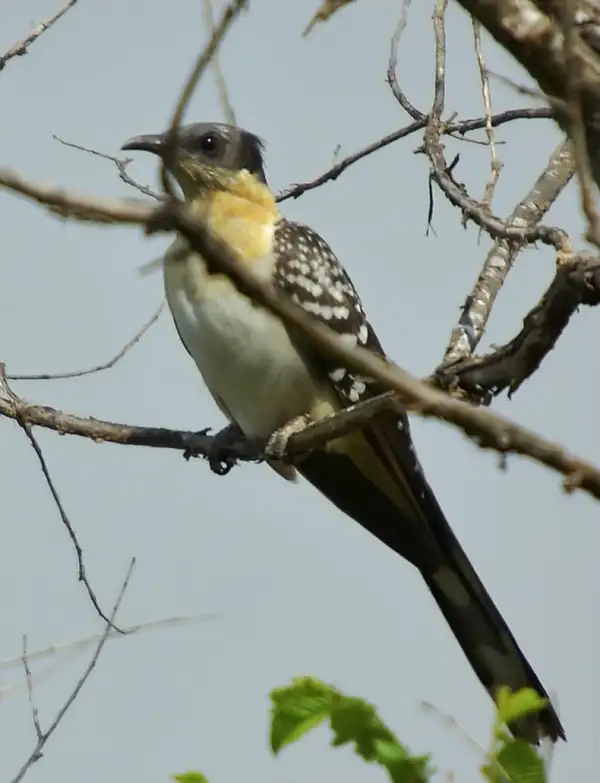
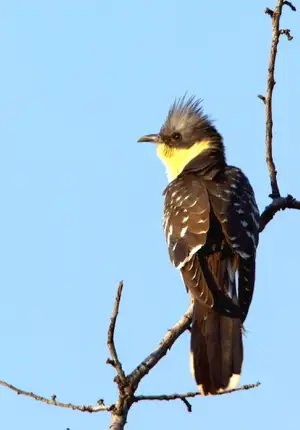 Same family
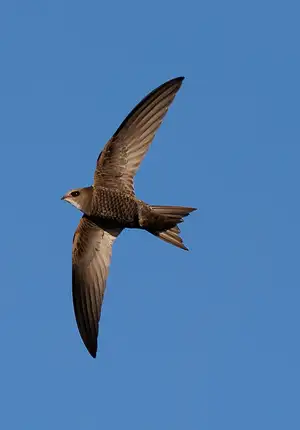 Same season in the park
 Same season in the park
 Same season in the park
 Same season in the park
 Same season in the park
 Same season in the park
 Same season in the park






