Seen perched, upright on dominant points of the crags; the female is shyer
Lifespan
Record of 7 years and 10 months in the wild (a bird ringed in Malta and checked by the ringer; the oldest ringed in Spain reached 6 years and 3 months)
Conservation status
LC
NT
VU
EN
CR
EW
EX
Global (IUCN)
Least Concern
Spain
Least Concern (LC) in the Red Book of the Birds of Spain; on the List of Wild Species under Special Protection, but not in the Spanish Catalogue of Threatened Species
When to see it
Resident
Months of the year when it is present
J
F
M
A
M
J
J
A
S
O
N
D
In Iberia
yes
yes
yes
yes
yes
yes
yes
yes
yes
yes
yes
yes
Song or voice of the Blue Rock Thrush
It gives soft, flute-like, penetrating notes, with vibrant peeps. Some trills and notes recall the song of blackbirds and thrushes, but the rock thrush is more melodious. Both sexes may sing, but the female usually does so perched, while the male dares to do so both perched and in flight. The alarm notes are a short, strong peep, quickly followed by harsh clicks, «bui-rarr-rarr».
SongBlue Rock Thrush
0:00 / 0:28
10 kHz5
The sonogram draws the sound: time runs from left to right, and the higher a trace sits, the higher the note.Recording by Tanguy Loïs, xeno-canto XC913473 (Córcega, Francia) (CC BY-SA 4.0).
Flight of the Blue Rock Thrush
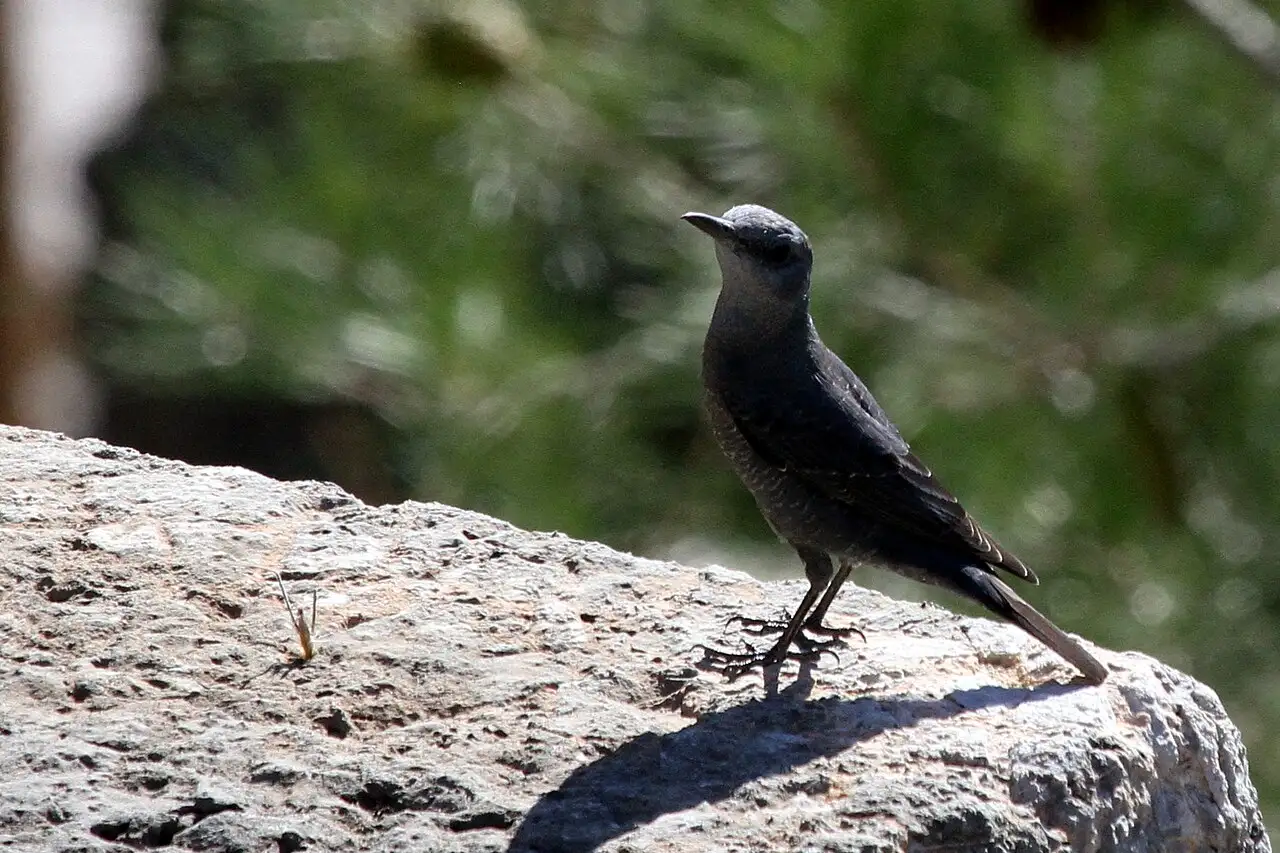
It is often seen perched on top of a rock, silhouetted against the landscape behind. The male sings both perched and in flight.
Flight typeAmong cliffs and crags; the male also sings in flight
It is usually seen perched and upright on top of a rock, silhouetted against the landscape. If something alarms it, it gives a short, strong peep, followed by harsh clicks.
It crosses from crag to crag over canyons, ridges and cliffs. The male dares to sing in flight, with soft, flute-like, penetrating notes.
It lands again, upright, on another dominant point of the crag.
Photo gallery of the Blue Rock Thrush
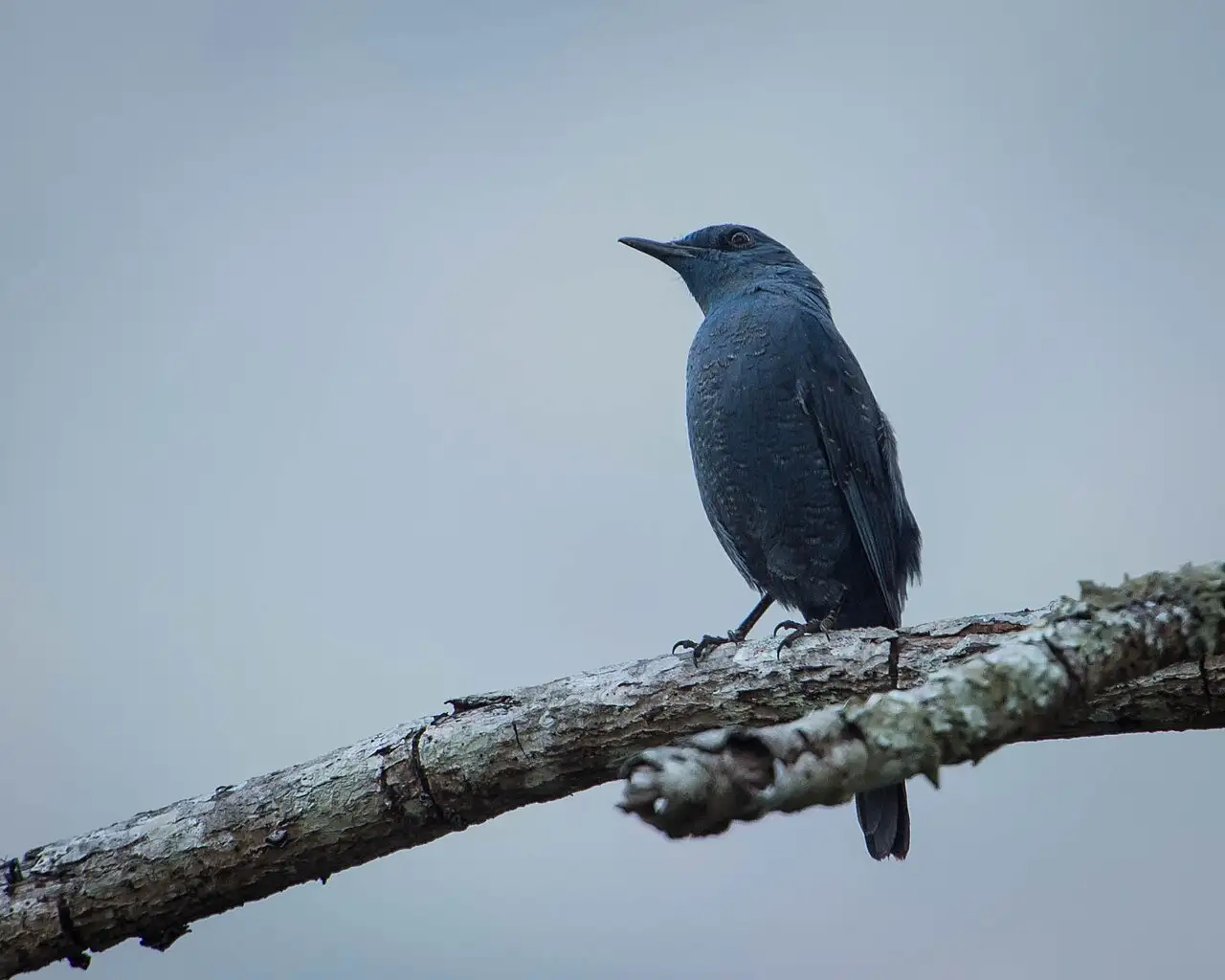
Male Blue Rock Thrush perched in profile on a lichen-covered branch, with uniform dark blue plumage and a long tailPhoto: Jason Thompson, CC BY 2.0Photo 1 of 4
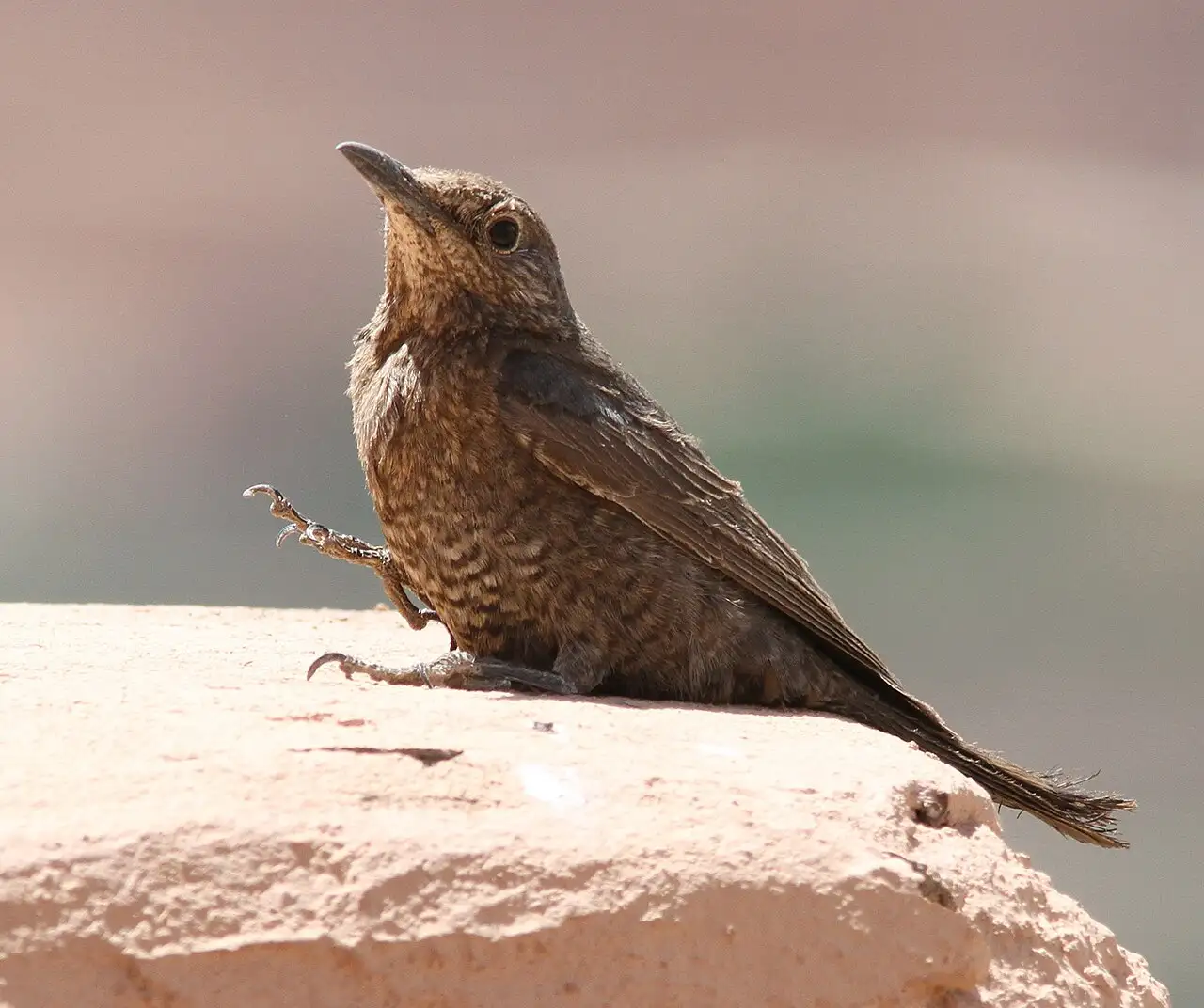
Female Blue Rock Thrush on a wall, with brown plumage finely mottled and the head turned upwardsPhoto: Gary L. Clark, CC BY-SA 4.0Photo 3 of 4
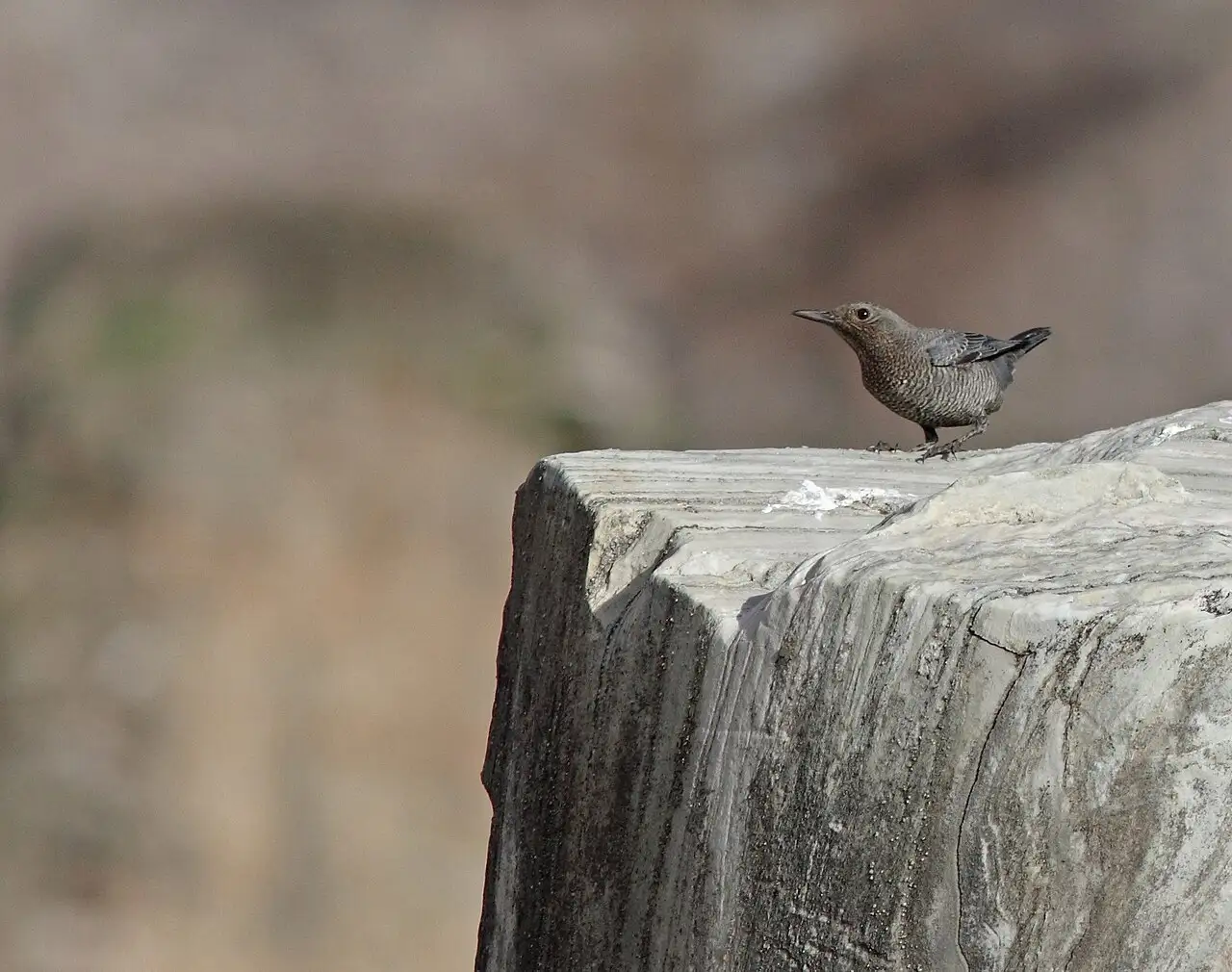
Blue Rock Thrush perched on top of a block of stone, grey, with its tail raisedPhoto: Bouke ten Cate, CC BY 4.0Photo 4 of 4
1 / 4
Identification of the Blue Rock Thrush
Blue Rock Thrushes are easy to recognise. The male has very characteristic dark blue plumage. The female has a grey or grey-brown livery, and on the underparts a soft mottling with white spots. They can be confused with blackbirds, but these are bigger and stockier, and the rock thrushes much more slender and long-tailed; moreover, unlike blackbirds, they usually live in rocky areas. It is often seen perched on top of a rock, silhouetted against the landscape behind.
Male
Very characteristic dark blue plumage.
Slender and long-tailed.
Female
Grey or grey-brown livery.
Underparts with a soft mottling of white spots.
Habitat and distribution of the Blue Rock Thrush
In Africa it breeds in Morocco and northern Algeria and Tunisia, and there are also populations in Asia, from Israel to Japan. In winter it extends its range and occupies central and eastern Africa, southern Algeria, Libya and Egypt (along the Nile); in Asia it winters in Saudi Arabia, the United Arab Emirates, India, Indochina and Indonesia. It has several subspecies, spread across all of southern Europe and Turkey; the Spanish populations are assigned to «solitarius».
It shows a marked preference for the canyons, cliffs and mountains of dry or Mediterranean Spain, although it also appears on coastal cliffs in the north and in the Central System, from where it goes into Extremadura. It is common on the whole southern face of the Pyrenees, the northern and southern Iberian System, the Montes de Toledo, Las Villuercas, Sierra Morena, the Betic ranges, the Balearics, Ceuta and Melilla. It is scarce in the Cantabrian Range, the Galician mountains, the large farming plateaus of Castilla y León and Castilla-La Mancha and the Guadiana and Guadalquivir depressions.
It occupies sunny, dry, warm places with plenty of crags, such as outlying hills, ridges and mid-mountain summits, river canyons and coastal cliffs. It also colonises little-visited human structures, such as ruined churches and castles. It is found from sea level to 1,700 metres, although in the Sierra Nevada it reaches 2,000.
Most populations of the Mediterranean basin are sedentary, although in winter some birds travel to central and eastern Africa. The Asian populations, more mobile, move after breeding to the warm regions of southern and south-western Asia.
Areas where it is regularly recorded since 2010Squares of about 25 km where it is recorded regularly (occasional passage records are left out). Data from GBIF.org (76,953 records, retrieved October 2026); outline from Natural Earth.
Etymology of the Blue Rock Thrush
According to Wikipedia, «Monticola» comes from the Latin «mons» («mountain») and «colere» («to inhabit»), and «solitarius» means «solitary». In other languages it is called «merla blava» in Catalan, «merlo azul» in Galician, «harkaitz-zozo urdina» in Basque and «blue rock thrush» in English1.
Population of the Blue Rock Thrush
In the 2021 European Red List of Birds the European breeding population is estimated at between 201,000 and 463,000 mature individuals, with an unknown trend. For Spain there are no up-to-date figures: the only reference is the 10,000 pairs of the Second Atlas of Breeding Birds (2003). The SACRE programme (1998–2018) indicates a stable trend, with year-to-year fluctuations.
It is favoured by fires, which increase the cover of bare rocky ground. On the other hand, the building of reservoirs in narrow valleys, urban pressure, climbing and other uncontrolled leisure activities reduce the available habitat and disturb it in the breeding season. As with so many other insectivores, the reduction of its food, caused by the use of chemicals together with climate change, is seen as a real threat.
Nest of the Blue Rock Thrush
It sets the nest in holes and cracks of large rocks, banks or rocky ledges, and occasionally makes use of human structures. It is a large, untidy cup, built of moss and grasses, with the inside lined with rootlets and very fine grasses.
Courtship and breeding of the Blue Rock Thrush
The breeding season begins in April. It usually raises a single brood, although some Mediterranean populations lay two clutches. The female lays four or five eggs (sometimes three or six), bluish with faint brown or reddish-brown speckling, which she incubates for 12–13 days. After hatching, the chicks are fed by both parents for two or three weeks.
Diet of the Blue Rock Thrush
All year round it eats every kind of invertebrate. In summer it adds small reptiles to its diet and, in autumn and winter, it completes its feeding with fleshy fruits.
Curious facts about the Blue Rock Thrush
The Spanish popular name «roquero» expresses this bird’s preference for rocky areas. According to EURING, the ringed bird that lived longest, in Malta, reached 7 years and 10 months; oiseaux.net gives a maximum age of 10.7 years.
The Blue Rock Thrush in Cabañeros
The habitat pages of this website do not mention it, but it is pointed to as common in the Montes de Toledo, where the park lies1. GBIF.org records 102 observations of the Blue Rock Thrush in Cabañeros and its surroundings.
Where to see the Blue Rock Thrush in Cabañeros
In Cabañeros and its surroundings, all year.
When
All year: it is sedentary in the Mediterranean basin.
What time
In good light, in sunny, dry, warm places with crags, river canyons and ridges.
Where
On top of rocks, crags and ruins, perched and upright.
What to look for
Look for the dark blue male and the slender, long-tailed silhouette, and listen for its flute-like notes.
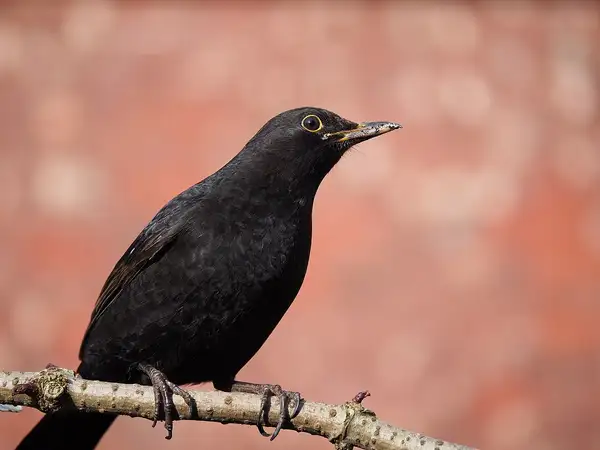
It is similar in song and appearance1. It is bigger and stockier than the rock thrush, which is much more slender and long-tailed and usually lives in rocky areas.



 Same family
 Same family
 Same family
 Same family
 Same order
 Same order
 Same order
 Same order





