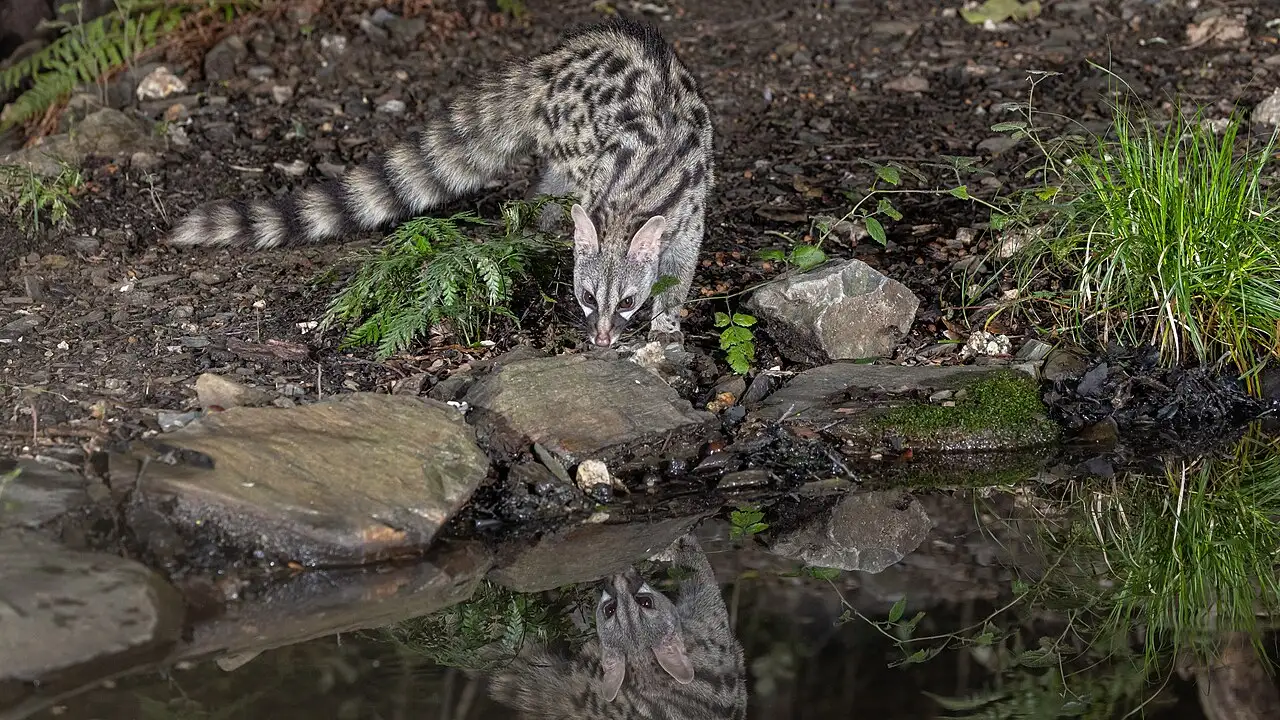
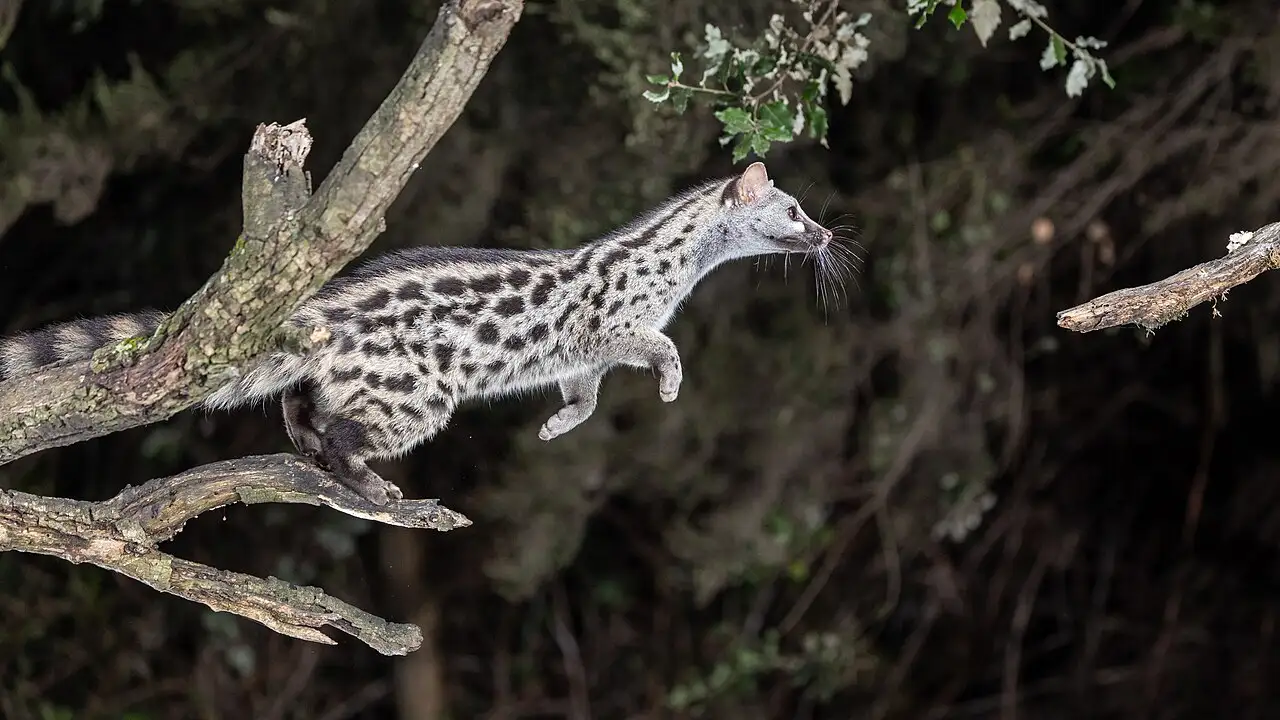
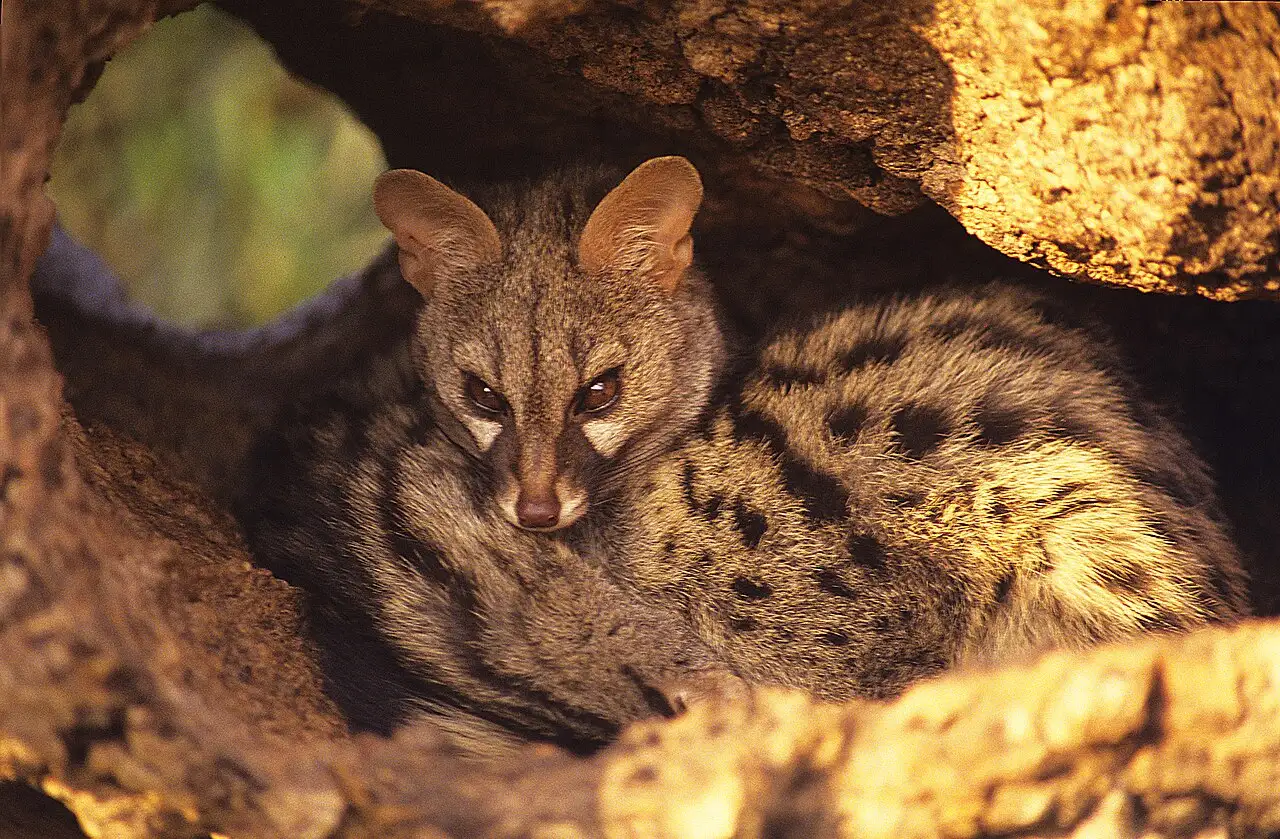
Common Genet at night, with a spotted coat and big eyesPhoto: FOTO-ARDEIDAS, CC BY-SA 3.0Photo 3 of 3
1 / 3
Identification of the Common Genet
It measures 43 to 55 centimetres of head and body, and the tail almost as much again. It weighs about two kilos.
Habitat and distribution of the Common Genet
Woods and scrub with cover, rocky outcrops and riverbanks.
Areas where it is regularly recorded since 2010Squares of about 25 km where it is recorded regularly (occasional records are left out). Data from GBIF.org (4,829 records, retrieved October 2026); outline from Natural Earth.
Breeding of the Common Genet
The rut runs from January to September, with a peak in February and March and a smaller one in July and August. Gestation lasts ten to eleven weeks; most females have a single litter a year, in spring, of one to four young.
Diet of the Common Genet
Depending on the area, its main prey are small mammals or arthropods. In Mediterranean environments its diet is more varied, and birds are usually the second most important group.
The Common Genet in Cabañeros
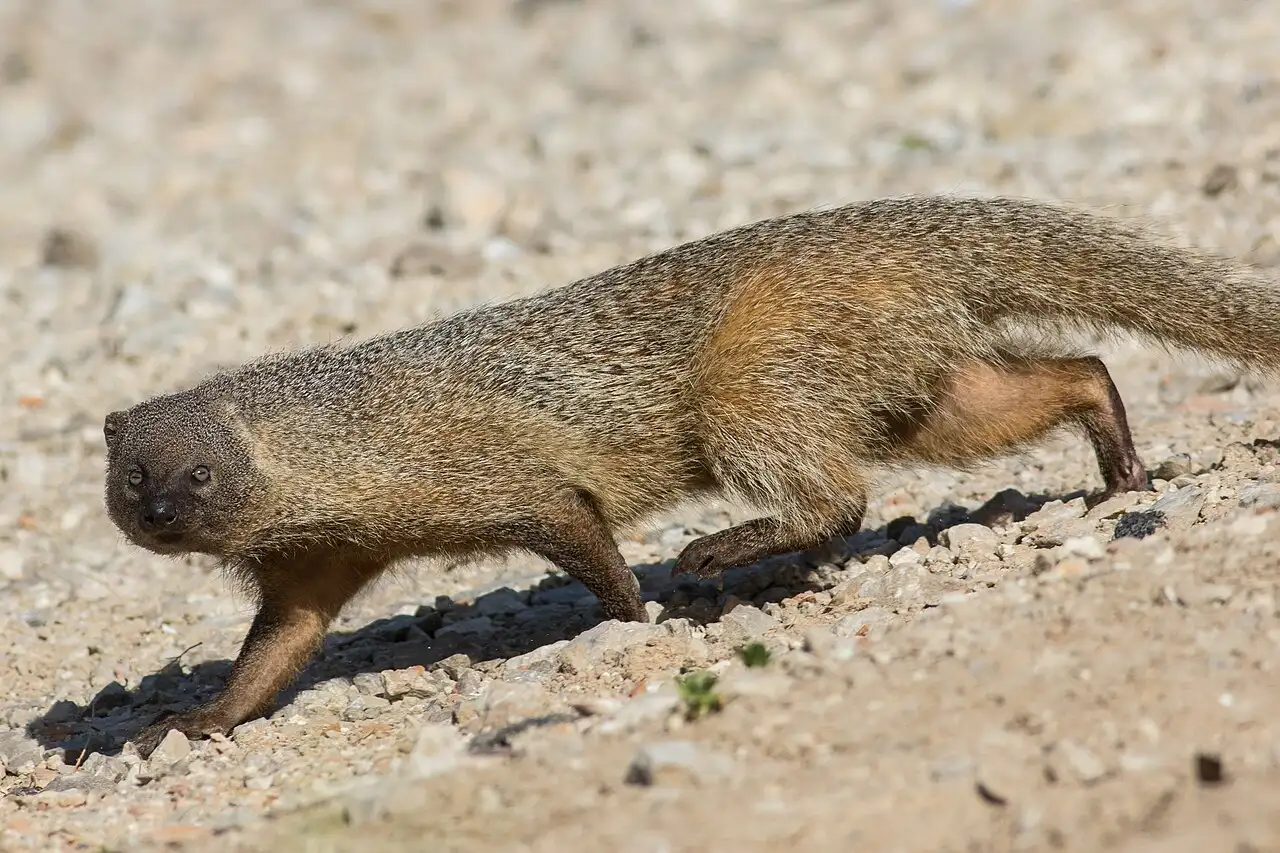
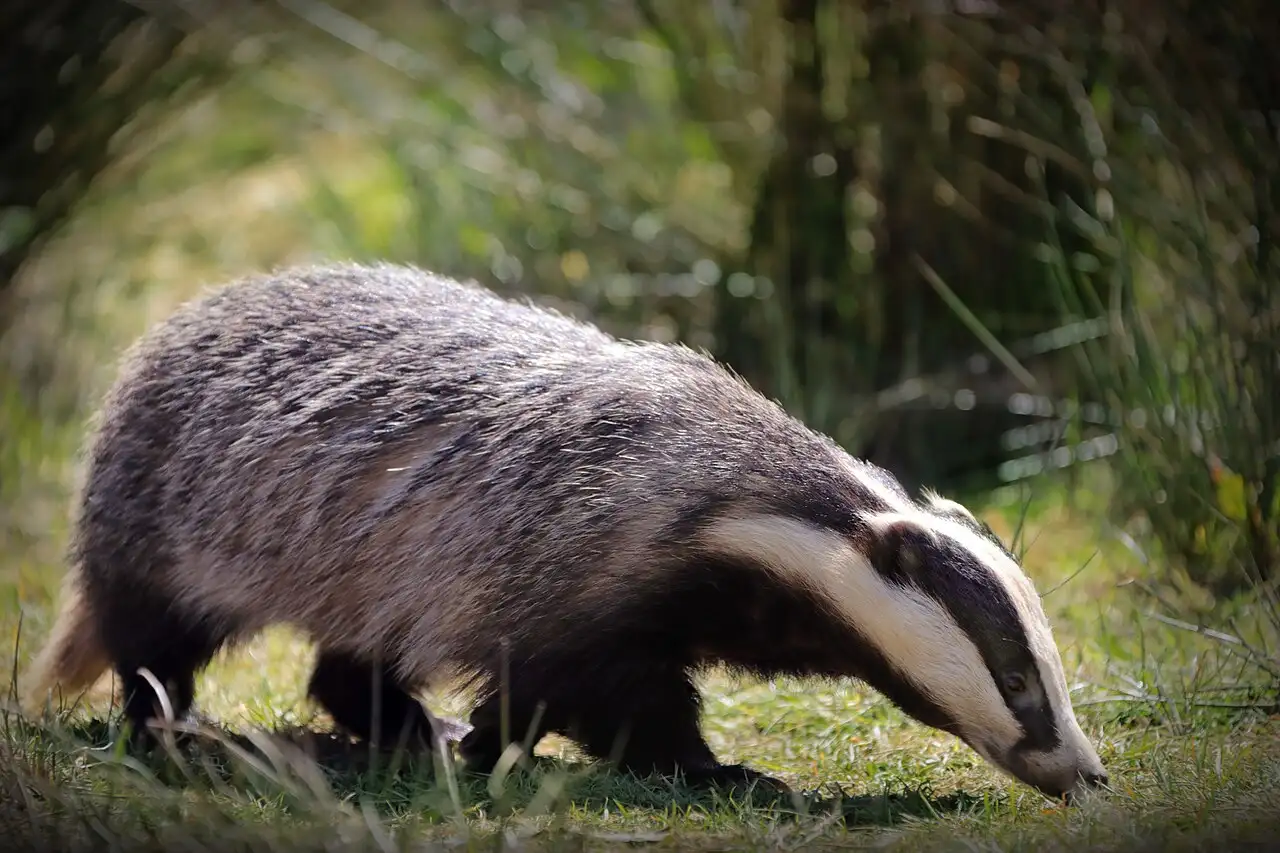
It is one of the species that, according to the website, have overtaken in abundance the big carnivores of the last century: today it is the third most numerous carnivore in the park. The guide cites it alongside cats, mongooses and badgers in the closed woodland of peonies and hawthorns.
Can it be seen in Cabañeros?
It is exclusively nocturnal. If you see it, it will be in a torch or in the car headlights: a long ringed tail disappearing into the scrub.
Camps, D. (2017). Jineta – Genetta genetta. En: Salvador, A. y Barja, I. (eds.), Enciclopedia Virtual de los Vertebrados Españoles. Museo Nacional de Ciencias Naturales (CSIC). vertebradosibericos.org
OAPN (2011). Guía de visita del Parque Nacional de Cabañeros. PDF
AnAge: The Animal Ageing and Longevity Database. Genetta genetta