Grasses and shoots, leaves of trees and shrubs; more grasses in autumn
Social life
Solitary or in small groups
Lifespan
Record of 17.5 years (in captivity)
Conservation status
LC
NT
VU
EN
CR
EW
EX
Global (IUCN)
Least Concern
Spain
Least concern; game species
When to see it
Mammal · in Cabañeros
Present in the mountains and valleys of the woodland, where the red deer does not dominate. The subspecies of the Montes de Toledo lives here.
Months of the yearly cycle
J
F
M
A
M
J
J
A
S
O
N
D
Rut
no
no
no
no
no
yes
yes
yes
yes
no
no
no
Births
no
no
no
yes
yes
no
no
no
no
no
no
no
Photos of the Roe Deer
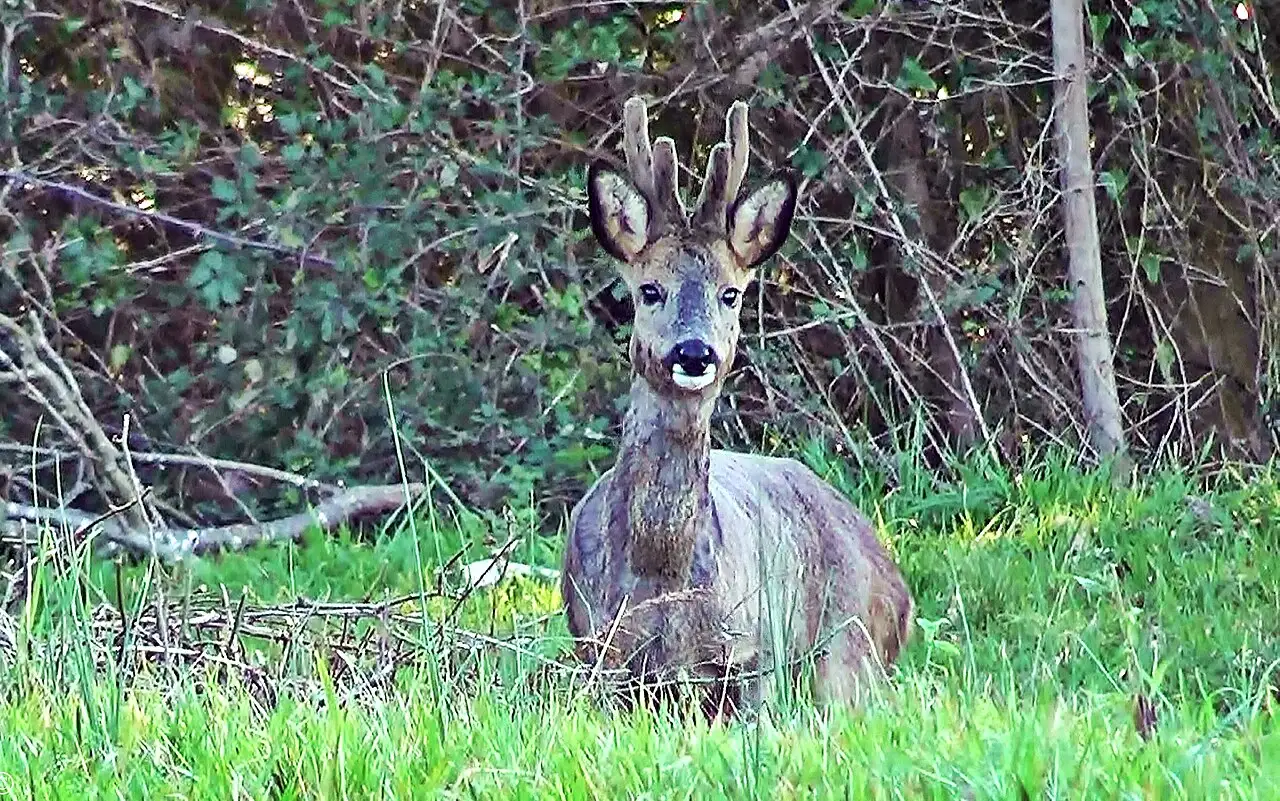
A male roe deer with short, rough, three-pointed antlersPhoto: Marcial Gijon, CC BY-SA 4.0Photo 1 of 2
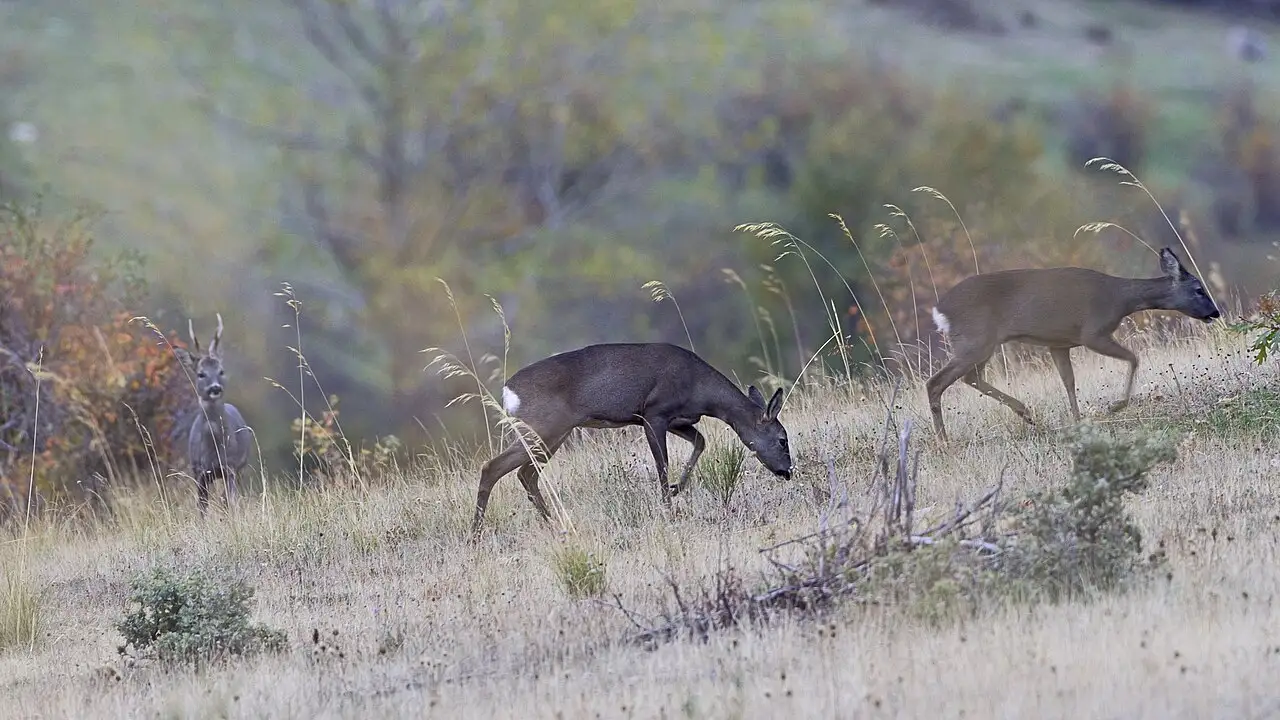
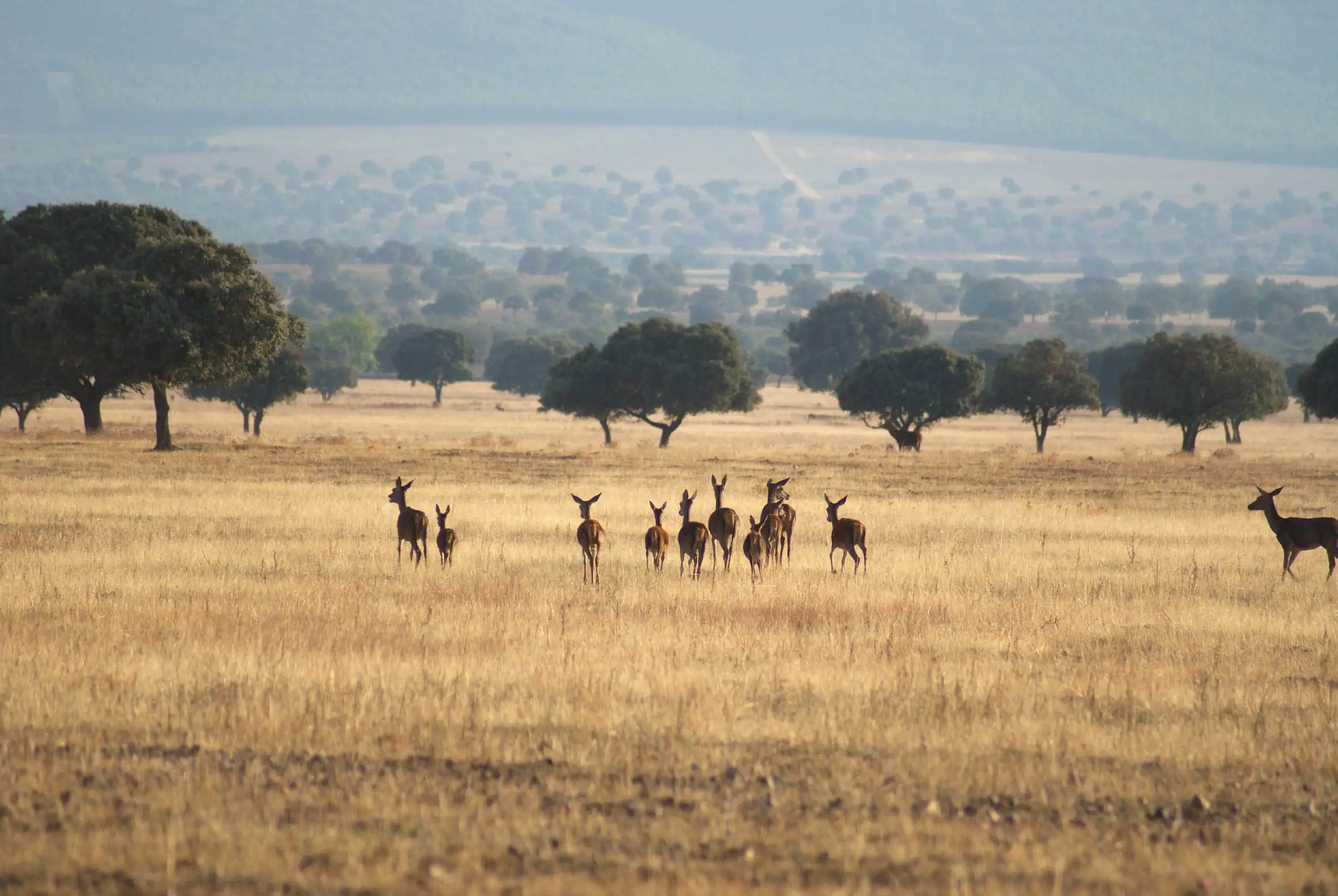
Several roe deer grazing in a woodland clearing in autumnPhoto: Juan lacruz, CC BY-SA 4.0Photo 2 of 2
1 / 2
Identification of the Roe Deer
The Montes de Toledo are home to a subspecies of their own, which the park guide cites as Capreolus capreolus ssp. canus. The roe deer is a woodland ungulate, reluctant to come out onto the raña: it prefers dense cover and valleys where the woodland is thinner.
Habitat and distribution of the Roe Deer
It occupies woods, tall scrub and their edges. The map shows where it is observed on the peninsula.
Areas where it is regularly recorded since 2010Squares of about 25 km where it is recorded regularly (occasional records are left out). Data from GBIF.org (334,338 records, retrieved October 2026); outline from Natural Earth.
Breeding of the Roe Deer
The rut is in summer, the opposite of the red deer. In the centre of the peninsula it runs from mid-June to mid-September, and the park guide places it in Cabañeros from June, with the «bark» most frequent in the twilight hours. During those days, the male follows the female until mating.
The curious part comes afterwards. About fifteen days after mating, the embryo stops developing and is paused for months, until growth resumes around January. Thanks to this delayed implantation, the young are born in spring: in the centre of the peninsula, between early April and the end of May, the earliest dates in its whole range. One or two are usually born, rarely three.
Diet of the Roe Deer
It selects the most nutritious food: grasses, shoots and leaves of trees and shrubs. It eats more grass in spring and summer and more grasses in autumn.
The Roe Deer in Cabañeros
Inside the park the roe deer has few places to settle, because the red deer puts very strong pressure on the woodland and displaces it. Where the red deer does not dominate, however, its population has increased. The guide highlights it among the mammals of the mountains and places it in spots such as the surroundings of Gargantilla and the Brezoso reservoir.
Where to see the Roe Deer in Cabañeros
When
All year. In June and July, with the rut, it is heard more.
What time
At dawn and dusk.
Where
In the woodland and thinned valleys: the surroundings of Gargantilla, on the guided visit, and those of the Brezoso reservoir, on the 4×4.
What to look for
A small brown silhouette that stands still looking at you and flees in bounds showing the white patch on its rump.
Mateos-Quesada, P. (2017). Corzo – Capreolus capreolus. En: Salvador, A. y Barja, I. (eds.), Enciclopedia Virtual de los Vertebrados Españoles. Museo Nacional de Ciencias Naturales (CSIC). vertebradosibericos.org
OAPN (2011). Guía de visita del Parque Nacional de Cabañeros. PDF