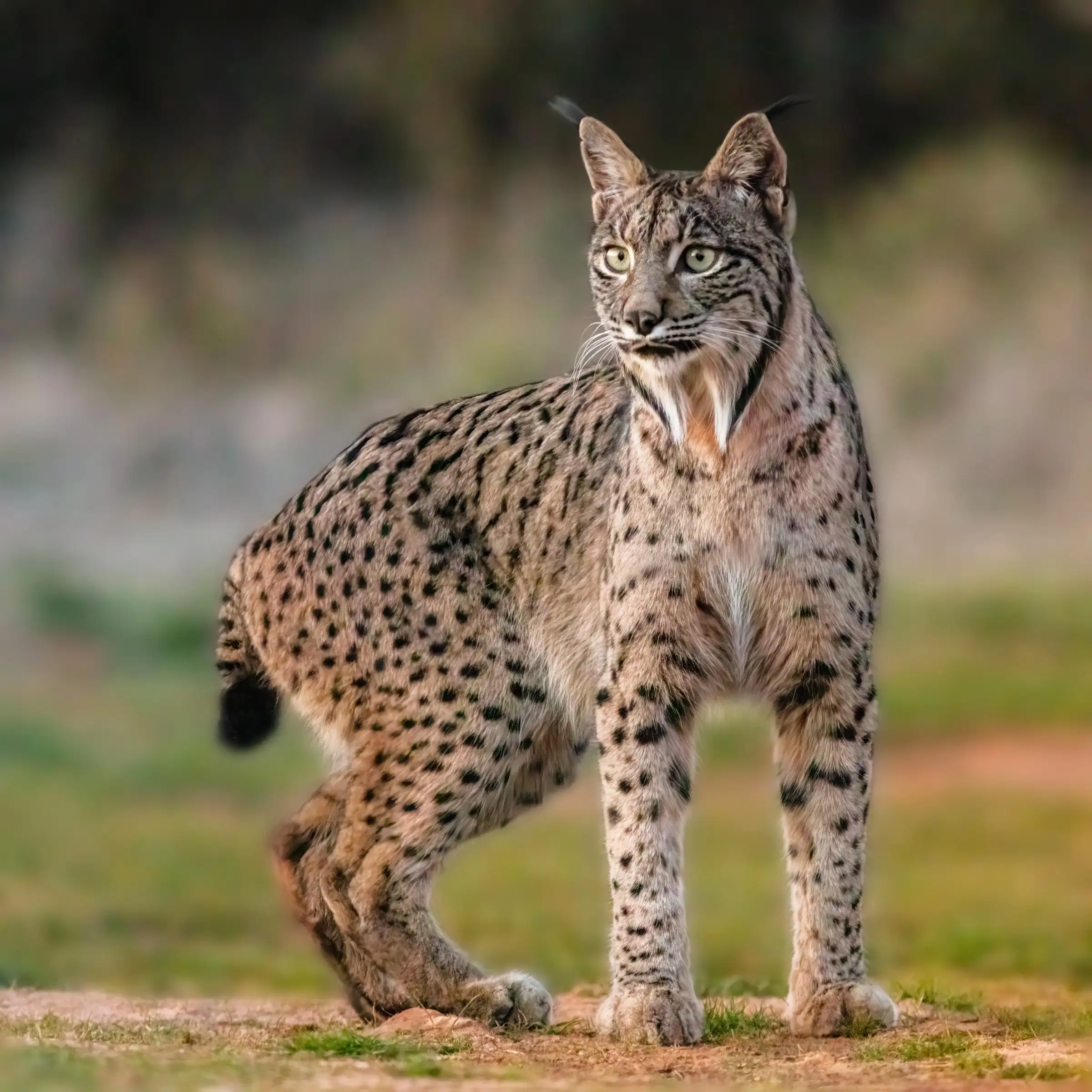
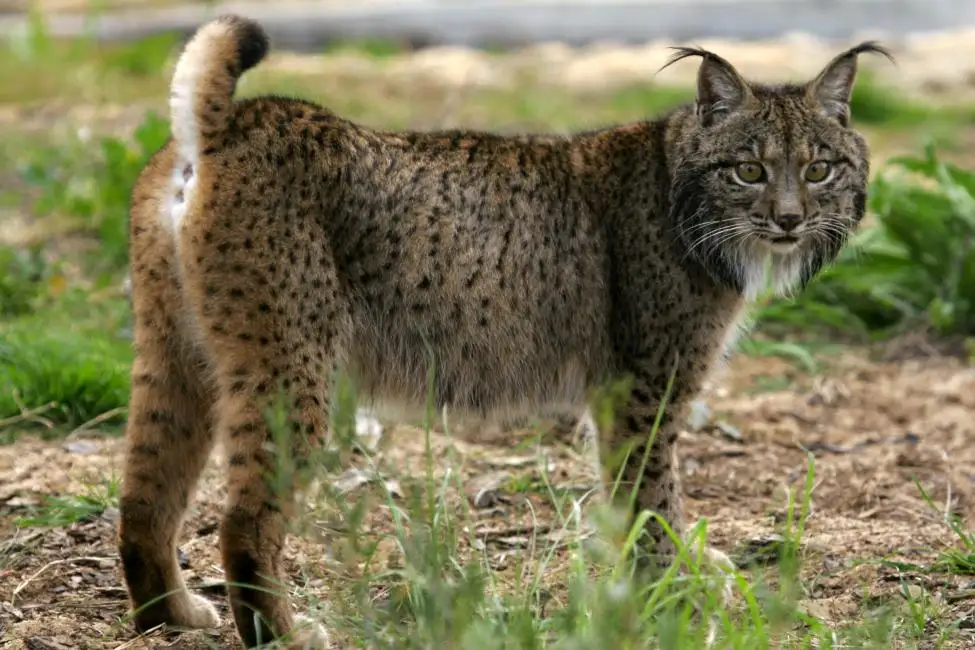
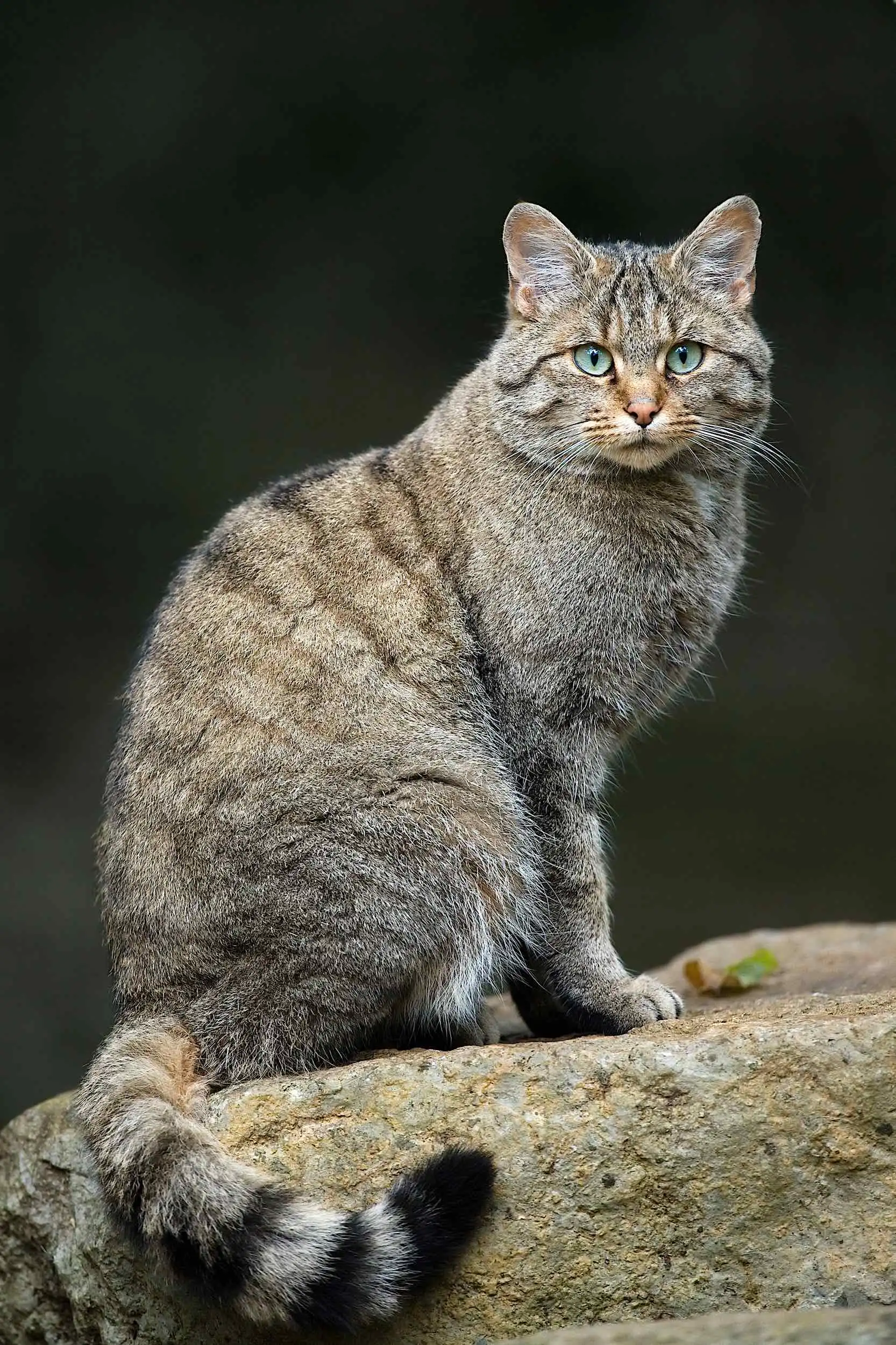
It is a medium-sized cat: between 82 and 103 centimetres of head and body, and an average weight of 12.8 kilos in males and 9.3 in females. It is told apart from a wildcat without difficulty by its long legs, short tail and ear tufts.
Distribution of the Iberian Lynx
It lives only on the Iberian Peninsula. According to the IUCN, which in 2024 moved it from «endangered» to «vulnerable», breeding adults have gone from 62 in 2001 to 648 in 2022, thanks to captive breeding, reintroductions and the recovery of the rabbit. Counting young too, in the 1990s fewer than a hundred lynxes remained and in 2024 more than 2,000 were estimated, spread over at least 3,320 km², against 449 km² in 2005. The map shows the places where it has been recorded, still very few.
Areas where it is regularly recorded since 2010Squares of about 25 km where it is recorded regularly (occasional records are left out). Data from GBIF.org (609 records, retrieved October 2026); outline from Natural Earth.
Breeding of the Iberian Lynx
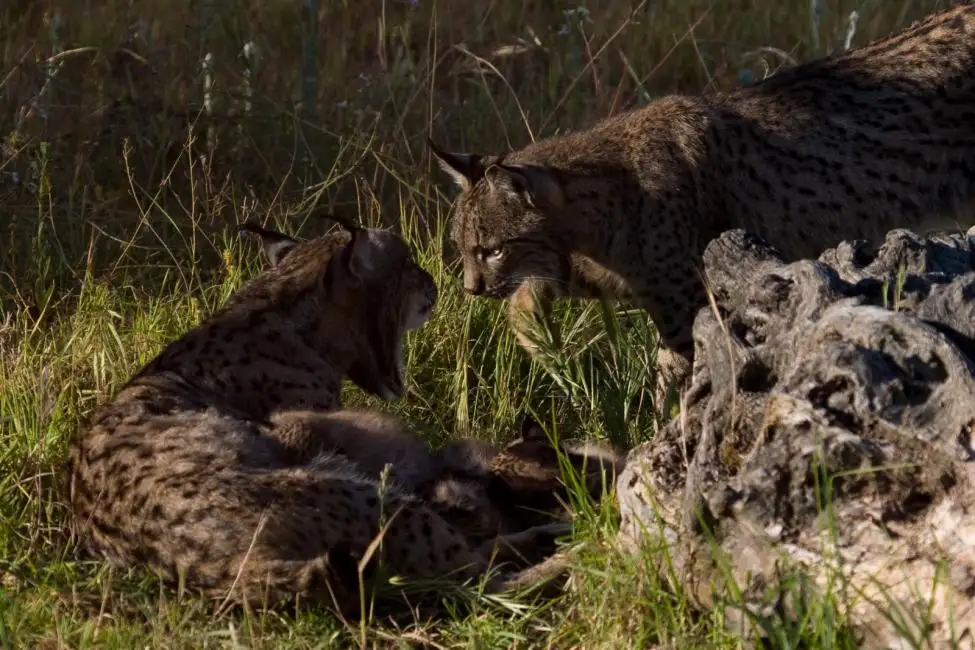
The rut is brief and gestation lasts about two months. Births are concentrated in March and three young are usually born, although often only one or two survive to ten months.
Diet of the Iberian Lynx
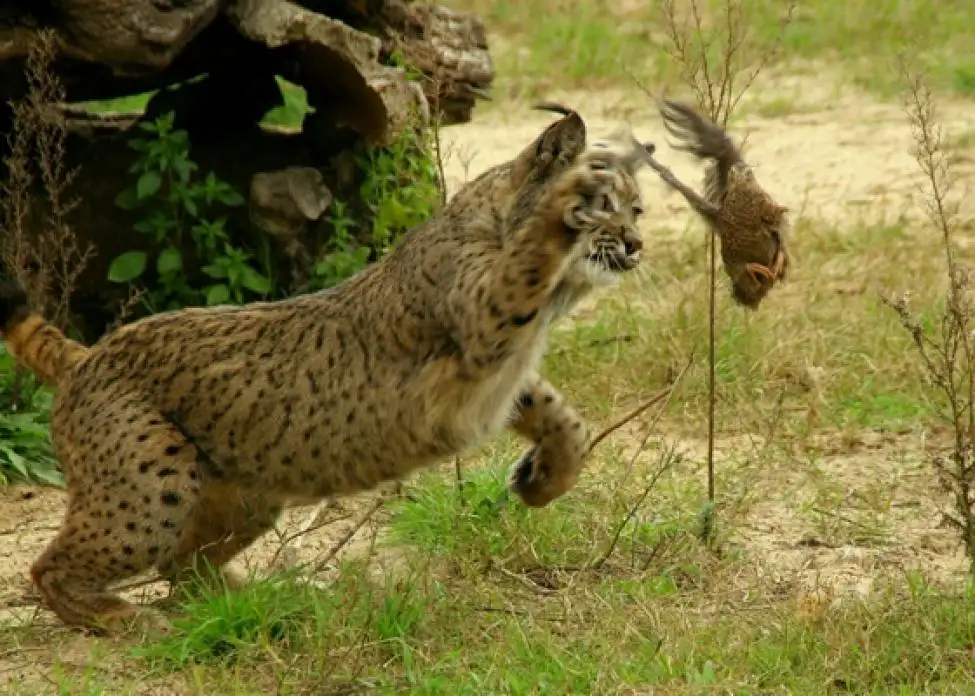
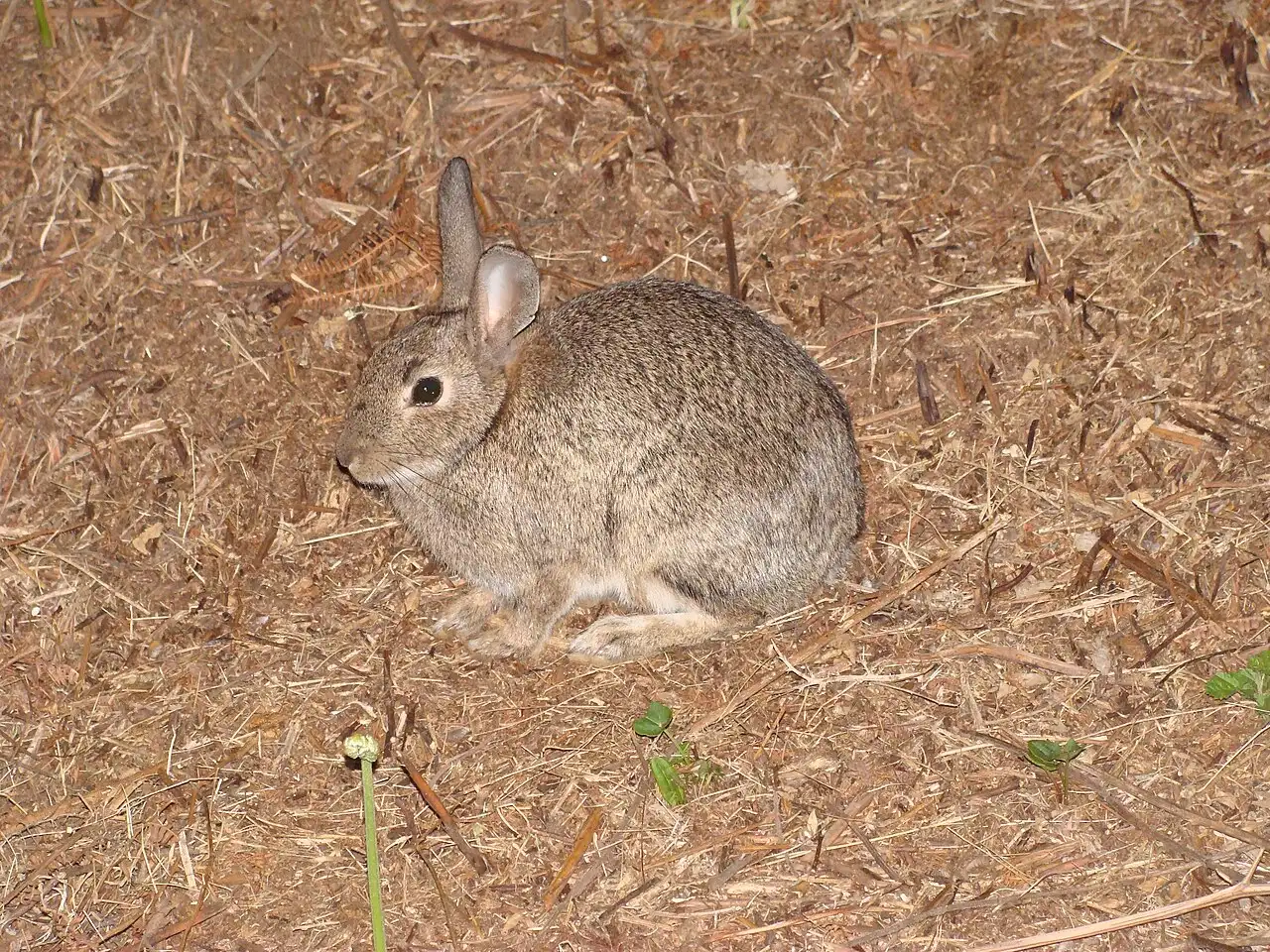
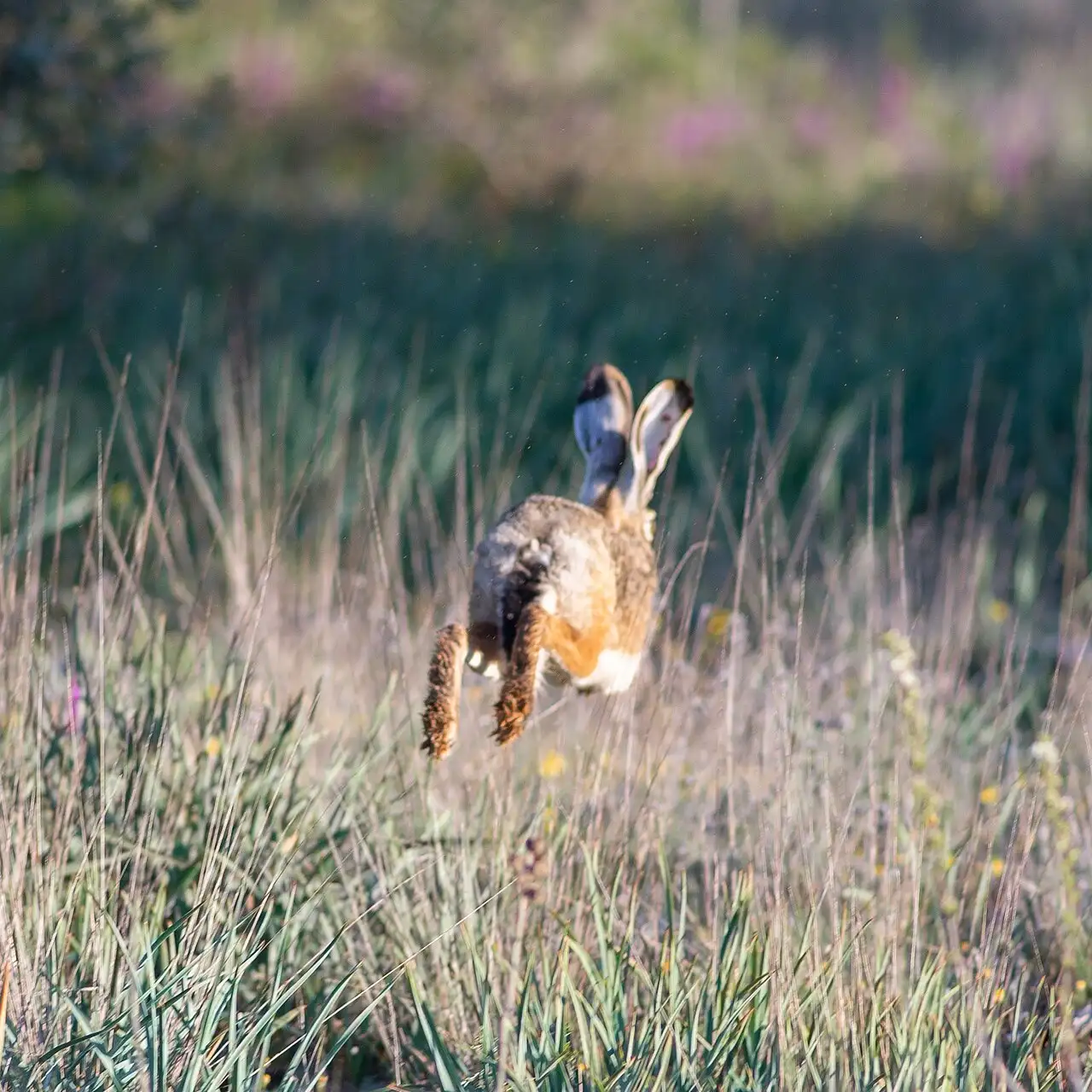
It is a specialist: it lives almost exclusively on the wild rabbit. That is why its history is stuck to that of the rabbit. According to the park guide, the appearance of rabbit diseases was the start and the main cause of its rarity.
The Iberian Lynx in Cabañeros
The Montes de Toledo were always good territory for the lynx. It was frequent in the region and, until hunting it was banned in 1973, a usual trophy of hunts. To rabbit diseases were added the fragmentation of the woodland, poison and hunting, and the last lynx seen in what is today the park was in 1992.
Cabañeros, together with the Quintos de Mora estate, is recognised as a stepping stone: a passage area where the lynx can settle and that serves as a bridge between the great population nuclei. The park takes part in the European project Life LynxConnect, which seeks to create new breeding nuclei, and it has two acclimatisation enclosures of about 15,000 square metres each, where lynxes get used to the terrain before going out into the woodland.
The return of the lynx, year by year
What follows comes from the «Desde el parque» newsletters published by the park itself, all on our newsletters page (in Spanish).
Before 2023: Carla was the first lynx released in the park, and ended up in Sierra Morena. Others passed through, such as Luna, who came from Extremadura and ended up settling in the Montes de Toledo.
May 2023: Sibila, a two-year-old female born in the Sierra Morena of Ciudad Real, leaves her acclimatisation enclosure on 17 May. She stays in the mountains around the raña and by the end of the year everything pointed to her having settled.
November 2023: R2D2 is released, a male of 2020 who had been in the pre-release enclosure since August. Unlike Sibila, he left the park heading south.
April 2024: U2 goes out, a male born on 13 March 2023. His mother, Nava, died after being hit by a vehicle, and he and his three siblings were reared at the La Olivilla breeding centre (Jaén). He entered the enclosure on 29 February and was set free on 15 April.
November 2024: Uvita goes out, a female born in 2023 on the La Garganta estate, in Sierra Morena, after a month in the enclosure. Her name was chosen by a vote on the park’s social networks, after the vineyards around Cabañeros. U2 had already been in the park for eight months, so the first meetings were through the fence.
December 2024: the collars place the two together on thirteen occasions during the month, and on the 11th a camera photographs them for the first time walking side by side.
Spring 2026: from 12 March the positions were repeated again and again at the same point, which made people suspect there were cubs. Camera trapping confirmed it: it is the first litter of lynx born in the wild inside the park, and there are three cubs.
Today: U2 and Uvita are the first territorial pair of lynx in Cabañeros.
The lynx has stayed because there are rabbits again. At the end of the last century the rabbit was at a minimum in the park, and recovering it has taken almost forty years of trials, most of them failures, until arriving at the buried pallet warrens installed between 2012 and 2018. Since then rabbit density has soared at the points where work is being done. The whole story is on the rabbit page.
How the park’s lynxes are tracked
U2 and Uvita wear collars that combine GPS with sending data by mobile phone network or satellite. The collar cannot weigh more than 3 to 5 % of the lynx’s weight, so that it does not get in the way when moving or hunting. If the lynx is in an area with no coverage, the collar stores the positions until it regains signal. It also carries a mortality sensor, which alerts the team if the lynx spends too many hours without moving, and a remote-release system, to take it off without having to capture it again.
Camera traps do the rest. The spotting of each lynx is unique, like a fingerprint: genetics decide the type of spots, but their exact shape and place are decided by chance while the animal forms. With a good photo you can tell which animal has passed, how it is doing or whether a female is rearing young. It was these cameras that caught Uvita with her three cubs.
Telling the cubs apart has its own science, and the July–August 2026 newsletter explains it. To the naked eye there are three types of spotting: fine (punctata), with small, tight spots that from afar look like a plain brown; coarse (maculata), with large, round, well-separated spots, and barred, when the spots join into false stripes. But lynxes are not symmetrical, and the left flank does not repeat the right, so a photo of one side only is just half an identification. For the rest «constellations» are sought: three or four striking spots on the shoulder, flank, thigh or inner side of the legs, which are joined with imaginary lines to compare the figure, its distances and its angles from one photo to another.
Some of those cameras belong to the RIMED-FAUNA project, of the Organismo Autónomo Parques Nacionales and the Complutense University of Madrid, which studies how wildlife uses the park’s temporary rivers. In summer, even when dry, their channels still serve as a corridor for animals. One of them filmed Uvita leaping a stream with her three cubs behind.
Can the Iberian Lynx be seen in Cabañeros?
It is very difficult, and no locations are given. There are few animals, they live in quiet areas and are in full settling-in period. The best thing a visitor can do is to respect the park rules, not leave the tracks and drive slowly: the IUCN cites road deaths among the threats that still weigh on the species.
Rodríguez, A. (2017). Lince ibérico – Lynx pardinus. En: Salvador, A. y Barja, I. (eds.), Enciclopedia Virtual de los Vertebrados Españoles. Museo Nacional de Ciencias Naturales (CSIC). vertebradosibericos.org
Newsletter «Desde el parque», Cabañeros National Park (OAPN): July–August and November–December 2023; January–February, March–April, May–June, September–October and November–December 2024; March–April, May–June and July–August 2026 (in Spanish). All the newsletters.
OAPN (2011). Guía de visita del Parque Nacional de Cabañeros. PDF