Fish and, in Mediterranean rivers, also crayfish, amphibians and reptiles
Social life
Solitary; the mother with her young
Lifespan
Maximum of 12 to 14 years
Conservation status
LC
NT
VU
EN
CR
EW
EX
Global (IUCN)
Near Threatened
Spain
On the List of Wild Species under Special Protection (Spain)
When to see it
Mammal · in Cabañeros
Present in the Estena and Bullaque rivers and their streams. Its droppings are easy to find on the stones of the bank.
Photos of the Eurasian Otter
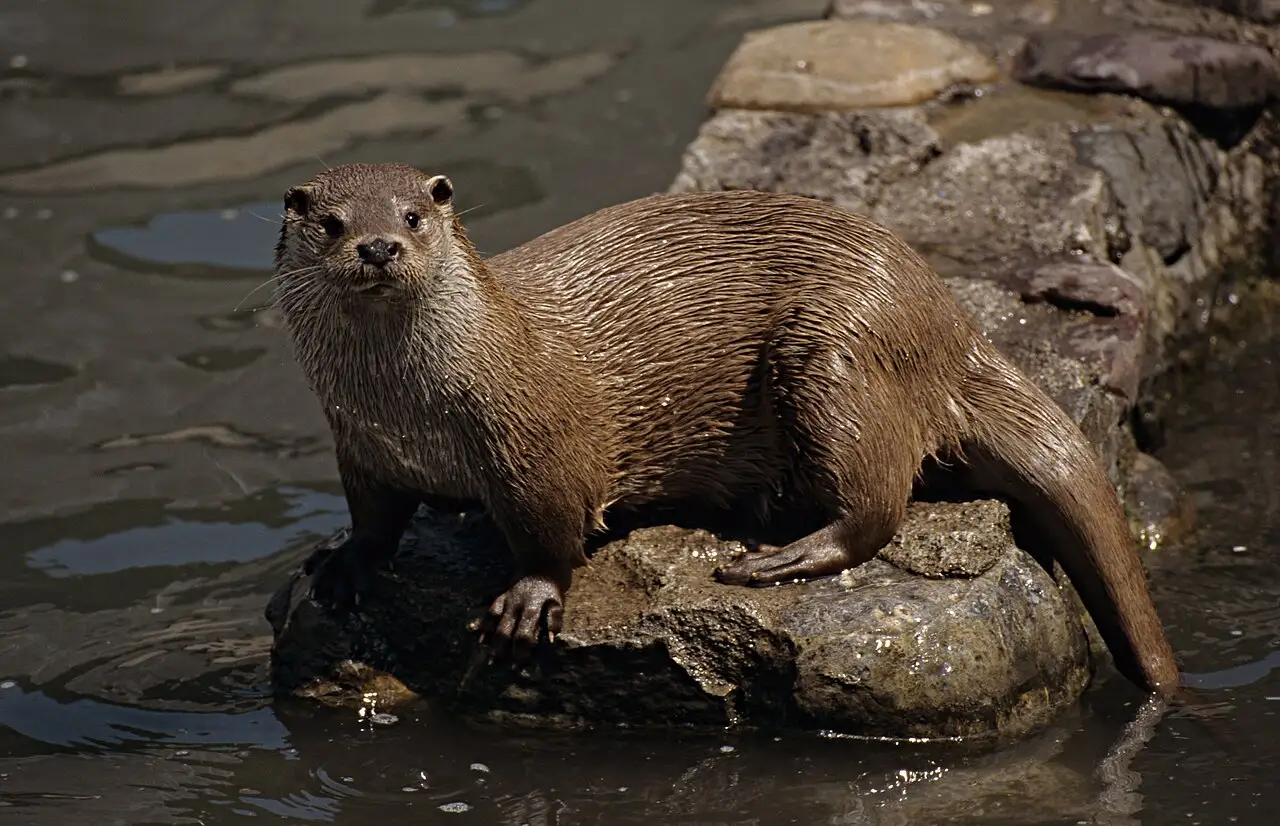
An otter on a rock: elongated body, short legs and a thick tailPhoto: FOTO-ARDEIDAS, CC BY-SA 3.0Photo 1 of 4
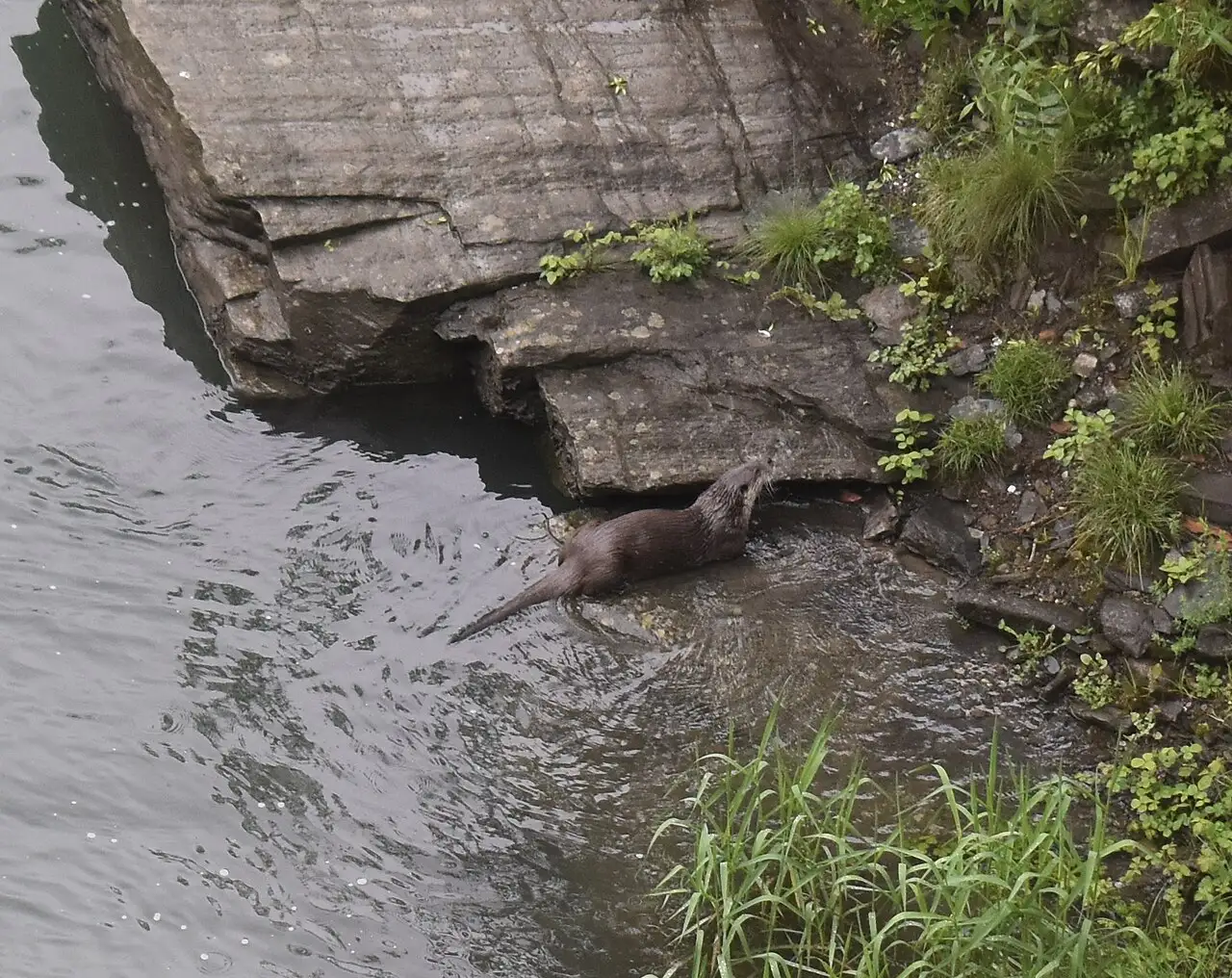
An otter enters the water from the rocks on a riverbankPhoto: Estevoaei, CC BY-SA 4.0Photo 2 of 4
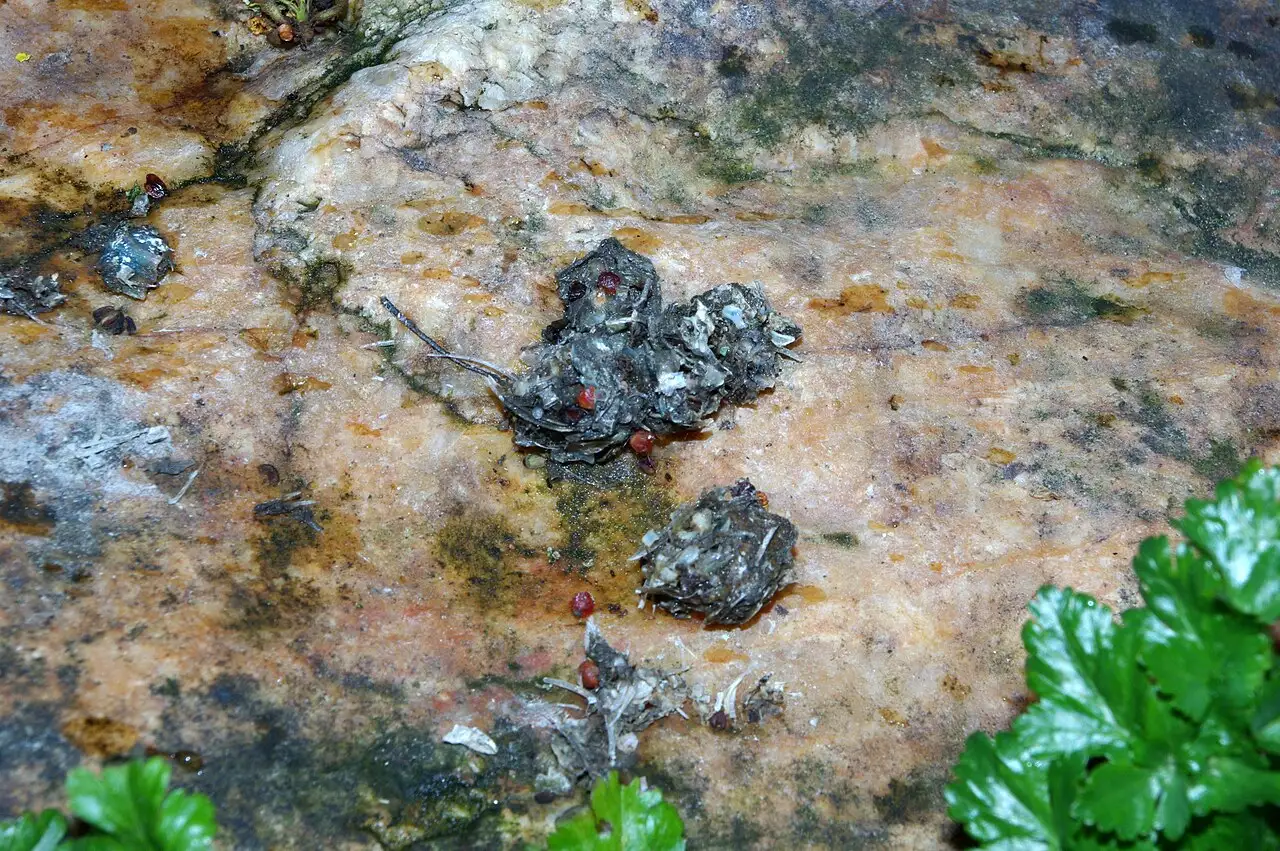
Otter droppings on a stone on the bank, the easiest sign to findPhoto: David Perez, CC BY 3.0Photo 3 of 4
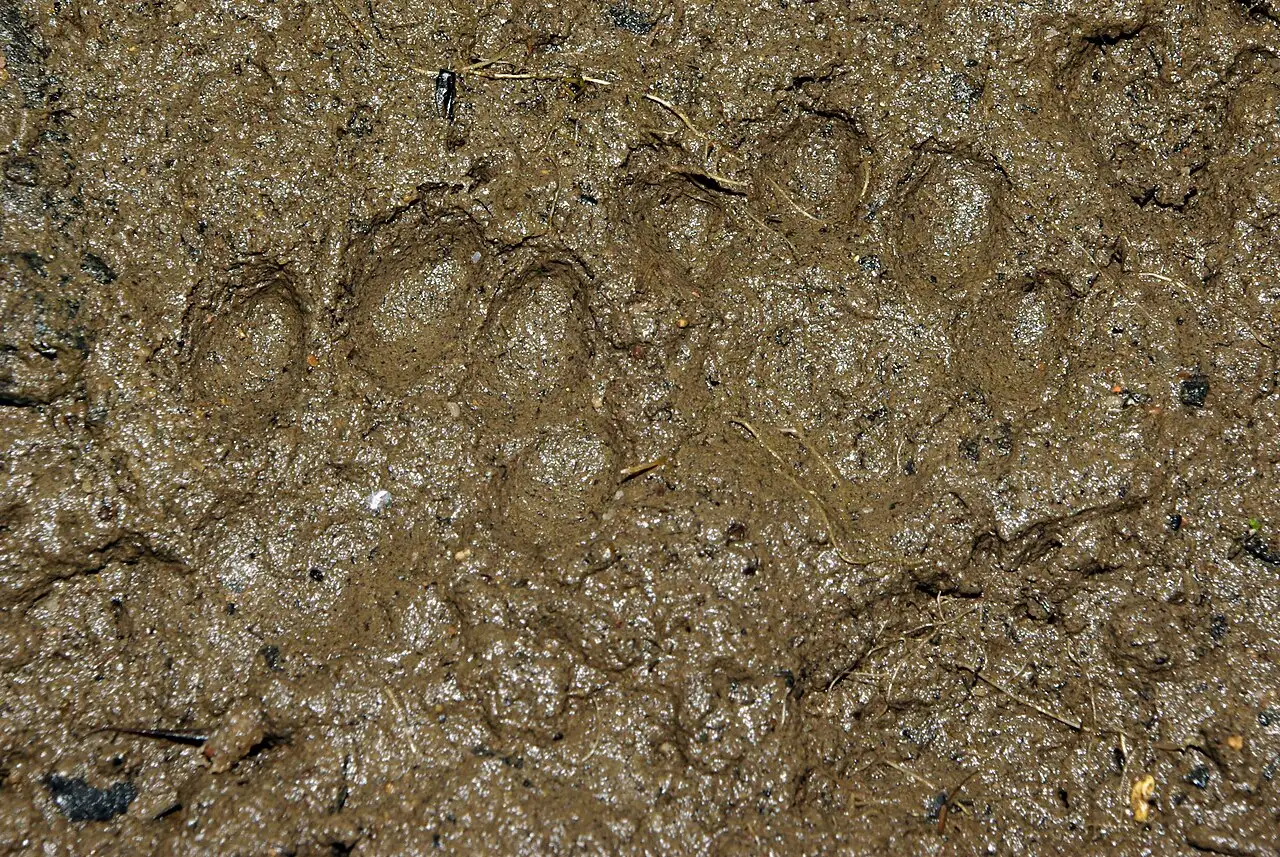
Otter tracks in the mud, with five toesPhoto: David Perez, CC BY 3.0Photo 4 of 4
1 / 4
Identification of the Eurasian Otter
Males weigh between 6.1 and 9.4 kilos and females between 4.4 and 6.5. It covers every day distances ranging from less than a kilometre to more than twenty, following the river.
Habitat and distribution of the Eurasian Otter
It lives in rivers, streams and reservoirs with quiet banks and good vegetation, and on some coasts.
Areas where it is regularly recorded since 2010Squares of about 25 km where it is recorded regularly (occasional records are left out). Data from GBIF.org (16,246 records, retrieved October 2026); outline from Natural Earth.
Breeding of the Eurasian Otter
It can breed at any time of year and adjusts its cycle to the abundance of prey. Gestation lasts about two months and one to five young are born, almost always one or two. Droughts can affect breeding success and delay births.
Diet of the Eurasian Otter
It eats mainly fish, but in Mediterranean rivers also many crayfish, amphibians and reptiles; when they are scarce, insects, birds or small mammals. In Cabañeros, according to the park guide, the American red swamp crayfish, an invasive species, has become an important part of its diet.
The Eurasian Otter in Cabañeros
The park guide presents it as a good indicator of water quality: where there is an otter, the river is alive. It is in the Estena, which crosses the Boquerón in a very good state of conservation, in the Bullaque and in streams and reservoirs such as the Brezoso.
Where to see the Eurasian Otter in Cabañeros
When
All year.
What time
At dawn and dusk, although at some times of year it lets itself be seen by day.
Where
The Estena river on the Boquerón route, where its droppings are easy to see on the stones of the old river crossing, and the Brezoso reservoir.
What to look for
Better than the animal, its signs: droppings with scales on stones on the bank and five-toed tracks in the mud.
Ruiz-Olmo, J. (2017). Nutria – Lutra lutra. En: Salvador, A. y Barja, I. (eds.), Enciclopedia Virtual de los Vertebrados Españoles. Museo Nacional de Ciencias Naturales (CSIC). vertebradosibericos.org
OAPN (2011). Guía de visita del Parque Nacional de Cabañeros. PDF
Real Decreto 139/2011, Listado de Especies Silvestres en Régimen de Protección Especial. BOE