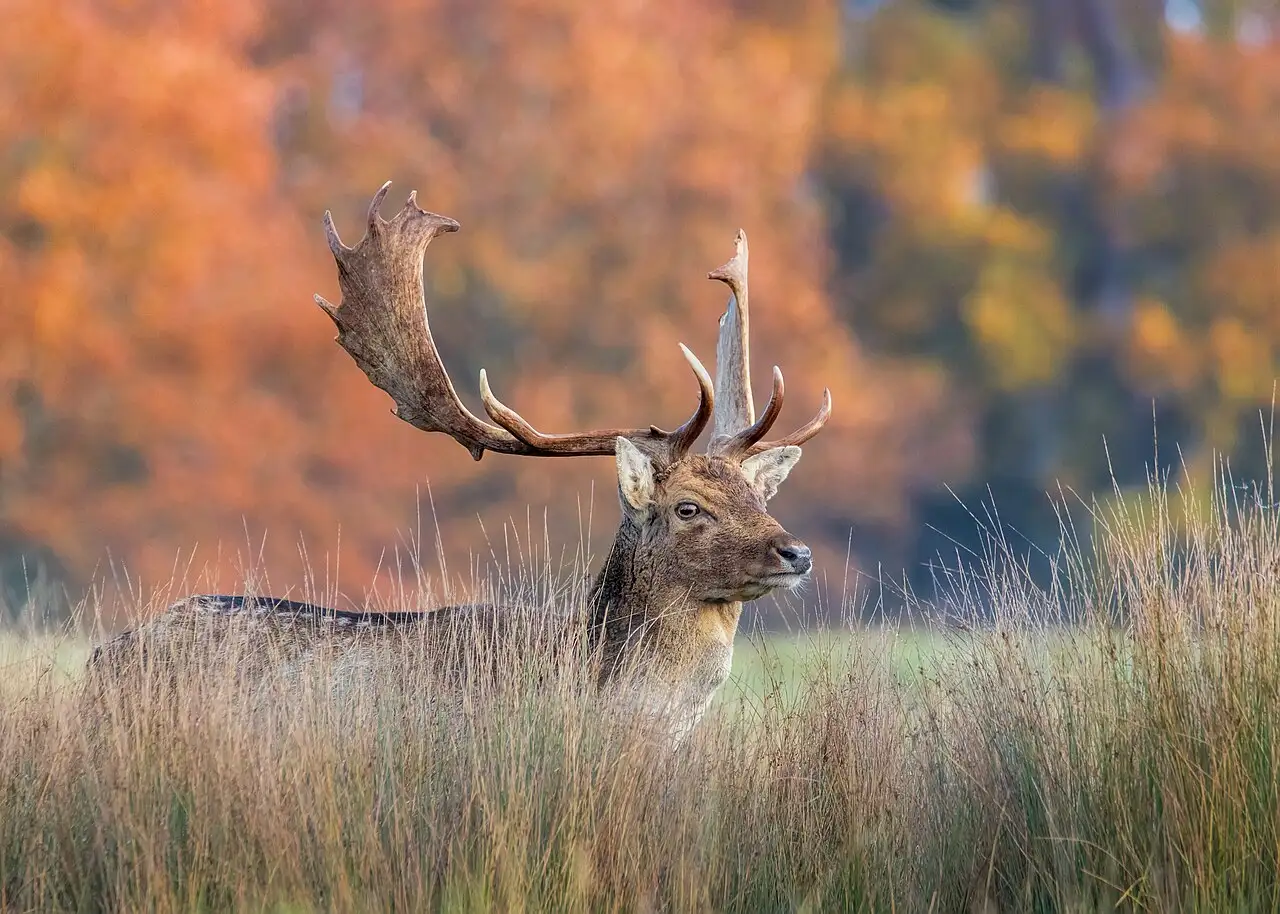
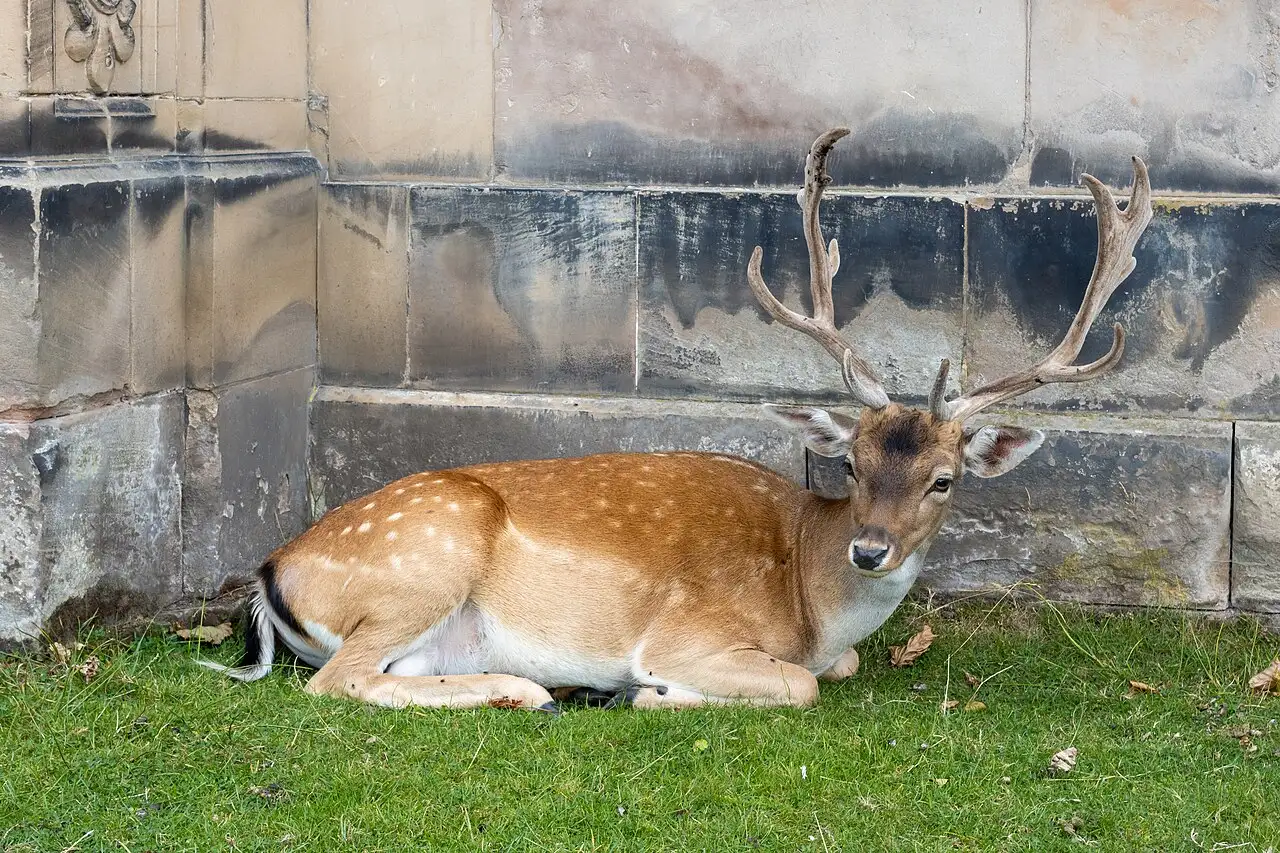
Head-and-body length ranges from 129 to 155 centimetres in males and from 118 to 140 in females. Males weigh between 52 and 63 kilos and females between 28 and 41.
Habitat and distribution of the Fallow Deer
Open woods and meadows. On the peninsula its distribution depends on introductions, often on hunting estates.
Areas where it is regularly recorded since 2010Squares of about 25 km where it is recorded regularly (occasional records are left out). Data from GBIF.org (18,743 records, retrieved October 2026); outline from Natural Earth.
Breeding of the Fallow Deer
The rut is in early autumn, when males defend territories. Gestation lasts about eight months and females give birth to a single young in spring.
Diet of the Fallow Deer
It eats almost exclusively grass, although it also browses trees and shrubs and eats fruit.
The Fallow Deer in Cabañeros
It is not native. According to the website, it is a species originally from Persia that the Romans had already introduced, and the fallow deer of Cabañeros come from populations that have remained for centuries on some estates and from recent introductions, driven by demand for hunting. Introduced species compete with native ones and can bring diseases.
On 29 March 2023 the park’s Board of Trustees issued a favourable report on the Ungulate Management Plan, which sets out the measures to manage and control within the park the populations of ungulates, such as the red deer, the fallow deer or the wild boar, according to the newsletter of March–April 2023.
Can it be seen in Cabañeros?
It is much less frequent than the red deer. If you see a «red deer» with white spots or antlers as broad as a spade, it is a fallow deer.
Newsletter «Desde el parque», Cabañeros National Park (OAPN), March–April 2023 (Ungulate Management Plan; in Spanish). All the newsletters.
Braza, F. (2017). Gamo – Dama dama. En: Salvador, A. y Barja, I. (eds.), Enciclopedia Virtual de los Vertebrados Españoles. Museo Nacional de Ciencias Naturales (CSIC). vertebradosibericos.org
OAPN (2011). Guía de visita del Parque Nacional de Cabañeros. PDF
AnAge: The Animal Ageing and Longevity Database. Dama dama