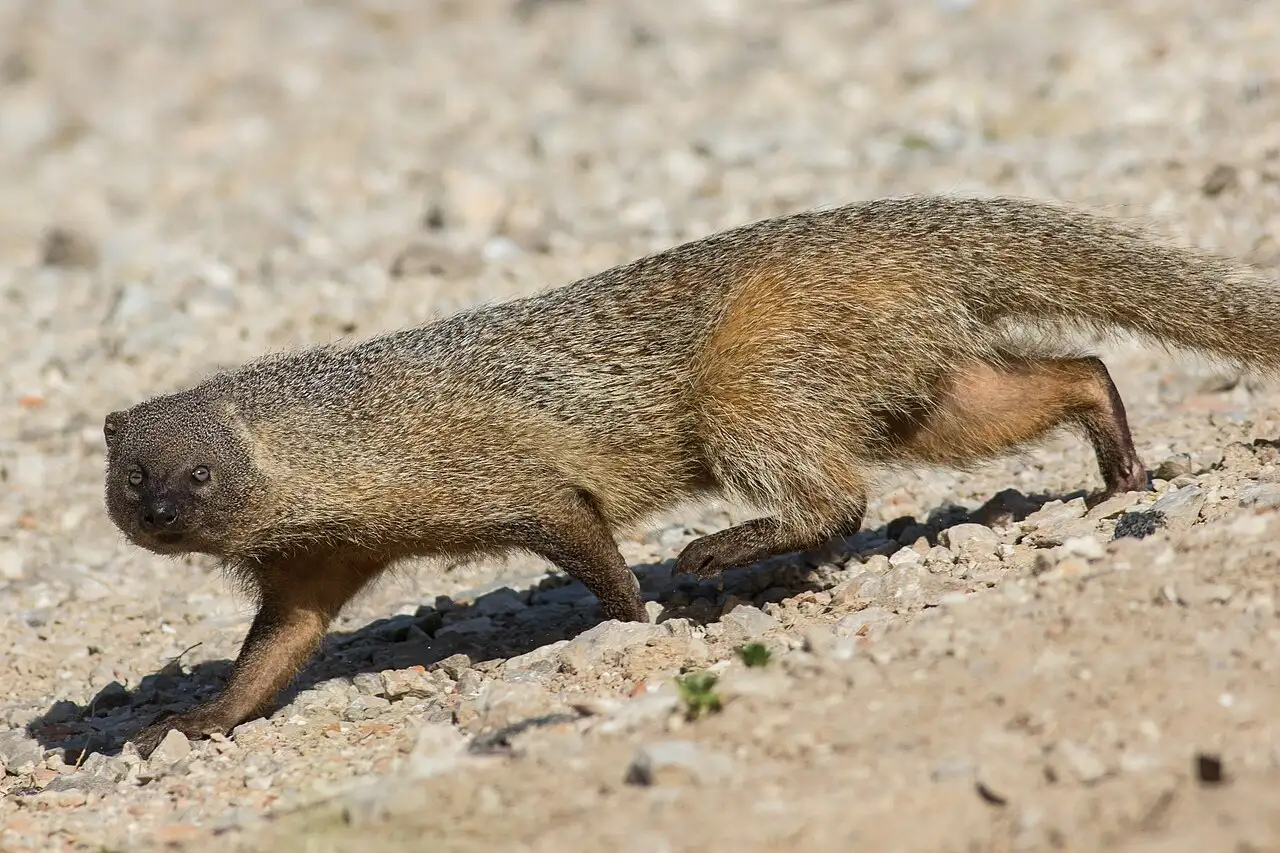
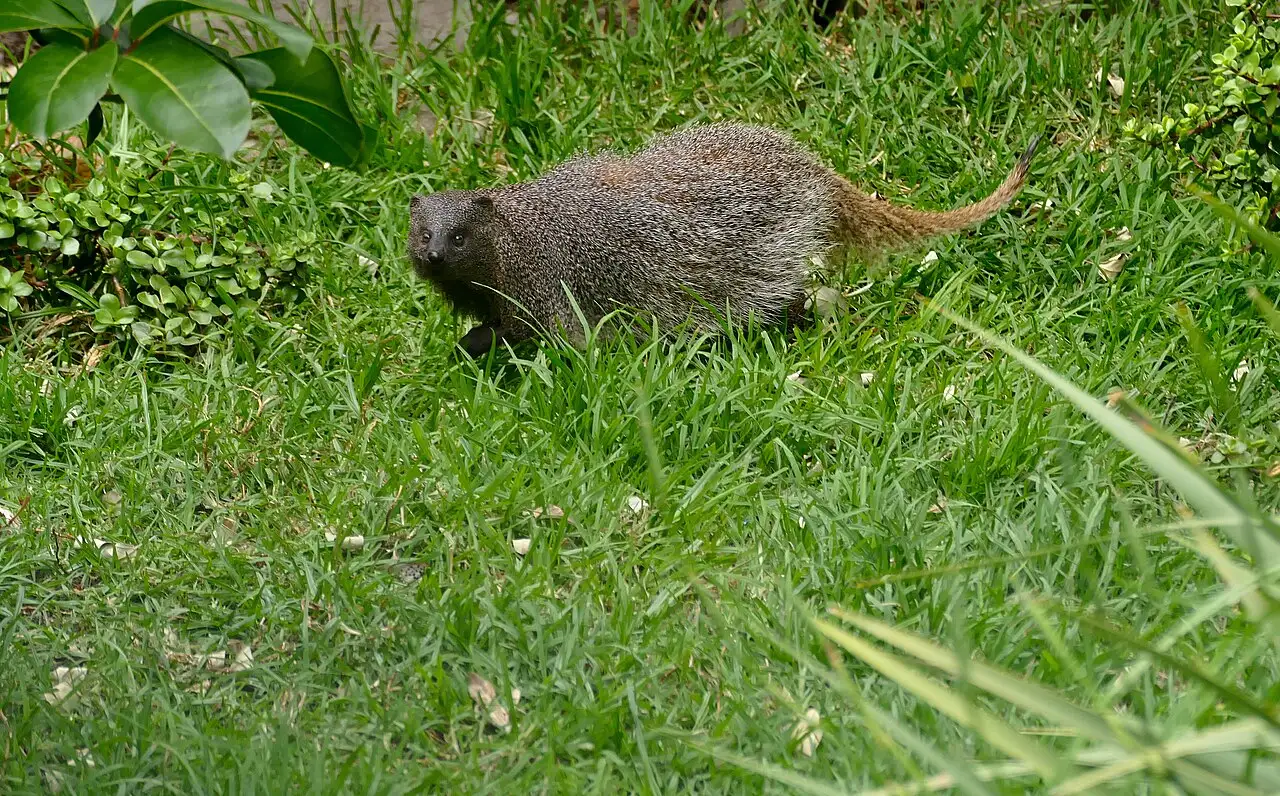
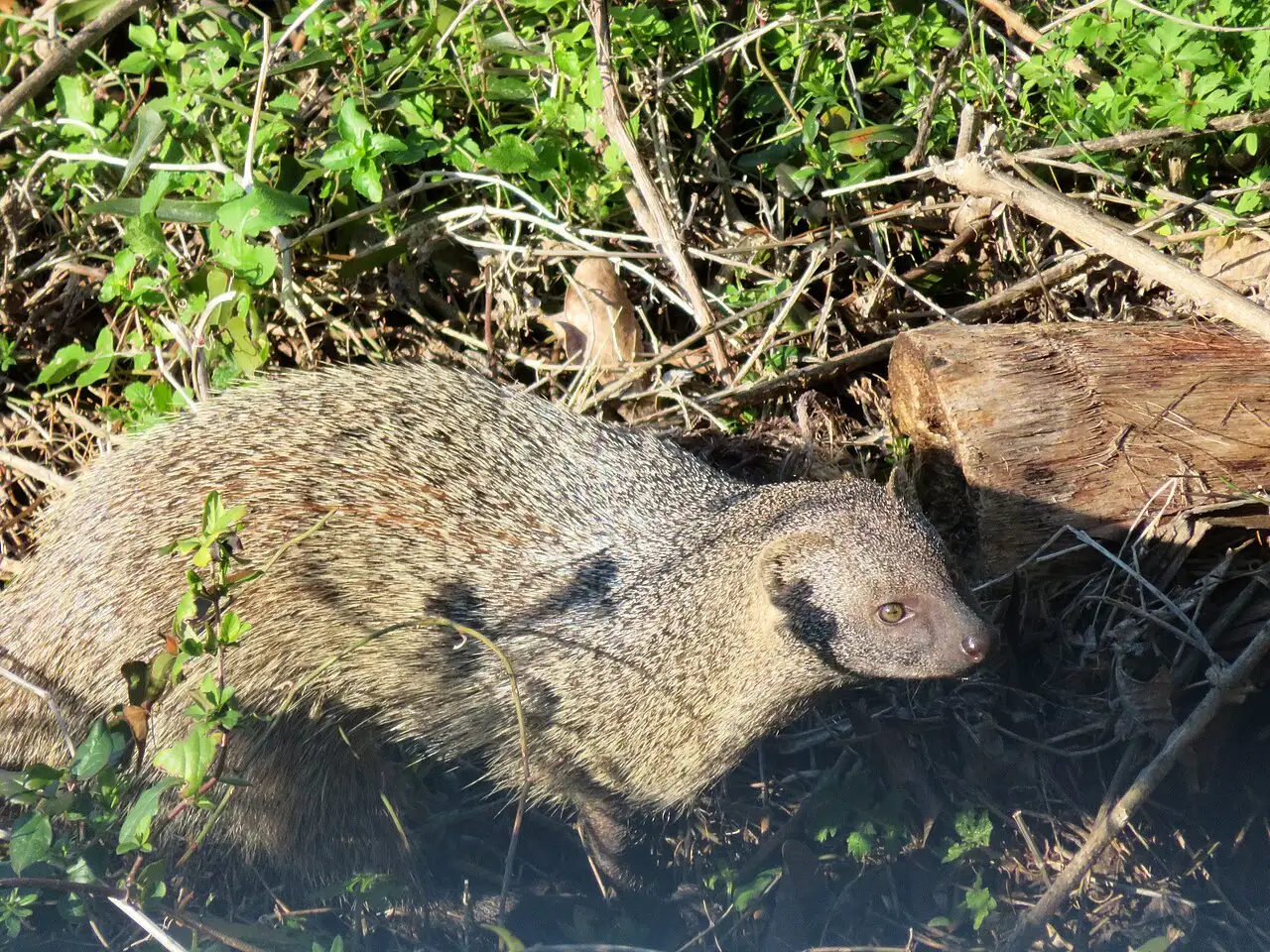
Egyptian Mongoose beside some stones, with a grizzled grey coatPhoto: 11asaf, CC BY-SA 4.0Photo 3 of 3
1 / 3
Identification of the Egyptian Mongoose
It is the only mongoose that lives in Europe. Males weigh on average 2.4 kilos and females 2.1. Its elongated silhouette, the tail with a black tuft and its habit of coming out by day set it apart from any other carnivore in the park.
Habitat and distribution of the Egyptian Mongoose
It prefers dense Mediterranean scrub and, above all, the banks of streams and damp areas with brambles, oleanders and rushes. The map shows where it is observed on the peninsula.
Areas where it is regularly recorded since 2010Squares of about 25 km where it is recorded regularly (occasional records are left out). Data from GBIF.org (3,290 records, retrieved October 2026); outline from Natural Earth.
Breeding of the Egyptian Mongoose
The rut is mostly in March and April, and births are between May and July, with two to four young per litter.
Diet of the Egyptian Mongoose
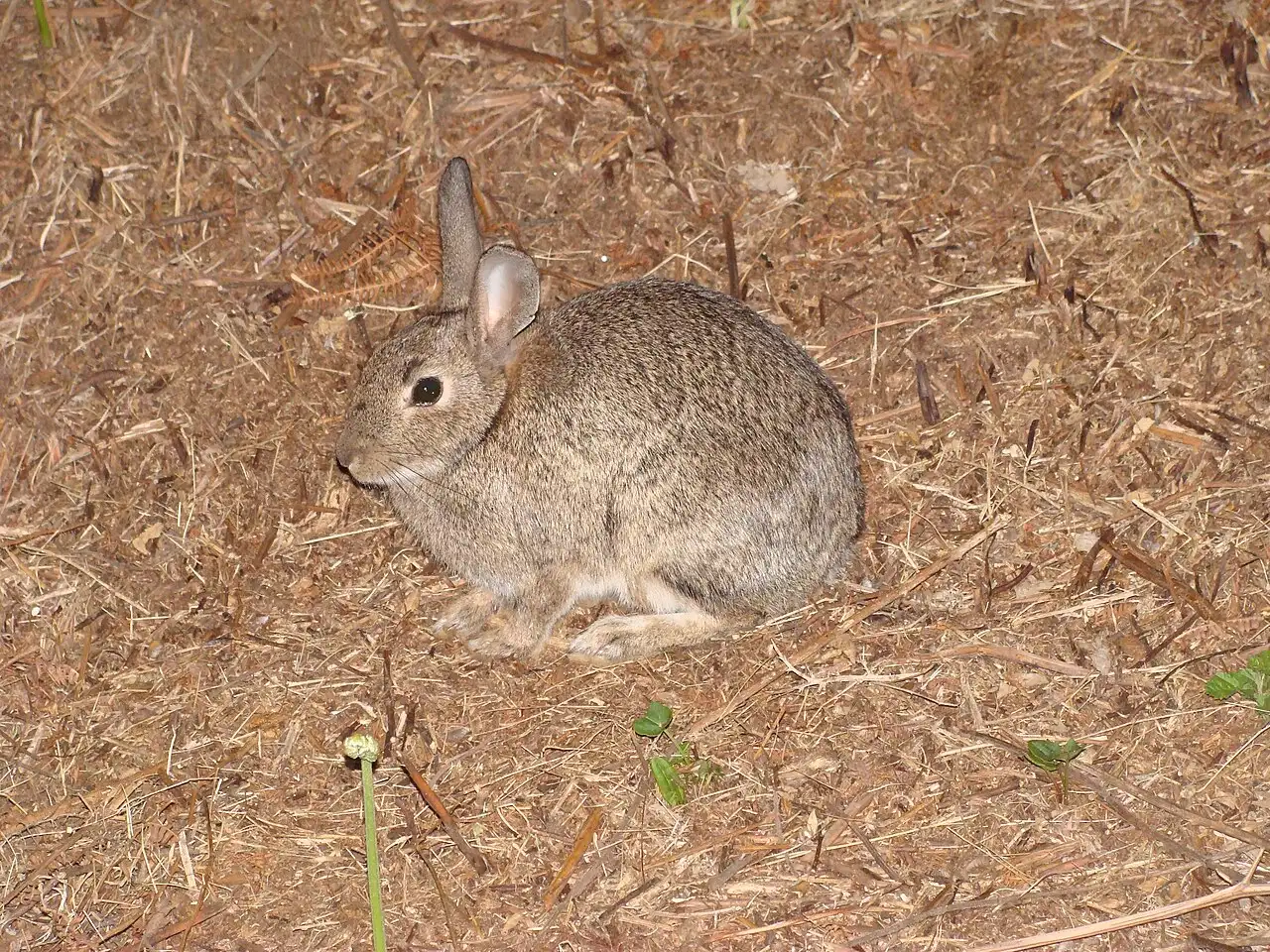
Young rabbits and small mammals dominate its diet, but it eats everything: insects, birds, carrion, amphibians, reptiles, crabs, fruit and even mushrooms.
The Egyptian Mongoose in Cabañeros
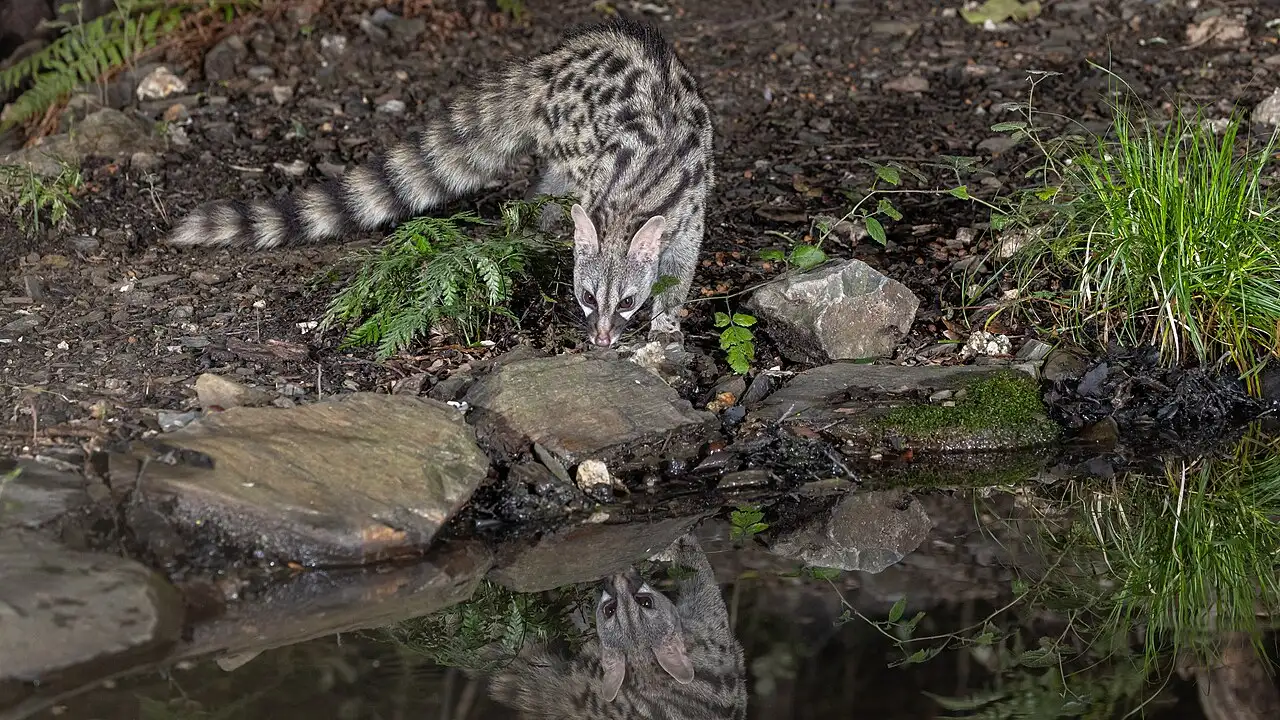
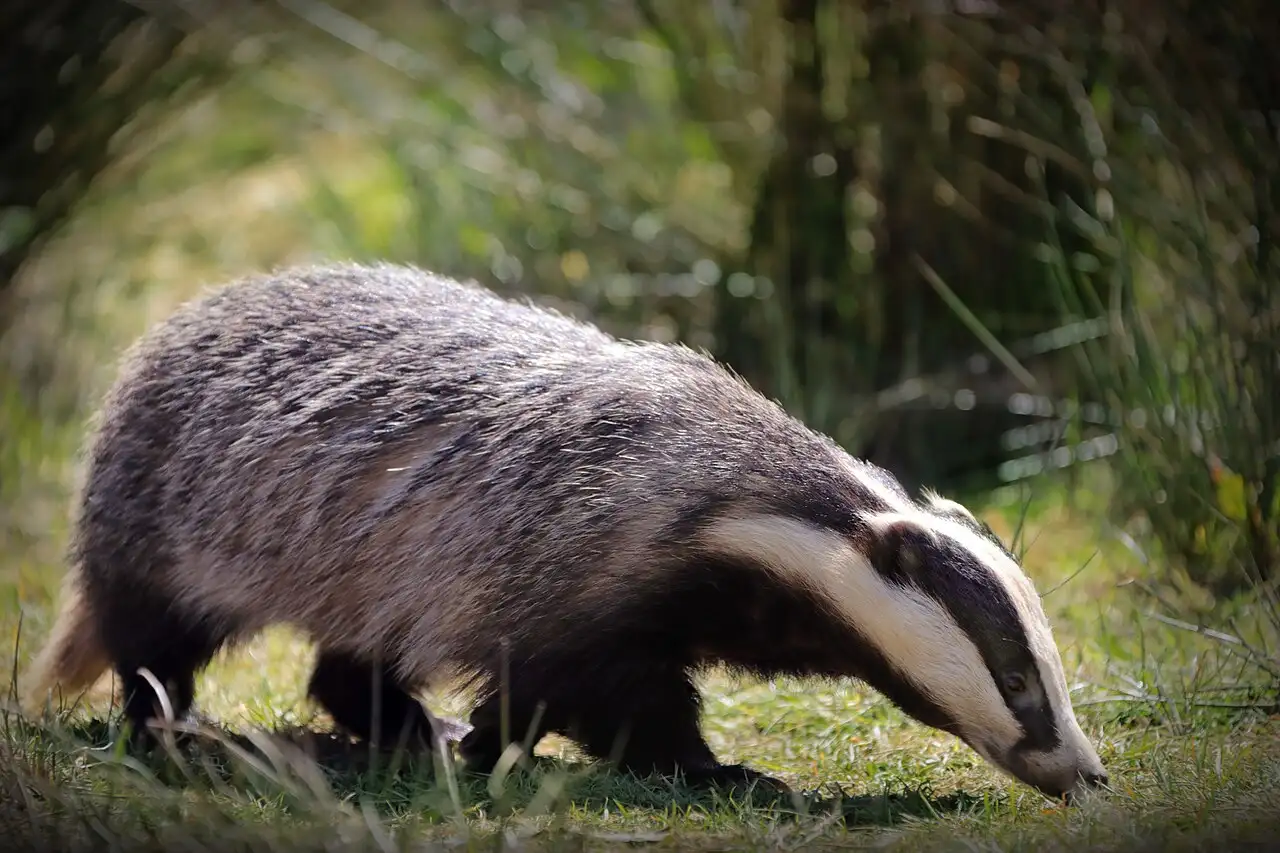
The park guide describes it as «scarce and peculiar», and the website places it among the least numerous carnivores, ahead only of the lynx. The guide cites it in the closed woodland of peonies and hawthorns, where cats, genets, mongooses and badgers take shelter. Little is known of its biology on a local scale.
Can it be seen in Cabañeros?
It is difficult, although being diurnal it is one of the carnivores that let themselves be seen by day. With luck, crossing a track beside a stream with dense vegetation.
Palomares, F. (2017). Meloncillo – Herpestes ichneumon. En: Salvador, A. y Barja, I. (eds.), Enciclopedia Virtual de los Vertebrados Españoles. Museo Nacional de Ciencias Naturales (CSIC). vertebradosibericos.org
OAPN (2011). Guía de visita del Parque Nacional de Cabañeros. PDF