Frequent in the woodland around the raña; about 15 per 100 hectares in the best areas, according to the website.
Photos of the Iberian Hare
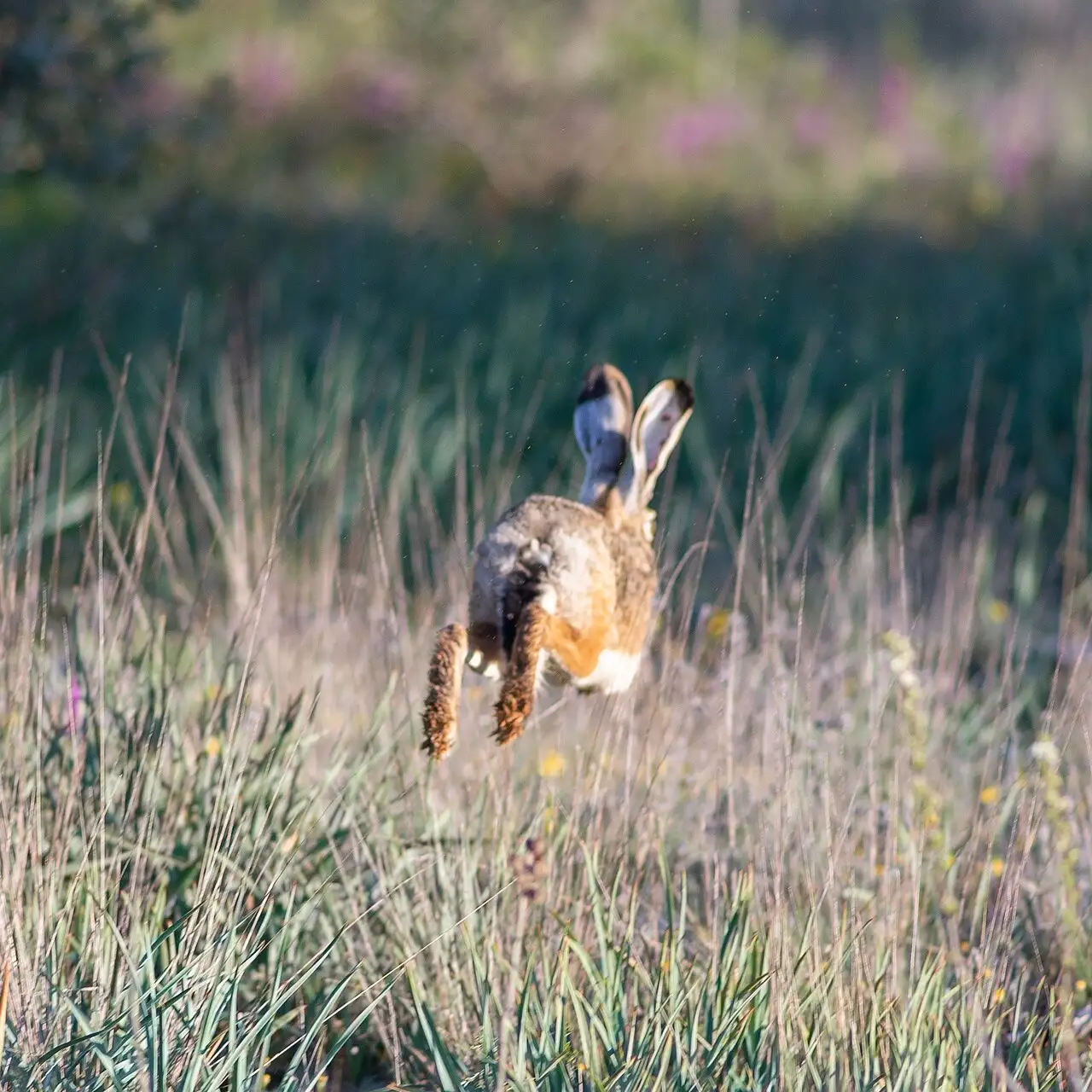
An Iberian Hare runs through the tall grassPhoto: euqirneto, CC BY 4.0Photo 1 of 2
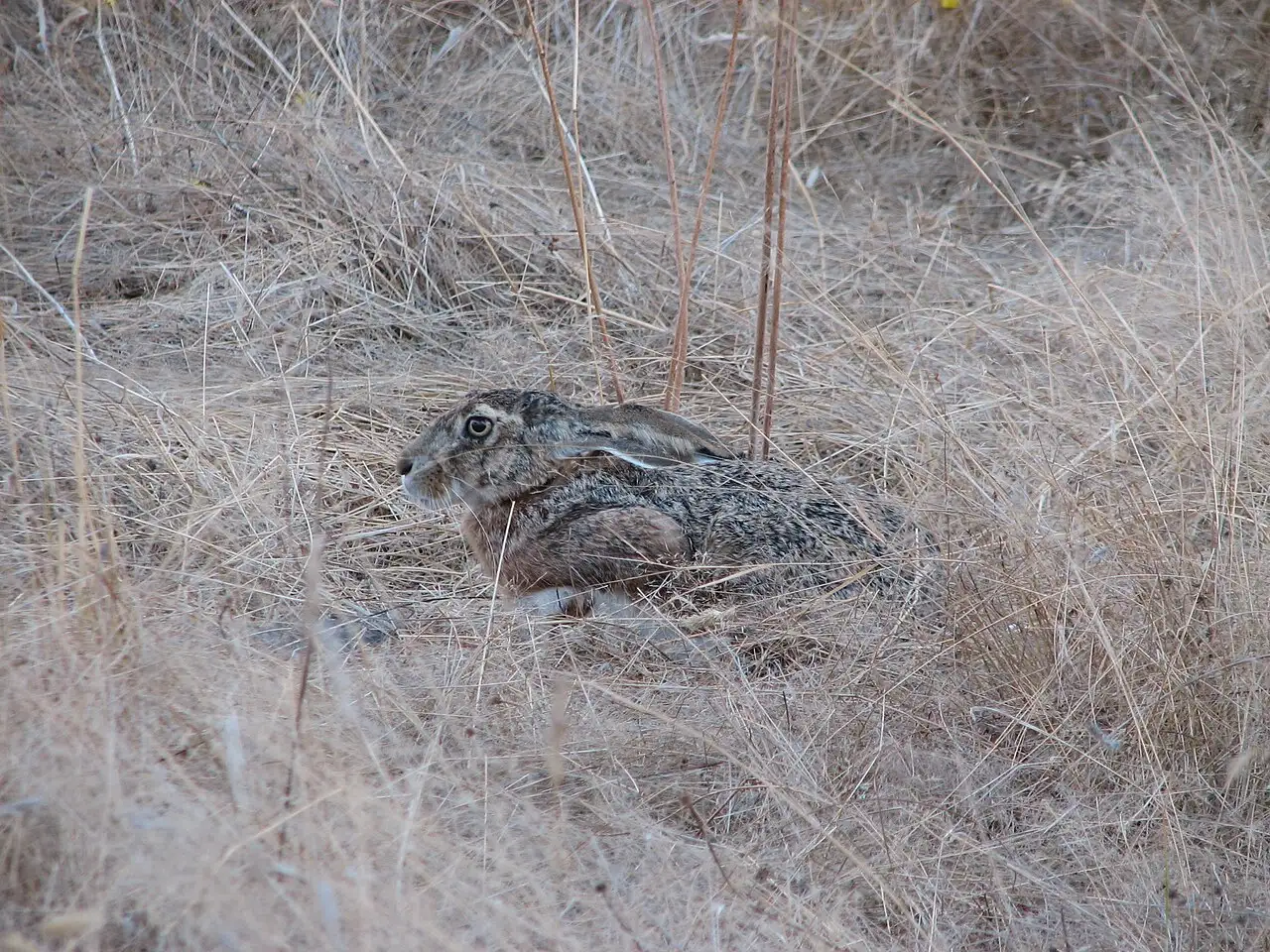
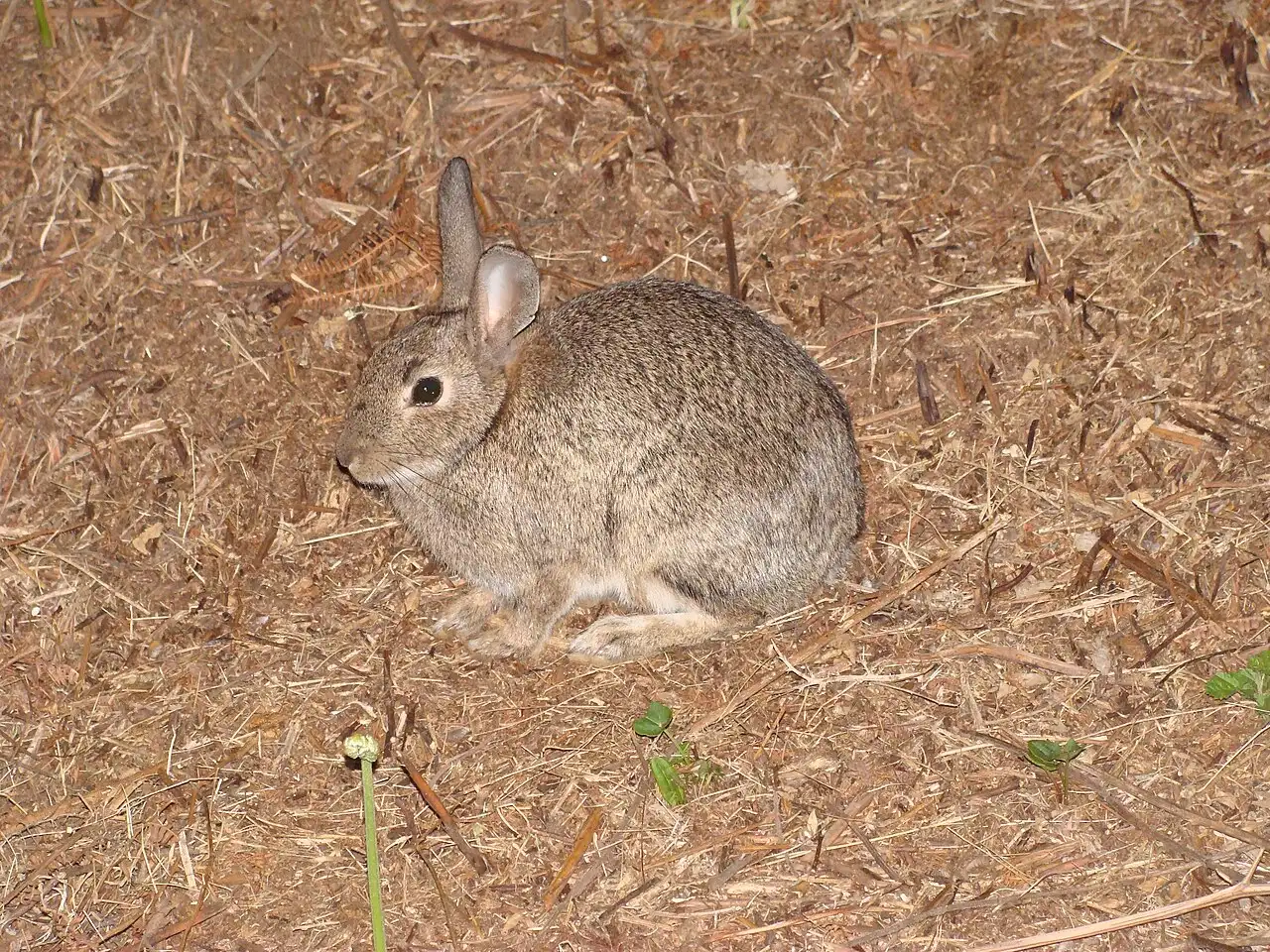
Hare crouched and camouflaged in the dry grassPhoto: Mmparedes, CC BY-SA 3.0Photo 2 of 2
1 / 2
Identification of the Iberian Hare
Bigger than the rabbit, it weighs between 1.3 and 3.3 kilos; females are somewhat bigger than males. Endemic to the peninsula, the park guide cites it under the old name of Cape hare (Lepus capensis).
Habitat and distribution of the Iberian Hare
Open fields, crops, holm oak woods and light scrub.
Areas where it is regularly recorded since 2010Squares of about 25 km where it is recorded regularly (occasional records are left out). Data from GBIF.org (3,510 records, retrieved October 2026); outline from Natural Earth.
Breeding of the Iberian Hare
It usually bears two leverets per birth. In the rut, according to the guide, hares can be seen locked in fights and chases that let themselves be seen from a few metres away.
Diet of the Iberian Hare
It eats plants, above all leaves and stems of grasses, which are the base of its diet all year; in summer, more scrub and flower heads.
The Iberian Hare in Cabañeros
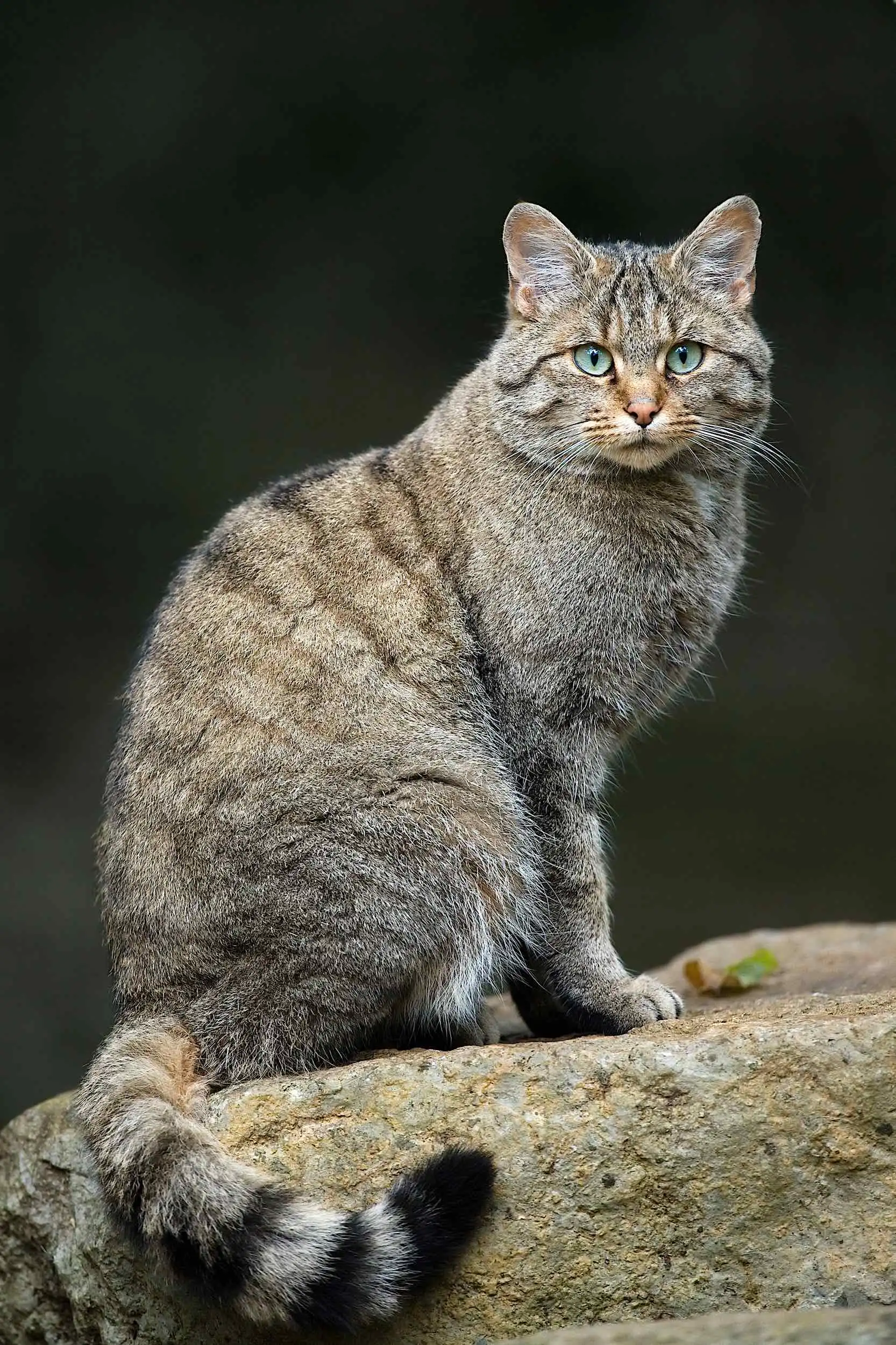
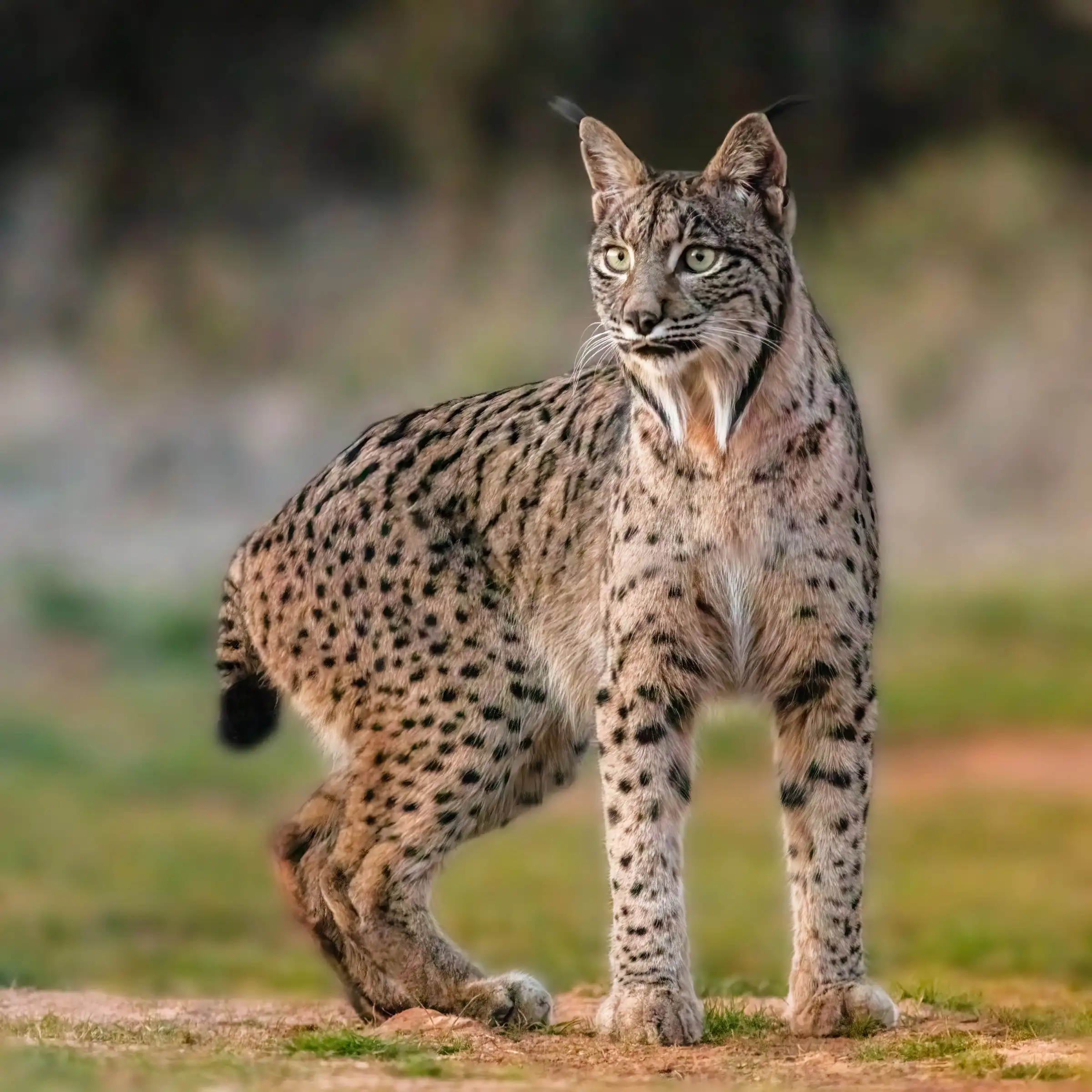
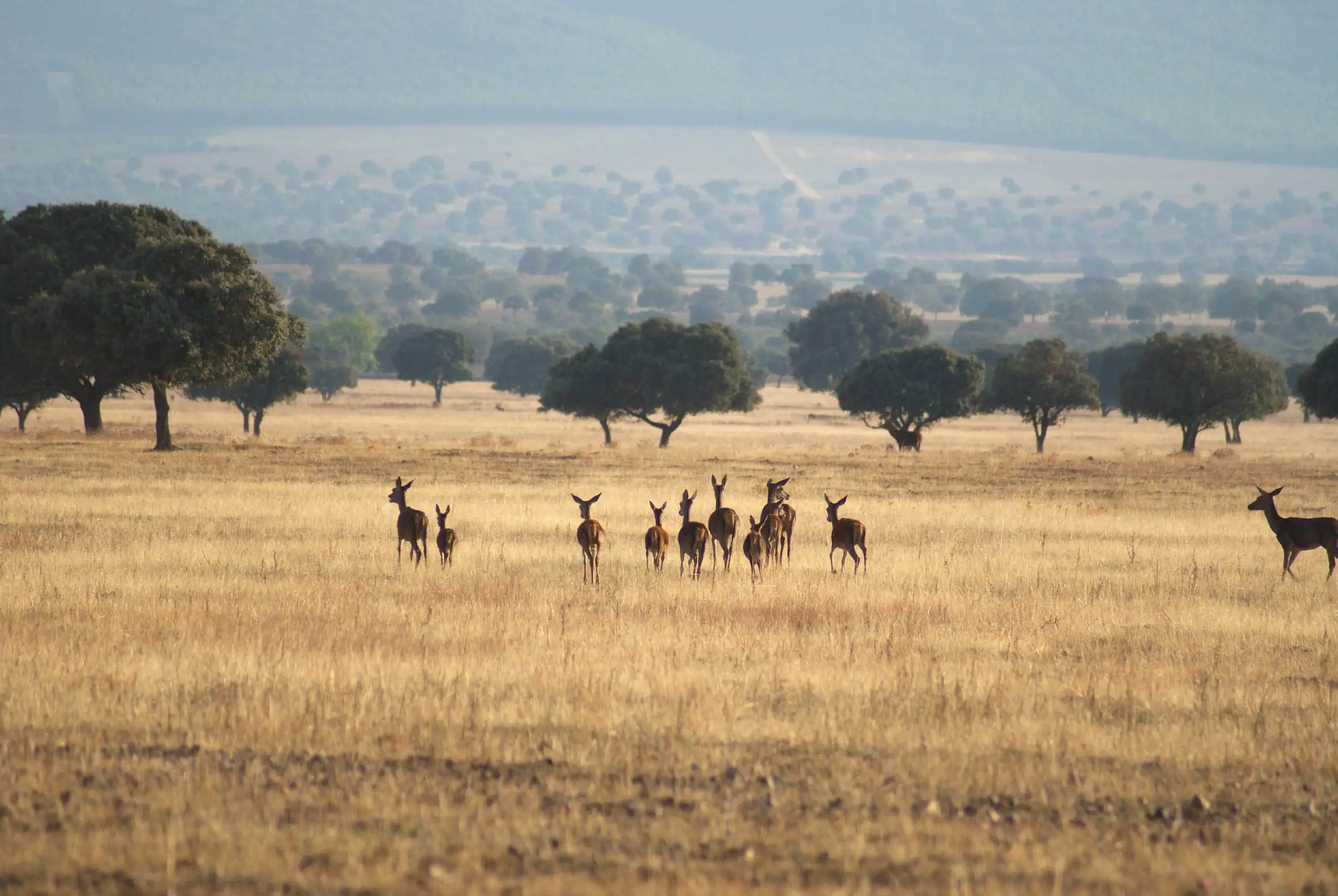
It is abundant in the woodland around the great central raña, above all under the vegetation of the streams that cross it. Sometimes it ventures onto the raña, where it is more exposed to predators such as the lynx and the wildcat. The transformation of scrub into open grassland has given it far more territory.
Where to see the Iberian Hare in Cabañeros
When
All year; in the rut, bolder.
What time
At dusk and at night.
Where
At the edge of the woodland with the raña and beside the streams that cross it.
What to look for
Long black-tipped ears peeping out of the grass, or a zigzag run.
Purroy, F. J. (2017). Liebre ibérica – Lepus granatensis. En: Salvador, A. y Barja, I. (eds.), Enciclopedia Virtual de los Vertebrados Españoles. Museo Nacional de Ciencias Naturales (CSIC). vertebradosibericos.org
OAPN (2011). Guía de visita del Parque Nacional de Cabañeros. PDF